Satin Pothos Care (Scindapsus pictus)

About Satin Pothos

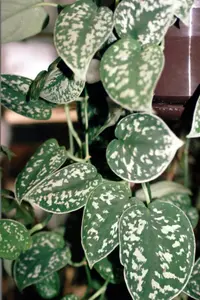
Satin pothos, Scindapsus pictus, is a tropical vining aroid grown mainly for its silver-flecked, velvety green leaves. It is usually grown as a trailing or climbing houseplant and can be trained on poles, hooks, or shelves.

In the wild, it occurs in parts of Southeast Asia, where it climbs trees in warm, shaded forests. Its moderate growth rate, tolerance of typical indoor humidity, and ability to handle occasional missed waterings make it suitable for most homes.

Understanding how to care for Satin Pothos starts with providing bright, indirect light, a free-draining potting mix, and consistent but not excessive moisture.

Main Plant Requirements

Care Difficulty

Easy Care

Light Preference

Bright Indirect Light

Water Requirements

Moderate Water

Temperature Preference

Tropical / Frost Sensitive

Hardiness Zone

11–12

Soil Texture

Loamy, Peaty, Organic-rich

Soil pH

Acidic (5.5–6.5), Slightly acidic (6.5–7.0)

Soil Drainage

Moist but well-drained

Fertilization

Light (every 4–6 weeks)

Get Personalized Care Plan

Scan your plant to receive care tips personalized for your specific plant

Personalized Care in the App

Available on iOS and Android

How to Care for the Satin Pothos

This vining aroid prefers bright, indirect light to maintain its silver variegation without leaf scorch.

  • Provide 6–8 hours of bright, filtered light each day, such as near an east or north window or under sheer curtains with dappled sun.
  • Tolerates partial shade, but in very low light the plant may produce smaller leaves and Satin Pothos markings can fade or turn more solid green.
  • Avoid harsh midday or strong afternoon sun, which can cause yellow or crispy patches; in winter, move closer to windows to compensate for weaker light.

This species prefers moderate, consistent moisture with brief drying between waterings.

  • Allow the top 2–4 cm of soil to dry before watering, then water thoroughly so excess drains away and the root zone is evenly moistened.
  • In spring and summer, expect to water more often as growth and evaporation increase; in fall and winter, extend intervals as growth slows.
  • Watch for soft, yellowing leaves and a sour smell as signs of overwatering, while drooping, thin leaves and very light pots indicate the need for water in Scindapsus pictus.

This tropical vine grows best in stable, warm conditions without cold drafts or sudden temperature swings.

  • Aim for 65–80°F (18–27°C) for active growth, keeping it away from air conditioners, heaters, and frequently opened exterior doors.
  • Protect the plant from cold; growth slows below about 60°F (16°C), and tissue damage can occur near 50°F (10°C) or with any frost exposure.
  • In hotter periods above 85°F (29°C), increase air movement and humidity and keep it out of direct sun to reduce heat stress and leaf scorch.

This species benefits from moderate to high indoor humidity for steady foliage growth.

  • Aim for 50–70% humidity; it will survive around 40% but grows more slowly and may develop dull leaves.
  • Dry air causes brown, crispy leaf edges, stalled new growth, and more frequent spider mite issues.
  • Increase humidity with a grouped plant arrangement, a nearby humidifier, or a pebble tray placed under the Satin Pothos pot.

Scindapsus pictus prefers a loose, airy, organic-rich mix that holds some moisture but drains quickly.

  • Use roughly 40% all-purpose potting mix, 30% fine bark, 20% perlite, and 10% compost for balanced moisture and structure.
  • Aim for slightly acidic to neutral pH, around 6.0–7.0, which supports nutrient availability for this aroid.
  • Avoid heavy garden soil, straight peat, or mixes that stay wet longer than 3–4 days after watering to reduce root rot risk.
  • Improve aeration by adding extra perlite or bark if the pot feels heavy and the soil compacts or pulls away from the pot sides.

This species is very suitable for container growing in homes and offices.

  • Choose a pot only 2–4 cm wider than the root ball to keep the root zone evenly moist without prolonged saturation.
  • Select a stable, heavier pot or cachepot when training vines upward so the container does not tip as growth extends.
  • Opt for porous materials like unglazed terracotta if soil stays wet for too long, or glazed ceramic/plastic if it dries out very quickly.

Scindapsus pictus benefits from light, consistent feeding during active growth rather than heavy applications.

  • Use a balanced liquid fertilizer (such as 10-10-10 or 20-20-20) diluted to 1/4–1/2 strength for Satin Pothos.
  • Feed every 4–6 weeks in spring and summer when growth is active.
  • Avoid fertilizing in late fall and winter, or reduce to 1 very light dose if growth continues.
  • Flush the pot with plain water every few months to prevent salt buildup from fertilizers.

Pruning Scindapsus pictus helps control length, maintain density, and remove weak growth.

  • Prune in spring or early summer when the plant is actively growing for fastest recovery.
  • Use clean, sharp scissors or pruning shears to remove dead, yellowing, or damaged leaves and stems.
  • Shorten overly long, leggy vines just above a leaf node to encourage branching and a fuller shape.
  • Remove crowded or tangled stems to improve light penetration and air movement around foliage.

This vining plant adapts well to containers and needs repotting only when rootbound.

  • Check for roots circling the pot, growing out of drainage holes, or slowed growth as signals for repotting.
  • Plan to repot every 2–3 years in spring, moving up only 2–5 cm in pot diameter.
  • Gently loosen circling roots and trim broken ones, then set the plant into fresh, well-draining houseplant mix.
  • Water thoroughly after repotting, keep in bright indirect light, and avoid heavy feeding for 3–4 weeks to limit stress.

Scindapsus pictus is most often propagated from stem cuttings taken from healthy vines.

  • Take 8–12 cm cuttings in spring or summer, each with 2–3 leaves and at least 1 node.
  • Remove the lowest leaf and place the node in water or moist, well-draining mix so it is just covered.
  • Provide bright indirect light, high humidity, and temperatures around 70–80°F to encourage rooting.
  • After roots reach about 3–5 cm, pot cuttings in small containers and keep evenly moist until established.

This tropical vine is frost-sensitive and should be treated as an indoor plant in cold climates.

  • Keep temperatures around 60–75°F and avoid drafts from windows or heating vents in winter.
  • Move outdoor containers indoors before temperatures drop below 55°F.
  • Reduce watering slightly, allowing the top 2–3 cm of soil to dry before rewatering, as growth slows.
  • Hold back most fertilizer in winter, resuming stronger feeding in spring when growth restarts.

Care Tips

Support For Climbing

Provide a moss pole, coco pole, or rough wooden stake so the plant can attach with its aerial roots, which often results in larger, more silvery leaves compared with letting it trail only from a pot.

Encourage Fuller Growth

Pinch or cut just above a node on long, bare vines and replant those cuttings back into the same pot to create a denser, bushier plant over time.

Strategic Rotation

Rotate the pot 90° every 2–3 weeks so vines grow evenly toward the light source and do not become lopsided or pale on one side.

Clean Foliage Routine

Wipe leaves gently with a slightly damp, soft cloth every 4–6 weeks to remove dust, improve light capture, and make it easier to spot early signs of pests when caring for Satin Pothos.

Safe Pest Monitoring

Place a small yellow sticky trap near, not touching, the foliage and inspect leaf undersides monthly so fungus gnats, thrips, or mites are detected early before they damage the plant’s variegated leaves.

Common Pests and Diseases

Spider mites

This pest often appears on Satin Pothos grown in warm, dry indoor air, causing tiny pale stippling on leaves and fine webbing on undersides. Symptoms include dull, dusty-looking foliage that may gradually yellow and drop.

Solution

Shower the plant thoroughly, focusing on leaf undersides, then wipe leaves with a damp cloth. For ongoing control, increase humidity, isolate the plant, and treat leaf surfaces every 5–7 days for several cycles with insecticidal soap or a neem oil solution, ensuring full coverage of both sides of the leaves and stems.

Mealybugs

These insects show up as white, cottony clumps in leaf axils, along stems, and sometimes on roots, where they suck sap and weaken growth. Symptoms include sticky honeydew, distorted new leaves, and general decline in vigor.

Solution

Isolate the plant and dab visible mealybugs with cotton swabs dipped in 70% isopropyl alcohol, then wipe affected areas. Repeat inspections weekly, wash foliage with lukewarm water and mild insecticidal soap, and if the infestation is heavy, consider repotting in fresh substrate and discarding heavily infested roots or stems.

Scale insects

These insects attach as small brown or tan bumps along stems and veins, remaining immobile while feeding on plant sap. Symptoms include sticky honeydew, yellowing leaves, and reduced growth over time.

Solution

Gently scrape or rub off visible scales with a fingernail or soft cloth, then wash the plant with insecticidal soap, covering stems and leaf midribs carefully. Repeat treatments every 7–10 days for several rounds and keep the plant isolated until new growth appears clean and honeydew-free.

Bacterial leaf spot

This disease causes water-soaked, translucent spots that may turn brown with yellow halos, often starting on older leaves in warm, humid conditions. Symptoms include irregular spotting that can merge into larger dead patches, leading to premature leaf drop.

Solution

Remove and discard affected leaves, sterilizing scissors between cuts with alcohol, and avoid overhead watering so foliage dries quickly. Improve air circulation, reduce crowding around the plant, and if spotting continues, keep leaves dry and consider using a copper-based bactericide according to label directions for ornamental foliage plants.

Fungal leaf spot

This disease produces small brown or dark purple spots with defined edges, often beginning on lower or shaded leaves in persistently moist conditions. Symptoms include gradual spread of spots along the vine, especially where leaves stay wet or pressed against other foliage or surfaces.

Solution

Prune and discard the worst affected leaves and any crowded stems to open up airflow, cleaning tools between cuts. Allow the soil surface and leaves to dry between waterings, avoid misting, and if necessary apply a broad-spectrum fungicide labeled for houseplants, repeating as directed until new growth emerges clean, as part of consistent Scindapsus pictus plant care.

Interesting Facts

Shimmering leaf surface

The silvery patches on its leaves come from specialized air-filled cells in the upper leaf tissue that scatter light, creating a matte, velvety shimmer rather than a glossy shine.

Epiphytic climbing habit

In its native Southeast Asian forests, this species often grows as an epiphyte on tree trunks, using aerial roots to cling and climb toward brighter canopy light while keeping its roots in humus-rich debris.

Variable leaf patterning

Wild populations show notable variation in the extent and shape of silver variegation, and cultivated forms represent selected clones that stabilize these patterns through vegetative propagation rather than seed.

Botan icon

Did you know?

This species can noticeably change leaf size and shape when grown vertically on a support, producing larger, more elongated leaves with a different variegation balance, an example of heteroblasty, which is the change in leaf form as the plant shifts from juvenile to more mature growth.

FAQs about Satin Pothos

Yellow leaves usually result from overwatering, poor drainage, or compacted soil causing root stress. Older leaves may yellow naturally over time. Check soil moisture, improve drainage, remove affected leaves, and adjust watering frequency to stabilize the plant.

Grow Healthy Plants with Botan Care

Keep your plants happy and healthy with plant identification, disease detection, and easy care guidance.

Botan plant care app — identify plants on mobile

Explore More Plants