Encourage Compact Growth
Pinch out the soft tips of long runners every 4–6 weeks to keep the plant dense, encourage branching, and produce more flowering rosettes.


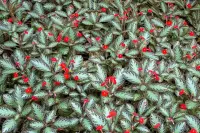
Flame violet, Episcia cupreata, is a small tropical perennial from Central and South America, related to African violets. It forms low, spreading mats with soft, patterned leaves in bronze, green, or silver tones. Bright orange to red tubular flowers rise above the foliage and appear repeatedly in warm, stable conditions.
Its compact size and trailing habit make it suitable for hanging baskets, terrariums, and windowsills in humid rooms. It prefers warm temperatures, gentle indirect light, and consistently moist but airy soil. With stable indoor conditions, it is considered moderately easy to care for Flame violet.

Care Difficulty
Moderate Care

Light Preference
Bright Indirect Light

Water Requirements
Keep Soil Moist

Temperature Preference
Tropical / Frost Sensitive

Hardiness Zone
11–12

Soil Texture
Loamy, Peaty, Organic-rich

Soil pH
Acidic (5.5–6.5), Slightly acidic (6.5–7.0)

Soil Drainage
Moist but well-drained

Fertilization
Light (every 4–6 weeks)
Scan your plant to receive care tips personalized for your specific plant
Available on iOS and Android
Like its colleague Columnea microphylla, Episcia cupreata prefers bright, indirect light that mimics a shaded tropical understory.
Episcia cupreata prefers consistently moist but not waterlogged soil.
This species thrives in stable, warm conditions with no sudden temperature swings.
This species prefers sustained high humidity to keep foliage dense and vibrant.
Episcia cupreata needs a light, airy, organic-rich mix that drains quickly yet holds some moisture.
This species is very suitable for container growing, especially shallow, wide pots that match its spreading habit.
Episcia cupreata benefits from light, consistent feeding during active growth but is sensitive to overfertilizing.
Episcia cupreata responds well to light, targeted pruning to maintain a compact, flowering mat.
Repotting helps Episcia cupreata maintain vigorous growth and prevents root congestion in shallow containers.
This species is commonly multiplied from vegetative parts, making it straightforward to expand a collection. The same works for Achimenes longiflora.
This tropical species lacks frost tolerance and needs warm, stable indoor conditions during winter in temperate climates.

Plant Health Check
Not sure what's wrong with your plant? Check your plant's health inside the app.
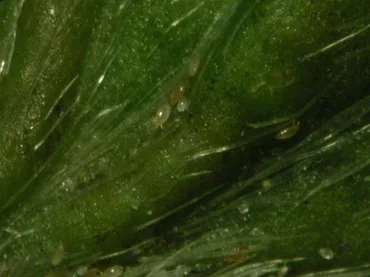
This pest attacks new growth and leaf undersides, causing distorted, stunted leaves and a dull, rough texture, often without visible insects.
Symptoms include tight, deformed crowns and leaves that fail to expand normally.
Solution
Isolate the plant, remove and discard the worst affected leaves, and increase air movement around the foliage.
Treat by thoroughly spraying all leaf surfaces, with a miticide labeled for cyclamen mites or with repeated applications of horticultural oil, keeping the plant out of direct sun.
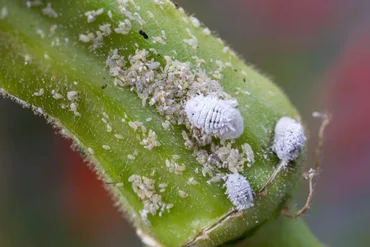
This pest feeds on plant sap and hides in leaf axils, stolons, and roots, leaving cottony white clusters and sticky honeydew.
Symptoms include slowed growth, distorted leaves, and sooty mold on the sugary residue.
Solution
Quarantine the plant, then dab visible mealybugs with cotton swabs dipped in 70% isopropyl alcohol and rinse the plant with lukewarm water.
Apply insecticidal soap or a systemic insecticide suitable for indoor ornamentals and repeat weekly, checking stolons, pot rims, and the root ball carefully.
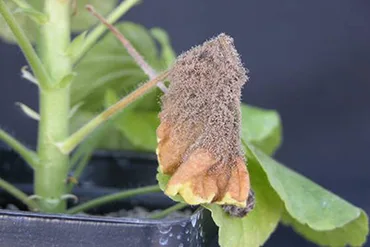
This disease favors cool, humid, low-light conditions and causes soft, water-soaked patches on leaves and flowers that develop gray, fuzzy mold.
Symptoms include mushy stolons and rapid collapse of affected tissues.
Solution
Promptly remove and discard all spotted or moldy plant parts and any fallen debris from the soil surface.
Improve air circulation, avoid water sitting on leaves, water earlier in the day, and if needed apply a fungicide labeled for Botrytis on ornamentals, keeping the foliage dry.
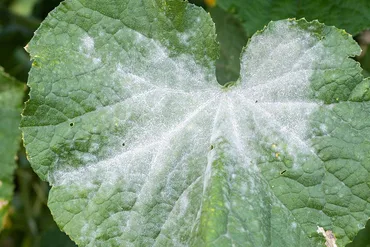
This disease appears as white or gray powdery patches on leaves and stems, often starting on older foliage in crowded or poorly ventilated conditions.
Symptoms include dulled leaf color, leaf curling, and gradual decline in vigor.
Solution
Increase air movement, reduce overcrowding, and avoid overhead watering that keeps foliage damp for long periods.
Remove heavily affected leaves and treat remaining foliage with a sulfur-based or potassium bicarbonate fungicide labeled for indoor ornamentals, repeating as directed.
The leaves often show a metallic, coppery sheen caused by specialized leaf cell structures that reflect and scatter light, rather than by pigments alone. This iridescence is especially noticeable under low, diffuse light, which mimics its native forest-floor habitat.
This species naturally creeps by producing thin, above-ground stolons that root at the nodes and form new rosettes. In the wild, this allows it to quickly carpet humid, shaded areas of tropical forest understory.
Wild populations in its native range show substantial variation in leaf color, patterning, and hairiness. Many cultivated varieties and hybrids trace back to this natural diversity rather than to heavy genetic modification.

Episcia cupreata belongs to the African violet family Gesneriaceae and has been used extensively in breeding programs to create a wide range of modern Episcia hybrids with elaborate foliage patterns and colors that are uncommon in most other houseplants.
Lack of blooms often comes from insufficient light, overly cool temperatures, or nutrient imbalance. Old, crowded stems also flower less. Regularly rejuvenate by taking tip cuttings and repotting. Balanced fertilizer at low strength supports repeat flowering.
Keep your plants happy and healthy with plant identification, disease detection, and easy care guidance.