Support trailing stems
Provide a hanging basket or a high shelf so stems can hang freely, which reduces mechanical damage to the brittle joints and keeps foliage dry and better aerated.

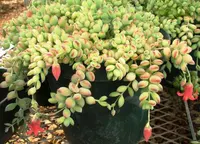
Cliff cotyledon (Cotyledon pendens) is a trailing succulent shrub valued for its hanging stems and fleshy, rounded leaves. It is often grown in hanging baskets or high shelves, where the stems can cascade down.
In its native habitat in South Africa, it grows on rocky cliffs and slopes, which explains its preference for bright light, good air flow, and very sharp drainage. The plant produces tubular, orange to red flowers that attract pollinators and add seasonal interest.
It is generally considered moderately easy to grow for those who avoid overwatering and provide strong light. Understanding how to care for Cliff Cotyledon mainly involves replicating its dry, sunny, rocky conditions with fast-draining soil and careful watering.

Care Difficulty
Moderate Care

Light Preference
Partial Sun

Water Requirements
Low Water

Temperature Preference
Tropical / Frost Sensitive

Hardiness Zone
10–11

Soil Texture
Sandy, Loamy, Rocky

Soil pH
Slightly acidic (6.5–7.0), Neutral (7.0)

Soil Drainage
Well-drained

Fertilization
Minimal (feed rarely)
Scan your plant to receive care tips personalized for your specific plant
Available on iOS and Android
This trailing succulent prefers bright, gentle light that mimics its native cliffside habitat.
This plant is drought-tolerant and prefers thorough but infrequent watering that allows the soil to dry between soakings.
This species prefers warm, dry conditions and has low tolerance for sustained cold or frost.
This succulent prefers dry air and does not need raised humidity.
This trailing succulent needs a very fast-draining, mineral-based medium to prevent root rot.
This species is well suited to container culture, especially hanging baskets that show off its trailing stems.
This succulent benefits from light feeding during active growth but does not need heavy fertilization for healthy development.
Pruning Cotyledon pendens is mainly about tidying the plant and maintaining a compact, cascading form.
This trailing succulent prefers slightly snug pots and only needs repotting when growth or roots clearly demand it.
New plants are most often produced from stem cuttings, which root reliably under warm, bright conditions.
This species is sensitive to hard frost and needs protection in climates with cold winters.

Plant Health Check
Not sure what's wrong with your plant? Check your plant's health inside the app.
This species is native to sheer rock faces in South Africa’s Eastern Cape, where it grows rooted in narrow crevices and hangs down the cliff, an adaptation that explains its strongly trailing habit in cultivation.
The leaves are covered with a fine layer of hairs called trichomes, which scatter intense sunlight and reduce water loss, helping the plant cope with bright, dry, exposed cliff conditions.
In its home range it typically flowers from late summer into autumn, producing clusters of hanging, bell-shaped orange to coral flowers that are adapted for pollination by local insects attracted to both color and nectar.

In habitat, this plant often grows with its roots wedged so firmly into tiny rock fissures that the main stems dangle freely in the air for long distances, allowing the plant to form dramatic, curtain-like cascades down vertical cliff faces.
Brown leaf tips or patches usually come from underwatering, sun scorch, or fertilizer salts building up. Check for very dry mix, harsh midday sun, or crusted soil, then adjust watering and gently flush the potting medium.
Keep your plants happy and healthy with plant identification, disease detection, and easy care guidance.