


Contain Spreading Habit
Keep this plant in a pot with a solid bottom and avoid placing it directly over garden soil or mulch, since the tiny plantlets drop and root easily and can become invasive outdoors when growing Chandelier plant.


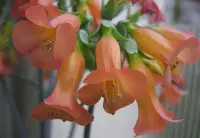
The chandelier plant, Kalanchoe delagoensis, is a succulent from Madagascar known for its tall, narrow stems and rows of slender, tubular leaves. Small plantlets often form along the leaf edges and drop to root easily, which helps the plant spread quickly in suitable conditions.
This species has an upright, architectural look and can become quite tall indoors with enough light. It prefers bright, indirect sun, sparse watering, and very well-draining soil.
Kalanchoe delagoensis is generally considered a low-maintenance plant, but its rapid self-propagation means it can become invasive in warm climates. Understanding how to care for Chandelier plant helps keep it healthy and controlled, especially in containers or indoor spaces.

Care Difficulty
Easy Care

Light Preference
Full Sun

Water Requirements
Low Water

Temperature Preference
Tropical / Frost Sensitive

Hardiness Zone
10–12

Soil Texture
Sandy, Loamy, Rocky

Soil pH
Acidic (5.5–6.5), Slightly acidic (6.5–7.0)

Soil Drainage
Well-drained

Fertilization
Minimal (feed rarely)
Scan your plant to receive care tips personalized for your specific plant
Available on iOS and Android
This succulent, along with its colleague Kalanchoe blossfeldiana, prefers bright, strong light but benefits from some protection at the hottest times of day.
This species is drought-tolerant and prefers infrequent, deep watering rather than frequent light drinks.
This succulent prefers warm, stable temperatures and is sensitive to frost.
This species, like most succulents, including Kalanchoe gastonis-bonnieri, handles typical indoor humidity well, so humidity is rarely a limiting factor.
This succulent needs a very fast-draining, mineral-based mix to prevent root rot.
This species is well suited to container growing due to its compact root system and upright stems.
Kalanchoe delagoensis has modest nutrient needs but responds well to light, controlled feeding in active growth.
Kalanchoe delagoensis benefits from periodic pruning to control height and maintain a compact, tidy form.
This species tolerates slightly tight pots and usually needs repotting only when clearly root bound.
Kalanchoe delagoensis is commonly propagated from plantlets and stem cuttings, which root fast in warm, dry conditions.
This succulent is frost sensitive and needs protection in regions with cold winters.

Plant Health Check
Not sure what's wrong with your plant? Check your plant's health inside the app.
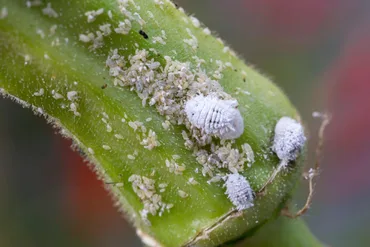
This pest forms white, cotton-like clusters in leaf axils, on young stems, and sometimes along the roots, feeding on plant sap and weakening growth.
Symptoms include sticky honeydew and sooty mold on leaves below infestations.
Solution
Isolate the plant, then dab visible insects with cotton swabs dipped in 70% isopropyl alcohol and gently wipe affected areas.
Repeat every 5–7 days until no new insects appear, and combine with a light neem oil or insecticidal soap spray.
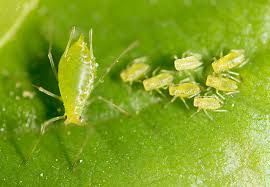
These insects gather on soft new growth and flower stalks, sucking sap and causing distortion, curling, and sticky honeydew that can attract ants.
Heavy infestations can stunt stems and reduce vigor, especially in young plants.
Solution
Rinse infested shoots under a strong but controlled stream of water to dislodge insects, then treat remaining colonies with insecticidal soap.
Repeat treatments every few days as needed and remove heavily infested shoot tips to reduce population pressure.
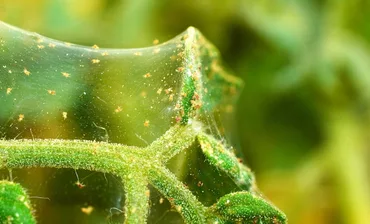
This pest is common in hot, dry indoor conditions and causes fine stippling, dull leaves, and delicate webbing between leaves and stems.
Symptoms include slowed growth and a dry, rough texture on older foliage.
Solution
Increase humidity around the plant, then rinse foliage thoroughly with lukewarm water, focusing on leaf undersides.
Follow with repeated applications of insecticidal soap or a light horticultural oil at 5–7 day intervals, and avoid placing the plant in very dry air.
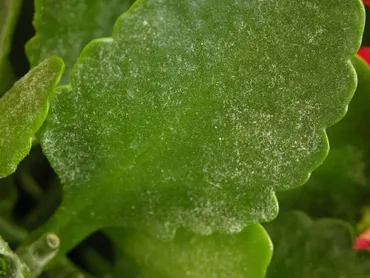
This disease produces white, powdery patches on leaves and stems, often starting on crowded or shaded parts of the plant.
Symptoms include distorted new growth and reduced vigor if coverage becomes extensive.
Solution
Remove and discard heavily affected leaves, then improve spacing, ventilation, and light levels around the plant.
If needed, apply a sulfur-based or potassium bicarbonate fungicide labeled for ornamentals.
This species produces rows of tiny clonal plantlets along its narrow leaf margins, each already equipped with small roots and leaves, allowing the plant to spread vegetatively with high efficiency when plantlets drop and root in nearby soil.
It uses crassulacean acid metabolism (CAM), a photosynthetic pathway where stomata open mainly at night to reduce water loss, which helps the plant survive in hot, arid or seasonally dry habitats.
In warm regions such as parts of Australia, Hawaii, and Florida, escaped garden plants have formed dense stands that outcompete native vegetation, leading to this species being listed and managed as an invasive weed in several jurisdictions.

Some populations of this species contain cardiac glycosides, a group of toxic compounds that can interfere with heart function, and have been linked to livestock poisonings when animals graze in heavily infested pastures.
Leggy, stretched stems usually result from insufficient light and lack of pruning. The plant elongates between leaf nodes to reach light. Provide brighter conditions and regularly pinch or cut back tall shoots to encourage branching and denser growth.
Keep your plants happy and healthy with plant identification, disease detection, and easy care guidance.

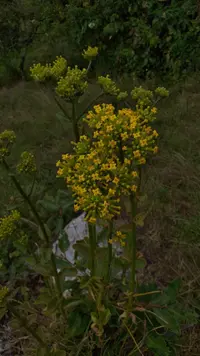
Kalanchoe densiflora
Kalanchoe densiflora
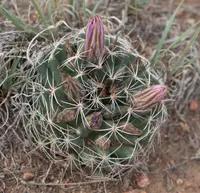
Cochemiea wrightii
Cochemiea wrightii
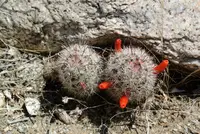
common fishhook cactus
Cochemiea tetrancistra
Cochemiea armillata
Cochemiea armillata
donkey ears
Kalanchoe gastonis-bonnieri
 POPULAR
Paddle plant
Kalanchoe luciae
elephantear pricklypear
Opuntia tuna
 POPULAR
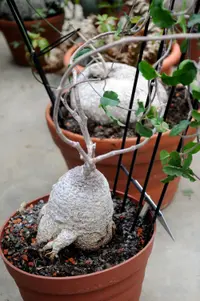
Hottentot Bread
Fockea edulis