Veld Grape Care (Cissus quadrangularis)

Also known as: Single-stemmed Wild Grape

About Veld Grape

Veld grape, Cissus quadrangularis, is a succulent vine in the grape family, grown mainly for its thick, jointed green stems rather than its foliage. It has a climbing or trailing habit and is often used in hanging baskets, tall pots, or trained on small supports indoors. This species is native to arid and semi-arid regions of Africa and parts of Asia, which explains its strong drought tolerance and preference for warmth. Its ability to store water in the stems and cope with poor soils makes it relatively forgiving for beginners who want to learn how to care for Veld Grape.

Main Plant Requirements

Care Difficulty

Easy Care

Light Preference

Full Sun

Water Requirements

Low Water

Temperature Preference

Tropical / Frost Sensitive

Hardiness Zone

10–11

Soil Texture

Sandy, Loamy, Rocky

Soil pH

Acidic (5.5–6.5), Slightly acidic (6.5–7.0)

Soil Drainage

Well-drained

Fertilization

Minimal (feed rarely)

Get Personalized Care Plan

Scan your plant to receive care tips personalized for your specific plant

Personalized Care in the App

Available on iOS and Android

How to Care for the Veld Grape

Cissus quadrangularis thrives in bright, warm conditions with protection from harsh midday sun.

  • Provide 4–6 hours of direct morning sun with light shade or filtered light during intense afternoon hours, especially in hot climates.
  • Plant in a position that receives bright, indirect light for the rest of the day; Veld Grape tolerates light partial shade but will grow more slowly.
  • Watch leaves for stress: pale, scorched, or crispy edges indicate excess sun, while thin, stretched stems and small leaves suggest insufficient light, especially in winter.

This succulent vine prefers infrequent, deep watering and fast-draining soil.

  • Allow the top 3–5 cm of soil to dry before watering again; in warm growing seasons this may mean watering after the foliage begins to look slightly less turgid.
  • Use a gritty, sharply draining mix so water runs through quickly; prolonged soggy soil around Cissus quadrangularis roots leads to yellowing leaves and stem rot.
  • In cooler months, extend the interval between waterings and watch for shriveling stems as a sign of underwatering, versus soft, mushy segments as a sign of overwatering.

This species favors warm, frost-free conditions throughout the growing season.

  • Aim for 70–90°F (21–32°C) for strongest growth; short spikes to 95°F (35°C) are tolerated if soil is not waterlogged and roots have some shade.
  • Protect the plant from temperatures below 50°F (10°C); growth slows sharply under this level and tissue damage can occur near 40°F (4°C).
  • Never expose it to frost, as freezing rapidly kills stems; in regions with cold winters, shift plants to a sheltered, dry spot before night temperatures drop toward 50°F (10°C).

This succulent vine tolerates a wide humidity range and usually does not need special humidity control indoors.

  • Ideal humidity is around 30–50%, similar to average indoor conditions in many homes.
  • Tolerates dry air well; only very prolonged air below 20% may cause tip browning or leaf edge crisping.
  • If air is very dry, group plants together or place the pot on a pebble tray with water to slightly raise local humidity.

Cissus quadrangularis prefers a fast-draining, slightly gritty substrate that mimics dry, rocky habitats.

  • Use a cactus or succulent mix amended with 20–30% extra coarse sand or perlite to increase drainage and aeration.
  • Aim for a slightly acidic to neutral pH of about 6.0–7.0, avoiding very alkaline or strongly acidic substrates.
  • Include a small proportion of organic matter such as composted bark or coconut coir to retain some moisture without becoming waterlogged.
  • Avoid dense, clay-heavy, or peat-heavy mixes that stay wet for long periods, as these promote root rot and weak growth.

This species is well suited to container growing when the pot supports its vining, succulent stems and fast drainage.

  • Choose a wide, low container or a stable heavy pot so the top-heavy, climbing stems do not tip the plant over.
  • Select terracotta or other porous materials if moisture tends to linger, as these allow faster evaporation and reduce rot risk.
  • Provide a pot deep enough for a modest but spreading root system, leaving extra surface area for a support trellis or stakes.

Cissus quadrangularis benefits from modest, controlled feeding during its active growing season.

  • Use a balanced liquid fertilizer (for example 10-10-10) at 1/4–1/2 strength every 4–6 weeks in spring and summer.
  • Alternatively, apply a light layer of well-rotted compost or a low-dose slow-release fertilizer at the start of the growing season.
  • Ensure soil is moist, not dry, before feeding to prevent root burn and salt buildup in the potting mix.
  • Stop feeding Veld Grape in late fall and through winter when growth slows or pauses.

Pruning supports compact growth and keeps Cissus quadrangularis vines manageable and healthy.

  • Best time for pruning is late winter to early spring, just before active growth resumes.
  • Remove dead, damaged, or diseased stems first, then thin crowded or tangled vines to improve light and airflow.
  • Shorten overly long stems to shape the plant and encourage branching from lower nodes.
  • Use clean, sharp scissors or pruners, disinfecting blades before and after work to reduce disease spread.

Container-grown Cissus quadrangularis benefits from occasional repotting to maintain root health and growth.

  • Plan to repot every 2–3 years in spring when roots circle the pot, growth slows, or water drains very quickly.
  • Choose a pot 2–5 cm wider with drainage holes and use a fast-draining, gritty mix suited to succulent-type vines.
  • Gently loosen circling roots, trim damaged sections, and avoid breaking thick, fleshy roots as this increases stress.
  • Water lightly after repotting, keep in bright but indirect light for 5–7 days, and resume normal watering once growth appears steady.

Cissus quadrangularis is most commonly propagated from stem cuttings taken during warm, active growth.

  • Take 8–12 cm segment cuttings in late spring or summer, each with 2–3 nodes and at least one healthy jointed section.
  • Allow cut ends to dry for a few hours, then place in a very well-drained mix of coarse sand and potting soil.
  • Keep the medium just slightly moist, provide bright indirect light, and maintain warm temperatures around 70–80°F.
  • Rooting usually occurs within several weeks; transplant rooted cuttings into individual pots once new growth is visible.

This warm-climate succulent vine is sensitive to frost and needs protection in cooler regions.

  • Keep plants above 50°F; prolonged exposure below this can damage stems and roots.
  • In cold climates, grow in containers and move indoors to a bright, cool room before the first frost.
  • Reduce watering in winter, letting the mix dry more between waterings to prevent rot in slower, semi-dormant roots.
  • In mild climates where light frosts occur, a dry, gritty soil and a light mulch over the root zone help buffer temperature swings.

Care Tips

Segment support training

Tie young, square stems loosely to a stake or trellis with soft horticultural ties so each joint is supported and segments do not snap under their own weight as they elongate and thicken.

Controlled stem propagation

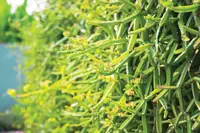
When pruning, select 8–12 cm firm but still green stem sections with at least 2 nodes, allow the cut ends to dry for 24 hours, then insert them upright into a coarse, barely moist medium to root new plants with minimal rot risk.

Winter growth slowdown

In cooler months, allow the plant to become slightly root-bound and avoid repotting so the reduced root disturbance matches the natural slowdown in top growth and helps prevent stem dieback.

Calcium‑friendly pot choice

Use terracotta or other mineral-based pots with good drainage, as these containers buffer moisture and can help keep the slightly alkaline conditions that this species typically tolerates well.

Preventing stem rot

Keep thick, lower stems slightly elevated above the soil surface using a top layer of coarse grit or small stones so that water drains away from the joints and the plant is less prone to fungal rot at the base when caring for Veld Grape.

Common Pests and Diseases

Mealybugs

This pest forms white, cotton-like clusters on stems and joints, feeding on sap and causing weak, stunted growth. Symptoms include sticky honeydew and sooty mold on nearby surfaces.

Solution

Isolate the plant, then dab visible insects with cotton swabs dipped in 70% isopropyl alcohol and wipe down affected stems. Repeat every 5–7 days and, if populations persist, use a neem oil or insecticidal soap spray, ensuring thorough coverage of stems and leaf nodes.

Scale insects

These insects appear as small, brown or tan bumps on the square stems and nodes, often blending with the plant surface. This pest removes sap, causing yellowing, reduced vigor, and occasional stem dieback.

Solution

Gently scrape or rub off individual scales with a fingernail or soft cloth, then treat the plant with insecticidal soap or horticultural oil, focusing on stems and joints. Repeat treatments every 7–10 days until new growth appears clean and monitor regularly, especially on indoor plants with low air movement.

Spider mites

This pest thrives in hot, dry conditions and may cause pale stippling on stems and reduced vigor, with fine webbing in tight joints. Symptoms include dull, dusty-looking surfaces and slow growth over time.

Solution

Increase humidity around the plant, then rinse stems thoroughly under a gentle stream of water to dislodge mites. Follow with a neem oil or insecticidal soap spray on all stem surfaces, repeating every 5–7 days until no webbing or new damage is visible.

Stem canker

This disease produces localized sunken, dark patches on the fleshy square stems that may crack or ooze slightly, leading to shriveled segments above the lesion. Symptoms include sudden collapse of individual stem sections while the rest of the plant appears healthy.

Solution

Cut out and discard affected stem sections well below the visible lesion with a sterile knife or pruners, then allow cuts to dry in bright, indirect light. Reduce watering slightly, improve airflow, and avoid splashing water on stems; in severe or recurring cases, apply a copper-based fungicide to remaining healthy tissue according to label directions.

Leaf spot

This disease causes small, water-soaked or brown lesions on any foliage or flattened stem ridges when present, often appearing after prolonged humidity or overhead watering. Symptoms include scattered spots that may coalesce, leading to tissue thinning or partial dieback.

Solution

Remove and discard affected leaves or stem sections and provide better airflow by spacing plants and avoiding overhead watering. Allow surface media to dry slightly between waterings and, if spots continue to spread, use a broad-spectrum fungicide labeled for leaf spot diseases, applying evenly to all green tissue.

Interesting Facts

Jointed stem adaptation

This species has thick, 4-angled, segmented stems that act as the main water-storage tissue, an adaptation to survive long dry periods in its native arid and semi-arid habitats.

Climbing by tendrils

It climbs using simple tendrils that grow opposite the leaves, allowing the plant to anchor itself on shrubs or rocks while the heavy, succulent stems remain supported and exposed to sunlight.

Traditional food use

In parts of India and Africa, the young, tender shoots and stems are traditionally cooked and eaten as a vegetable, reflecting its long history of use beyond ornament and medicine.

Botan icon

Did you know?

Cissus quadrangularis is frequently used as a model plant in biomechanical research on succulents because its stem geometry and internal structure make it useful for studying how plants balance water storage with mechanical strength.

FAQs about Veld Grape

Brown leaf edges or patches usually come from underwatering, very low humidity, or salt buildup from fertilizer. Check soil moisture, flush the pot occasionally, and avoid placing this plant directly next to heaters or cold drafts.

Grow Healthy Plants with Botan Care

Keep your plants happy and healthy with plant identification, disease detection, and easy care guidance.

Botan plant care app — identify plants on mobile

Explore More Plants