Сreeping myrtle Care (Vinca minor)

Also known as: Common Periwinkle, periwinkle, dwarf periwinkle, small periwinkle, creeping myrtle, running-myrtle

About Сreeping myrtle

Creeping myrtle (Vinca minor) is a low-growing, evergreen groundcover often used to form dense, green carpets under trees and along borders. It spreads by trailing stems that root as they touch the soil, creating a uniform mat of glossy, oval leaves.

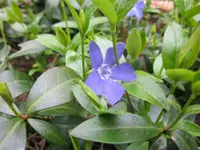
In spring, it produces small, star-like blue, purple, or white flowers that sit just above the foliage. Native to parts of Europe and western Asia, it has naturalized widely in temperate regions.

This plant is generally easy to grow, adapting to partial shade and a range of soils, as long as drainage is good. Those planning to care for Сreeping myrtle should note its vigorous growth, which can become invasive in mild, moist climates.

Main Plant Requirements

Care Difficulty

Easy Care

Light Preference

Partial Shade

Water Requirements

Moderate Water

Temperature Preference

Cold Hardy

Hardiness Zone

4–9

Soil Texture

Sandy, Loamy, Clay

Soil pH

Acidic (5.5–6.5), Slightly acidic (6.5–7.0)

Soil Drainage

Moist but well-drained

Fertilization

Minimal (feed rarely)

Get Personalized Care Plan

Scan your plant to receive care tips personalized for your specific plant

Personalized Care in the App

Available on iOS and Android

How to Care for the Сreeping myrtle

Vinca minor grows best with moderate light that mimics dappled woodland conditions.

  • Provide 3–6 hours of sun daily, ideally morning sun with afternoon shade, or bright dappled light under open trees.
  • Plant Сreeping myrtle where it receives partial shade; dense deep shade reduces flowering and causes sparse, weak growth over time.
  • Avoid hot, direct afternoon sun in summer, which can scorch foliage and dry the soil quickly, especially on south- or west-facing slopes.

Vinca minor prefers evenly moist but not waterlogged soil once established.

  • Water when the top 3–5 cm of soil feels dry, then soak the root zone thoroughly and allow excess moisture to drain away.
  • During the first growing season, monitor closely after planting; in hot, dry weather, expect to water more often, but reduce frequency in cool or rainy periods.
  • Watch leaves for signals: wilting and dry soil indicate underwatering, while yellowing, limp stems, and soggy soil suggest overwatering or poor drainage.

This groundcover tolerates a wide temperature range but grows fastest in mild conditions.

  • Optimal growth occurs around 60–75°F (16–24°C), with steady spring and early-summer temperatures promoting dense foliage and flowering.
  • Plants survive winter cold down to about -20°F (-29°C) in many regions, though foliage may brown or die back in severe freezes and recover from roots in spring.
  • In summer, growth may slow above 85°F (29°C); provide soil mulch and some afternoon shade to protect roots and prevent heat stress.

Humidity is rarely critical for Vinca minor, which adapts well to typical indoor and outdoor air levels.

  • Ideal humidity is around 30–60%, similar to most heated or air-conditioned homes.
  • The plant tolerates drier air, but very hot, dry drafts can cause leaf edges to crisp or yellow.
  • If Сreeping myrtle shows leaf curl or browning tips, lightly mist foliage or place the pot on a pebble tray to slightly raise humidity.

Vinca minor prefers loose, well-draining mineral-organic soil that stays evenly moist but not waterlogged.

  • Use a loamy mix made from 2 parts all-purpose potting mix, 1 part compost, and 1 part coarse sand or fine bark for structure.
  • Aim for slightly acidic to neutral pH, roughly 6.0–7.0, which supports healthy nutrient uptake and dense foliage.
  • Improve aeration and drainage by incorporating perlite or small bark pieces, especially for containers or heavier native soils.
  • Avoid compacted clay, chronically waterlogged spots, or pure sand that dries out too fast and weakens the root system.

This species suits container growing and trailing displays on patios, balconies, or steps.

  • Choose a wide, shallow pot that allows stems to spread while preventing overly deep, soggy soil around the roots.
  • Select a heavier material like ceramic or clay if outdoor winds might lift or tip lightweight plastic containers.
  • Raise the container slightly on pot feet or bricks so drainage holes stay clear and excess water exits quickly after rain or watering.

Vinca minor grows well in average soil and benefits from modest feeding rather than heavy fertilization.

  • Apply a balanced, slow-release fertilizer (for example 10-10-10) lightly in early spring as new growth begins.
  • During the growing season, one additional light feeding or a thin layer of compost is usually enough for Сreeping myrtle.
  • Use fertilizers at 1/2–1/4 the label strength to avoid excessive leafy growth and salt buildup.
  • Stop feeding in late summer and do not fertilize during winter dormancy.

Vinca minor responds well to light pruning that keeps the mat dense and within bounds.

  • Shear or trim in late spring after the main flush of flowers to tidy and control spread.
  • Remove dead, damaged, or weak stems with clean hand pruners to reduce disease risk.
  • Thin crowded areas by cutting some runners back to their origin to improve air flow.
  • Light trimming encourages fresh, compact growth and can improve flowering the following season.

This groundcover is more often transplanted in beds than repotted, but container plants may need attention over time.

  • Check containers every 2–3 years; crowded roots, slow growth, or roots circling the pot indicate a need for repotting.
  • Transplant or repot Vinca minor in early spring or early fall when temperatures are mild and soil is workable.
  • Lift plants with as much root ball as possible, keep roots shaded and moist, and replant at the same depth.
  • Water thoroughly after transplanting and keep soil evenly moist for 1–2 weeks to limit transplant shock.

Vinca minor is commonly propagated to expand groundcover areas or replace thin patches.

  • Take 7–10 cm softwood or semi-ripe stem cuttings in late spring to summer and root in moist, well-drained medium.
  • Use division in early spring or early fall, separating rooted sections and replanting them immediately.
  • Encourage natural layering by pegging down long runners so buried nodes root into the soil, then sever and transplant.
  • Seeds are less common; if used, sow in spring in a loose seed mix and keep consistently moist until germination.

This species is cold hardy and usually needs minimal winter care once established in the ground.

  • In colder regions, apply a 3–5 cm layer of mulch around the root zone to reduce freeze–thaw stress.
  • Container-grown Vinca minor benefits from moving into an unheated garage or sheltered area in very cold climates.
  • Avoid heavy foot traffic on frozen plants to prevent stem breakage and winter injury.

Care Tips

Edge Containment

Install a shallow physical barrier 10–15 cm deep along beds and paths to stop stolons from rooting beyond their area and to keep the groundcover in a defined shape.

Layering For Fill-In

Pin down long, healthy stems with small landscape staples and cover the nodes lightly with soil to encourage fast rooting and fill bare patches more evenly.

Weed Suppression Timing

Hand-weed and mulch lightly before spring growth begins so new shoots can quickly cover the soil surface and outcompete emerging weeds with less ongoing maintenance.

Salt And Footpath Protection

Keep plants at least 15–20 cm back from salted winter walkways and driveways, or use edging stones, since repeated salt exposure can burn foliage and thin out the mat over time.

Targeted Pest Monitoring

Inspect foliage at ground level several times in spring and early summer for chewing damage or discolored patches so any emerging pest or foliar disease can be treated early when caring for Сreeping myrtle.

Common Pests and Diseases

Leaf spot

This disease causes brown to black circular or irregular spots on leaves, often with a purple or dark margin, and can lead to premature leaf drop in dense groundcover patches.

Solution

Remove and discard heavily spotted leaves and any fallen debris, then thin or trim the mat to improve airflow and allow foliage to dry faster. Avoid overhead watering, irrigate early in the day, and if the problem is persistent, use a labeled ornamental fungicide according to the product directions as part of broader Vinca minor care instructions.

Blight

This disease leads to sudden wilting, blackened stems, and dieback of shoots, especially in areas that stay wet or crowded.

Solution

Prune and dispose of all blighted stems well below the damaged area, disinfecting tools between cuts. Reduce irrigation, increase spacing or thin the planting, and apply a suitable ornamental fungicide during wet periods if blight recurs regularly.

Stem canker

This disease produces sunken, dark lesions on stems that can girdle shoots, causing sections of the mat to yellow and collapse.

Solution

Cut out and discard affected stems and surrounding material to reduce inoculum, then improve drainage and airflow by thinning dense growth. Avoid wounding stems, keep mulch thin around crowns, and consider a preventative fungicide drench in sites with a history of canker problems.

Aphids

These insects cluster on tender shoots and undersides of leaves, sucking sap and causing curling, distortion, and sticky honeydew that can lead to sooty mold.

Solution

Rinse colonies off with a firm stream of water and pinch back heavily infested shoot tips. Encourage natural predators such as lady beetles and, if needed, use insecticidal soap or a horticultural oil, ensuring thorough coverage of new growth and leaf undersides.

Two-spotted spider mites

This pest feeds on leaf undersides, causing fine stippling, a dull grayish or bronzed appearance, and sometimes delicate webbing between stems in hot, dry conditions.

Solution

Spray foliage thoroughly with water to knock mites off and raise local humidity, and remove any heavily damaged sections. For ongoing issues, apply insecticidal soap or a labeled miticidal horticultural oil to both upper and lower leaf surfaces, repeating as directed until new growth appears clean.

Interesting Facts

Evergreen subshrub habit

This species is not just a vine; it is a low, woody, evergreen subshrub that spreads by trailing stems which can root at the nodes and form dense, long-lived mats.

Shade-adapted leaves

Its thick, glossy leaves have a tough cuticle that reduces water loss and allows the plant to photosynthesize efficiently in relatively deep shade, even under conifers and dense shrubs.

Naturalized across continents

Originally native to central and southern Europe, it has widely naturalized in parts of North America and other temperate regions, where it can escape cultivation and form persistent ground-cover colonies.

Botan icon

Did you know?

Historical records show that this species was cultivated in European monastery and cottage gardens for centuries, valued as a long-lived evergreen ground cover around graves and along paths, which is why it is still often found near very old settlements and churchyards today.

FAQs about Сreeping myrtle

This species spreads by trailing stems that root where they touch soil, forming dense mats. In mild, moist climates it can become aggressive, so use edging, mulch borders, or contained beds to prevent unwanted spread when growing Сreeping myrtle.

Grow Healthy Plants with Botan Care

Keep your plants happy and healthy with plant identification, disease detection, and easy care guidance.

Botan plant care app — identify plants on mobile

Explore More Plants