Watermelon Dischidia Care (Dischidia ovata)

About Watermelon Dischidia

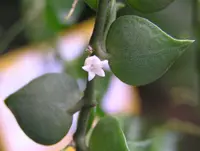
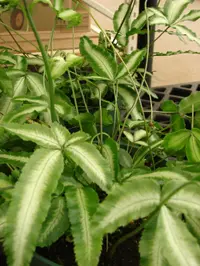
Watermelon Dischidia (Dischidia ovata) is a small trailing epiphyte, often grown in hanging baskets or mounted displays. It naturally clings to trees in humid forests of Southeast Asia. The plant is known for its oval, green leaves with pale stripes that resemble watermelon rind, giving it strong ornamental value even without flowers. Stems tend to form cascading, layered curtains, which makes it suitable for small spaces and shelves. It is generally considered moderate in difficulty, as it prefers bright, filtered light, regular light moisture, and a very airy potting mix. Understanding how to care for Watermelon Dischidia starts with treating it more like an epiphytic plant than a typical houseplant in soil.

Main Plant Requirements

Care Difficulty

Moderate Care

Light Preference

Bright Indirect Light

Water Requirements

Moderate Water

Temperature Preference

Tropical / Frost Sensitive

Hardiness Zone

11–12

Soil Texture

Sandy, Loamy, Organic-rich

Soil pH

Acidic (5.5–6.5), Slightly acidic (6.5–7.0)

Soil Drainage

Well-drained

Fertilization

Light (every 4–6 weeks)

Get Personalized Care Plan

Scan your plant to receive care tips personalized for your specific plant

Personalized Care in the App

Available on iOS and Android

How to Care for the Watermelon Dischidia

This vining epiphyte prefers bright but softened light to keep its foliage compact and well colored.

  • Provide 6–8 hours of bright, indirect light each day; gentle morning sun is suitable, but shield from strong midday and afternoon rays.
  • Tolerates partial shade, yet very low light causes stretched, sparse vines and dull leaf markings on Watermelon Dischidia.
  • Outdoors, place under a tree canopy, shade cloth, or a bright porch; in stronger summer sun increase distance from windows or add sheer curtains to prevent leaf scorch.

This species prefers light, consistent moisture with brief drying between waterings.

  • Allow the top 2–3 cm of the mix to dry before watering; in warm active growth this may mean watering once every few days, in cooler seasons far less often.
  • Use a very free-draining, airy medium and water thoroughly until excess drains away, then empty saucers to prevent root rot and sour-smelling mix.
  • Watch the foliage: soft, yellowing leaves and blackened stems suggest overwatering, while thin, wrinkled leaves and very light pots point to underwatering.

This plant favors warm, stable conditions similar to a tropical understory.

  • Aim for 65–80°F (18–27°C) for steady growth; short peaks to 85°F (29°C) are tolerated if humidity is higher and air movement is gentle.
  • Protect from cold; growth slows below 60°F (16°C) and sustained exposure under 50°F (10°C) can damage foliage and roots.
  • Never expose to frost or cold drafts from open windows; in hot summers, keep out of reflected heat and away from hot walls or metal surfaces that can overheat the roots.

This species prefers moderately high humidity and benefits from stable moisture in the air.

  • Aim for 50–70% humidity, as Watermelon Dischidia naturally grows in humid forest conditions.
  • It tolerates brief dips to 30–40%, but prolonged very dry air can slow growth and cause leaf edge browning or shriveling.
  • Increase humidity with a nearby humidifier, grouped plants, or a pebble tray, rather than misting that keeps leaves wet for long.

Dischidia ovata grows best in a light, airy, fast-draining mix similar to epiphytic houseplants.

  • Use a mix of roughly 40% fine orchid bark, 30% perlite or pumice, and 30% peat moss or coco coir for structure and moisture balance.
  • Ensure the mix feels springy and open so roots receive air; compact or heavy substrates increase the risk of rot.
  • A slightly acidic to neutral pH around 6.0–7.0 is suitable and usually achieved by typical peat- or coir-based components.
  • Avoid dense garden soil, clay-heavy mixes, or those that stay wet for more than 2–3 days after watering.

This species is well suited to container growing, including hanging pots and wall-mounted planters.

  • Choose a shallow to medium-depth pot that allows roots to spread without leaving a large unused soil volume that stays wet.
  • Use a pot with multiple drainage holes so the airy mix sheds excess water quickly after each watering.
  • Select a lightweight plastic pot for slower drying or an unglazed terracotta pot if extra evaporation is needed in very humid or cool rooms.

Dischidia ovata benefits from light, controlled feeding during its active growing season.

  • Use a balanced liquid fertilizer (for example 10-10-10 or 20-20-20) diluted to 1/4–1/2 strength for Watermelon Dischidia.
  • Feed every 4–6 weeks in spring and summer when growth is active.
  • Avoid compost-heavy mixes; instead, use a low-salt product suited to epiphytic or succulent plants.
  • Stop feeding in fall and winter, or reduce to once in the season if growth continues under warm, bright indoor conditions.

Pruning Dischidia ovata is useful to control length and keep vines dense and healthy.

  • Best time to prune is late winter to early spring before strong new growth starts.
  • Remove dead, damaged, or overly tangled stems first to maintain plant health.
  • Shorten excessively long vines to encourage branching and a fuller hanging basket shape.
  • Use clean, sharp scissors or small pruners, cutting just above a node to minimize tissue damage.

Dischidia ovata prefers slightly snug containers and only occasional repotting.

  • Plan to repot every 2–3 years in spring when roots circle the pot or growth slows despite good care.
  • Choose a shallow container with drainage and a very airy mix, such as orchid bark with some perlite and a little peat or coco coir.
  • Gently loosen congested roots and trim any dead portions, avoiding heavy disturbance of healthy roots.
  • After repotting, water lightly, keep in bright indirect light, and avoid strong sun or heavy feeding for 1–2 weeks to limit stress.

Dischidia ovata is most commonly propagated from stem cuttings taken during the warm growing season.

  • Take 7–10 cm cuttings in late spring or summer, including 2–3 nodes, and remove lower leaves.
  • Root cuttings in moist, airy mix or sphagnum moss under bright, indirect light and 70–80°F temperatures.
  • Maintain high humidity around cuttings using a vented plastic cover while allowing some air exchange.
  • After roots develop, gradually reduce humidity, then pot into a free-draining mix and resume normal watering.

Dischidia ovata is not frost hardy and needs indoor protection in regions with cold winters.

  • Keep indoor temperatures around 60–80°F and avoid spots below 55°F.
  • Move outdoor containers indoors before night temperatures drop near 50°F.
  • Place in bright, indirect light and reduce watering, allowing the mix to dry more between waterings.
  • Avoid cold drafts and keep foliage away from icy window glass to prevent tissue damage.

Care Tips

Branch tip pinching

Pinch or snip 0.5–1 in from the ends of active vines a few times a year to encourage denser side-branching instead of long, sparse runners.

Soft trellis training

Guide young, flexible vines onto a small trellis, hoop, or hanging frame using soft ties or clips, checking every 1–2 months so stems do not girdle or cut into the support.

Root-zone aeration

Once or twice a year, gently loosen the top 1–2 in of potting mix with a clean chopstick to improve airflow around the fine roots without breaking the main root mass.

Targeted pest checks

Inspect the undersides of leaves, stem joints, and along the pot rim every 2–3 weeks for early signs of mealybugs or scale, and isolate the plant promptly if pests are found to keep caring for Watermelon Dischidia manageable.

Seasonal resting phase

In late fall and winter, reduce handling and avoid repotting or heavy pruning so the plant can maintain energy reserves and resume stronger growth when light levels increase.

Common Pests and Diseases

Mealybugs

This pest often hides in leaf joints and along stems, feeding on sap and causing yellowing, distortion, and sticky honeydew on foliage. Symptoms include slowed growth and a general decline in vigor, especially on dense hanging vines.

Solution

Isolate the plant, then dab visible insects with cotton swabs dipped in 70% isopropyl alcohol and gently wipe leaf undersides and nodes. Repeat weekly until no new insects appear and improve air movement around the plant; for heavier infestations, use a neem oil or insecticidal soap spray labeled for indoor succulents and epiphytes.

Scale insects

These insects appear as small, dome-shaped bumps along stems and leaf veins, often blending with the plant’s reddish or green tissue. This pest sucks sap, leading to pale leaves, sticky residue, and sooty mold growth on the honeydew they excrete.

Solution

Gently scrape or lift off individual scales with a fingernail or soft tool, then wipe stems and leaves with a cloth lightly moistened with diluted alcohol. Follow up with 2–3 applications of insecticidal soap or neem oil at 7–10 day intervals and keep the plant slightly drier and better ventilated during treatment.

Spider mites

These insects favor the relatively thin, succulent leaves of this species in warm, dry indoor air and can cause tiny pale speckles, dull foliage, and fine webbing between leaves and stems. Symptoms include a dusty look to the plant and leaf drop if left untreated.

Solution

Rinse the plant thoroughly under a gentle shower or sink spray, focusing on leaf undersides, then allow it to dry in bright, indirect light. Maintain higher humidity, avoid hot dry drafts, and use repeated applications of insecticidal soap or a miticide labeled for indoor use if webbing or stippling continues.

Fungal leaf spots

This disease develops as small brown or black spots with possible yellow halos on leaves, often triggered by prolonged surface moisture in warm conditions. Symptoms include spotting that may merge into larger blotches and premature leaf drop on older stems.

Solution

Remove and discard affected leaves, avoid wetting foliage when watering, and increase air circulation around hanging baskets or mounted plants. If spotting continues, apply a copper-based or other suitable fungicide labeled for ornamental houseplants, following the label carefully and spacing waterings so the substrate dries slightly between them.

Edema

Symptoms include small corky bumps or blisters on the leaf surface caused by the plant taking up water faster than it can transpire, which is common in Dischidia ovata under cool, very wet conditions. This is a physiological disorder, not an infection, but damaged tissue does not revert to normal.

Solution

Allow the substrate to dry more between waterings, avoid sudden overwatering after a dry spell, and keep the plant in stable, warm conditions with good air movement. Remove only the most damaged leaves for appearance and adjust the watering pattern as part of practical Dischidia ovata care instructions to prevent recurrence.

Interesting Facts

Watermelon leaf mimicry

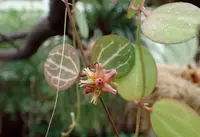
The small, oval leaves have pale, parallel veins that mimic the striped pattern of watermelon rind, a form of visual mimicry likely related to the plant’s natural habitat on bark and branches where dappled light enhances the contrast.

Epiphyte with ant links

In the wild, this species often grows as an epiphyte on trees and is associated with ant-inhabited microhabitats, using natural crevices, old insect galleries, or organic debris instead of soil to anchor and access moisture and nutrients.

Hoya family relative

This species belongs to the Apocynaceae family and is closely related to wax plants in the genus Hoya, sharing similar succulent foliage and small, star-like flowers adapted to pollination by small insects.

FAQs about Watermelon Dischidia

Yellow leaves usually result from overwatering, poor drainage, or prolonged low light. Check that the pot drains freely, let the top layer of the medium dry slightly between waterings, and remove any consistently soggy or compacted substrate.

Grow Healthy Plants with Botan Care

Keep your plants happy and healthy with plant identification, disease detection, and easy care guidance.

Botan plant care app — identify plants on mobile

Explore More Plants