Madagascar palm Care (Pachypodium lamerei)

About Madagascar palm

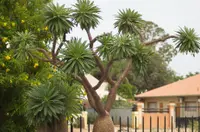
The Madagascar palm, Pachypodium lamerei, is a succulent shrub or small tree, not a true palm. It has a thick, spiny, gray trunk topped with a rosette of narrow, leathery leaves. In its native habitat in Madagascar, it grows in hot, dry, rocky areas with intense sunlight and very sharp drainage. This species stores water in its swollen trunk and drops leaves in stress, which makes it relatively tolerant of short dry spells and missed waterings. With strong light, infrequent watering, and gritty, fast-draining soil, it can adapt well to indoor containers, and this helps explain how to care for Madagascar palm successfully.

Main Plant Requirements

Care Difficulty

Moderate Care

Light Preference

Full Sun

Water Requirements

Low Water

Temperature Preference

Tropical / Frost Sensitive

Hardiness Zone

10–11

Soil Texture

Sandy, Loamy, Rocky

Soil pH

Slightly acidic (6.5–7.0), Neutral (7.0)

Soil Drainage

Well-drained

Fertilization

Minimal (feed rarely)

Get Personalized Care Plan

Scan your plant to receive care tips personalized for your specific plant

Personalized Care in the App

Available on iOS and Android

How to Care for the Madagascar palm

This species prefers strong light similar to bright, arid habitats.

  • Provide 6–8 hours of direct sun daily; morning sun with light afternoon shade helps prevent scorching in hot climates.
  • Outdoors, full sun is ideal once acclimated; introduce Madagascar palm gradually to stronger light over 1–2 weeks to avoid leaf burn.
  • In cooler or darker seasons, ensure at least bright, unobstructed light; thin, stretched growth indicates it needs more sun or a sunnier position.

This drought-tolerant succulent stores water in its swollen stem and needs infrequent watering.

  • Water only when the top 3–5 cm of soil are fully dry; in warm active growth this may mean deep watering every 10–21 days, depending on heat and soil.
  • Use a very fast-draining, gritty mix; standing water or heavy clay promotes root rot and stem softening in Pachypodium lamerei.
  • Reduce watering sharply in cooler months or when leaves drop; wrinkling of the stem suggests slight underwatering, while yellowing, mushy roots indicate excess moisture.

This plant thrives in warm, dry conditions with no frost exposure.

  • Aim for 70–90°F (21–32°C) during active growth; short peaks up to 100°F (38°C) are tolerated if soil drains well and airflow is good.
  • Protect from cold below 55°F (13°C); growth slows near this point and damage can occur with repeated exposure.
  • Never expose to frost; even brief drops near 32°F (0°C) can scar or kill tissues, so move or protect plants before cold snaps in autumn and winter.

This species handles dry indoor air well, so humidity is rarely a concern.

This succulent needs a sharply draining, mineral-based mix that dries fast after watering.

  • Use a cactus/succulent mix amended with extra coarse sand, pumice, or small gravel to keep the root zone airy.
  • Aim for a slightly acidic to neutral pH around 6.0–7.0, avoiding heavy peat-only blends that compact over time.
  • Avoid dense, clay-rich or water-retentive mixes, which promote root rot and trunk base softening in Pachypodium lamerei.
  • Improve drainage by using a gritty top dressing that reduces surface compaction and keeps the stem base dry.

This species adapts well to container growing when the pot supports its tall, top-heavy form.

  • Choose a wide, heavy container that lowers the center of gravity so the plant does not tip as it gains height.
  • Select a pot deep enough to accommodate the thickened taproot without bending or crowding it against the base.
  • Use a container material like unglazed terra cotta that allows moisture to evaporate quickly from the root zone.

Pachypodium lamerei grows well with light, controlled feeding during its active season.

  • Use a balanced liquid fertilizer (such as 10-10-10) or cactus feed at 1/4–1/2 strength for Madagascar palm in spring and summer.
  • Apply every 4–6 weeks only when the soil is warm and the plant is actively growing.
  • Do not fertilize in winter dormancy; resume feeding after new growth appears.
  • Avoid compost-heavy mixes or slow-release pellets that keep soil wet and salty.

Pruning Pachypodium lamerei is minimal and mainly focused on safety and sanitation.

  • Best time is late spring, once active growth has started and frost risk has passed.
  • Remove only dead, diseased, or storm-damaged branches using clean, sharp bypass pruners.
  • Limit tip cutting; heavy heading can cause awkward branching and spoil the natural shape.
  • Wear thick gloves and eye protection to handle the spines and milky sap safely.

Container-grown Pachypodium lamerei prefers infrequent repotting with careful root handling.

  • Repot every 3–5 years, or when roots circle the pot, emerge from drainage holes, or growth slows despite good light.
  • Choose late spring, using a heavy, very free-draining cactus mix in a pot only 2–5 cm wider.
  • Slide the root ball out gently, keep roots largely intact, and backfill firmly without burying the swollen stem base.
  • Water lightly after repotting, then allow the mix to dry between waterings to limit root stress and rot.

Propagation of Pachypodium lamerei is usually done from seed and is considered slow and specialized.

Pachypodium lamerei needs warm, dry winter conditions and is not tolerant of freezing temperatures.

  • Keep plants above 50°F; prolonged exposure near 32°F can damage stems and roots.
  • For outdoor containers, move indoors to a bright, cool, and dry spot before first frost.
  • Maintain almost dry soil in winter, watering only enough to prevent complete shriveling.
  • If planted in mild climates, mulch lightly around the root zone and shield from cold, driving rain.

Care Tips

Rotate for symmetry

Turn the pot 90° every 2–3 weeks during active growth so the stem develops evenly and does not lean toward the light source.

Stabilize tall stems

Once the plant exceeds 60–70 cm, use a heavy terracotta pot and a top dressing of coarse gravel to lower the center of gravity and reduce the risk of tipping.

Protect from self-injury

When moving or repotting, wrap the trunk loosely with a folded towel or several layers of newspaper so the sharp spines do not puncture the stem or your hands.

Manage cool-season rest

In cooler months, keep it slightly cooler and very dry, and avoid repotting or fertilizing so the plant can complete its natural rest period without stress.

Check for root rot early

If lower leaves yellow rapidly after a watering mistake, unpot gently and inspect roots for soft, dark tissue, trimming damaged sections and replanting in fresh, very free-draining mix as part of careful caring for Madagascar palm.

Common Pests and Diseases

Mealybugs

This pest feeds on plant sap and hides in leaf axils and spine bases, often appearing as white cottony clusters. Symptoms include slowed growth, yellowing leaves, and sticky honeydew that can lead to sooty mold.

Solution

Isolate the plant, then dab visible mealybugs with cotton swabs dipped in 70% isopropyl alcohol and repeat weekly until none are seen. Improve light and airflow, and if the infestation is widespread, use a systemic insecticide labeled for succulents, following product directions carefully as part of overall Pachypodium lamerei care instructions.

Spider mites

These insects are tiny sap-feeders that thrive in warm, dry indoor air, causing fine speckling on leaves and eventual bronzing or leaf drop. Fine webbing may appear in the leaf bases and along the spines.

Solution

Rinse the plant thoroughly with a firm stream of lukewarm water, focusing on leaf bases, then allow it to dry in bright light. Increase humidity slightly around the plant and apply a miticide or insecticidal soap labeled for spider mites, repeating at 5–7 day intervals until new growth is clean.

Scale insects

This pest appears as small, brown or tan bumps along the stem and leaf bases that do not brush off easily, causing sap loss and weakened growth. Sticky honeydew and sooty mold may also be present.

Solution

Carefully scrape or pry off individual scale insects with a fingernail or soft tool and wipe affected areas with alcohol-moistened cotton. For heavier infestations, combine manual removal with a systemic insecticide and maintain the plant in strong light and low humidity to make conditions less favorable for reinfestation.

Fusarium stem rot

This disease is caused by soilborne fungi entering through wounds or overly wet roots, leading to soft, discolored areas on the lower stem and eventual collapse. Symptoms include localized black or brown lesions, foul odor, and loss of firmness in the swollen trunk.

Solution

Immediately cut away affected soft tissue with sterilized tools back to healthy, firm tissue, then allow the plant to dry and callus in a warm, bright, dry place. Discard contaminated soil, repot into fresh, very well-draining cactus mix, reduce watering significantly, and avoid injury to the stem and roots to prevent reinfection.

Bacterial soft rot

This disease often starts at mechanical injuries or persistently moist areas on the trunk, causing rapidly spreading wet, mushy, foul-smelling tissue. Symptoms include collapse of the swollen stem and sometimes oozing liquid from the affected area.

Solution

Remove and discard severely affected plants, as advanced bacterial soft rot is rarely reversible. For very early, localized infections, cut out all soft tissue with sterilized tools, dust cuts with sulfur or a bactericidal product, keep the plant completely dry in high light, and strictly avoid water contact with the wound until a firm callus forms.

Interesting Facts

Spiny photosynthetic trunk

The thick gray trunk is covered in sharp spines and performs most of the plant’s photosynthesis, while the narrow leaves contribute less and are often shed in dry or cool conditions.

Dry-season leaf drop

In its native southwest Madagascar habitat, this species naturally loses most or all of its leaves during the dry season, surviving as a spiny, water-storing stem until favorable conditions return.

Night-scented white flowers

Mature plants can produce large white, tubular flowers with yellow centers that open mainly in warm conditions and are lightly scented, an adaptation associated with moth pollination in the wild.

Botan icon

Did you know?

In habitat, individual Pachypodium lamerei can develop a massively thickened stem that functions as a water reservoir, allowing established specimens to survive months of drought on exposed, rocky slopes where few other woody plants persist.

FAQs about Madagascar palm

Yellowing leaves usually come from natural aging, sudden temperature changes, or incorrect watering. Check that the pot drains well, allow the soil to dry between waterings, and avoid cold drafts or recent moves causing stress.

Grow Healthy Plants with Botan Care

Keep your plants happy and healthy with plant identification, disease detection, and easy care guidance.

Botan plant care app — identify plants on mobile

Explore More Plants