


Rotate for symmetry
Turn the pot 90° every 2–3 weeks so new fronds develop evenly and the plant keeps a balanced, upright form instead of leaning toward the light source.

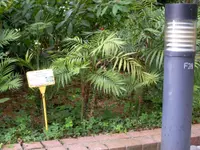
Parlor palm, Chamaedorea elegans, is a compact, slow-growing palm commonly used as a tabletop or floor plant in homes and offices. It forms clumps of slender, cane-like stems topped with soft, arching fronds.
In its native habitat of southern Mexico and Central America, it grows as an understory palm in shaded, humid forests. Indoors, it stays relatively small and keeps a tidy, upright habit.
This species is valued for its tolerance of lower light, modest watering needs, and generally forgiving nature, which makes it suitable for beginners. Understanding how to care for Parlor Palm mainly involves providing bright, indirect light, evenly moist but not soggy soil, and good air circulation.

Care Difficulty
Easy Care

Light Preference
Bright Indirect Light

Water Requirements
Moderate Water

Temperature Preference
Tropical / Frost Sensitive

Hardiness Zone
10–12

Soil Texture
Loamy, Peaty, Organic-rich

Soil pH
Acidic (5.5–6.5), Slightly acidic (6.5–7.0)

Soil Drainage
Moist but well-drained

Fertilization
Light (every 4–6 weeks)
Scan your plant to receive care tips personalized for your specific plant
Available on iOS and Android
This small palm prefers soft, filtered light that mimics an understory forest environment.
Watering should keep the root zone lightly moist but never saturated for Chamaedorea elegans.
Stable, mild temperatures support healthy growth and help prevent stress-related leaf damage.
This species benefits from moderate humidity but usually adapts to typical home air.
Chamaedorea elegans prefers a light, airy, organic-rich mix that drains quickly but holds some moisture.
This palm is well suited to container growing for long-term indoor display.
Chamaedorea elegans benefits from modest, consistent feeding during its active growing season for steady foliage growth.
Chamaedorea elegans needs only light pruning to maintain a tidy appearance and remove declining fronds.
This palm prefers to stay slightly root-bound, so repotting is infrequent and should be done gently to limit root disturbance.
For Chamaedorea elegans, propagation is slow and usually done by seed rather than by stem cuttings.
This species is frost-sensitive and needs mild, stable indoor conditions during winter in most climates.

Plant Health Check
Not sure what's wrong with your plant? Check your plant's health inside the app.
This species occurs naturally as an understory palm in the rainforests of southeastern Mexico and Guatemala, where it grows in deep shade under taller trees and shrubs.
In its native habitat it can take several years to reach flowering size, and even then usually remains a small, clustering palm rarely exceeding shrub height.
It became popular in Europe and North America in the late 19th century as a refined indoor plant, often featured in Victorian parlors, which is how the common name parlor palm arose.

Genetic and morphological studies place this species among the few truly shade-tolerant palms that complete their entire life cycle, from seedling to seed production, under low light levels that would stress or kill many other palm species.
Brown tips or edges usually come from low humidity, irregular watering, or fertilizer buildup. Hard tap water with salts can also scorch foliage. Trim only the dead tips and adjust care slowly rather than making sudden changes.
Keep your plants happy and healthy with plant identification, disease detection, and easy care guidance.

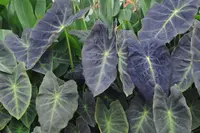
Imperial Taro
Colocasia esculenta 'Illustris'
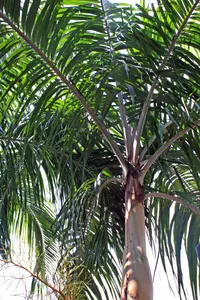
Carpentaria
Carpentaria acuminata
 POPULAR
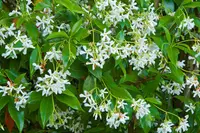
Star jasmine
Trachelospermum jasminoides
Canterbury bells
Gloxinia perennis
iguana hackberry
Celtis iguanaea
Tillandsia leiboldiana
Tillandsia leiboldiana
Bamboo Palm
Chamaedorea seifrizii
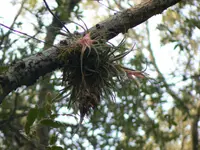
Tillandsia erubescens
Tillandsia erubescens