Encourage Upright Climbing
Install a narrow moss pole, cedar stake, or coco totem and loosely tie young vines as they elongate so the plant can climb, anchor its aerial roots, and develop larger, better-shaped leaves over time.

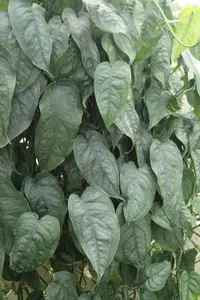
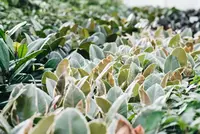
Silver monstera (Monstera siltepecana) is a tropical climbing aroid valued for its patterned foliage rather than large fenestrations. Young leaves are small, silver-green, and marked with darker veins, while mature leaves become larger and may develop perforations on a support.
This species is native to humid forests in Mexico and Central America, where it creeps along the ground and climbs trees in shade to dappled light. It is generally considered moderate in difficulty, as it prefers stable warmth, evenly moist but not soggy soil, and consistent humidity.
Indoor growers who learn how to care for Silver Monstera usually find it adaptable, provided it receives bright, indirect light and a well-draining, airy mix that protects the roots from waterlogging.

Care Difficulty
Moderate Care

Light Preference
Bright Indirect Light

Water Requirements
Moderate Water

Temperature Preference
Tropical / Frost Sensitive

Hardiness Zone
11–12

Soil Texture
Loamy, Peaty, Organic-rich

Soil pH
Acidic (5.5–6.5), Slightly acidic (6.5–7.0)

Soil Drainage
Moist but well-drained

Fertilization
Light (every 4–6 weeks)
Scan your plant to receive care tips personalized for your specific plant
Available on iOS and Android
Monstera siltepecana prefers bright, indirect light that mimics a forest understory.
This species prefers evenly moist but not saturated soil, with brief drying between waterings.
Consistent, warm temperatures support steady growth and healthy foliage.
This species prefers moderate to high humidity and reacts quickly to very dry air.
This species prefers an airy, organic-rich medium that drains quickly but does not dry out instantly.
This species grows very well in containers when its climbing habit and root needs are considered.
This vining aroid responds well to light, steady feeding during the active growing season.
Thoughtful pruning keeps Monstera siltepecana compact, healthy, and easier to support.
Container-grown plants benefit from periodic repotting to maintain root health and steady growth.
This species is most commonly propagated from stem cuttings taken from healthy, actively growing vines.
This tropical climber is frost-sensitive and must be kept above freezing in temperate climates.

Plant Health Check
Not sure what's wrong with your plant? Check your plant's health inside the app.
In its native habitats of southern Mexico and Central America, this species often grows as a hemiepiphyte, starting life on the forest floor and then climbing up rocks or tree trunks using its strong adventitious roots.
Juvenile plants have narrow, silver-patterned leaves that stay unfenestrated, while mature climbing plants develop much larger, thicker, greener leaves that can change shape dramatically once they reach brighter, higher positions.
The characteristic silvery patches on the leaves are caused by areas of reduced chlorophyll in the upper leaf tissues, which create a mottled appearance while still allowing enough green tissue for efficient photosynthesis.
Brown leaf edges usually result from low humidity, irregular watering, or excess fertilizer salts. Very dry air, allowing soil to fully dry, or using hard water are common causes. Trim damage, adjust conditions, and monitor new growth.
Keep your plants happy and healthy with plant identification, disease detection, and easy care guidance.