Crystal Anthurium Care (Anthurium crystallinum)

About Crystal Anthurium

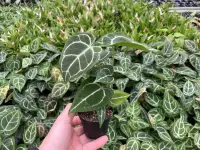
Crystal anthurium, Anthurium crystallinum, is a tropical aroid grown mainly for its striking foliage rather than flowers. It is typically kept as an indoor ornamental plant. The plant forms a compact clump of large, velvety, heart-shaped leaves with strong pale veins that give a contrasting, almost metallic look. New leaves often emerge with a bronzy tone before turning deep green. In nature it occurs in humid tropical forests of Central and South America, where it grows as an epiphyte or terrestrial plant in shaded, moist conditions. Its need for stable warmth, high humidity, and airy, fast-draining substrate makes it moderately challenging, so learning how to care for Crystal Anthurium is important for long-term success.

Main Plant Requirements

Care Difficulty

Moderate Care

Light Preference

Bright Indirect Light

Water Requirements

Keep Soil Moist

Temperature Preference

Tropical / Frost Sensitive

Hardiness Zone

11–12

Soil Texture

Loamy, Peaty, Organic-rich

Soil pH

Acidic (5.5–6.5), Slightly acidic (6.5–7.0)

Soil Drainage

Moist but well-drained

Fertilization

Light (every 4–6 weeks)

Get Personalized Care Plan

Scan your plant to receive care tips personalized for your specific plant

Personalized Care in the App

Available on iOS and Android

How to Care for the Crystal Anthurium

This species prefers bright, indirect light that mimics a shaded tropical understory.

  • Aim for 8–10 hours of bright, filtered light daily, such as near an east- or north-facing window or under sheer curtains with no direct midday sun.
  • Tolerates light dappled morning sun but direct sun from 11 a.m. to 4 p.m. can scorch leaves, causing pale patches and crispy edges on Crystal Anthurium.
  • In winter, move the plant closer to bright windows or add a grow light to prevent slow growth, sparse foliage, and elongated stems from low light.

Anthurium crystallinum prefers evenly moist but never waterlogged soil.

  • Water when the top 2–4 cm of soil feels dry, using this as the main guide instead of a fixed schedule.
  • Use a chunky, fast-draining mix; persistent wetness, yellowing lower leaves, and a sour smell indicate overwatering and possible root rot.
  • In spring and summer, drying will be faster; in fall and winter, allow slightly deeper drying and watch for drooping or curling leaves as signs of underwatering.

This plant thrives in warm, stable temperatures with minimal drafts or sudden swings.

  • Ideal growth occurs at 65–80°F (18–27°C), which supports steady leaf production and healthy root activity.
  • Avoid temperatures below 55°F (13°C); brief exposure under this can cause leaf drop, dark patches, and slowed recovery, and frost will kill exposed tissue.
  • Tolerates short periods up to 85–90°F (29–32°C) if humidity is high and air movement is gentle, but prolonged heat with dry air causes leaf edge browning and stress.

This species needs consistently high humidity to keep foliage healthy and avoid edge damage.

  • Aim for 60–80% humidity, as the Crystal Anthurium develops larger leaves and better color in moist air.
  • In drier rooms below about 50%, expect brown leaf tips, crispy margins, and slowed new growth as signs of humidity stress.
  • Increase humidity with a nearby humidifier, grouped plants, or an open pebble tray under the pot, but avoid misting that leaves foliage wet for long.

Anthurium crystallinum prefers a loose, airy, organic-rich medium that mimics epiphytic forest conditions.

  • Use a chunky mix such as roughly 40% fine orchid bark, 30% peat or coco coir, 20% perlite, and 10% compost for nutrients.
  • Ensure very fast drainage so water runs through within seconds, leaving the mix moist but never waterlogged.
  • Target slightly acidic conditions, around pH 5.5–6.5, which supports nutrient uptake and root health.
  • Avoid dense garden soil or heavy potting compost that compacts, as this reduces aeration and encourages root rot.

This species is well suited to container growing when the pot supports its shallow, spreading root system.

  • Choose a squat, wide pot rather than a deep, narrow one so roots can spread horizontally and the mix dries evenly.
  • Select a slightly porous material like terra-cotta if the environment is humid, to prevent the mix staying wet for too long at the base.
  • Use a heavier or broader-based container to stabilize tall foliage and prevent the plant from tipping as leaves increase in size.

Nutrient support keeps Anthurium crystallinum foliage large and evenly colored when grown in containers.

  • Use a balanced liquid fertilizer (around 10-10-10 or 20-20-20) diluted to 1/4–1/2 strength for Crystal Anthurium.
  • Feed every 4–6 weeks during spring and summer while the plant is actively growing.
  • Reduce feeding to 1 light application in fall and stop or nearly stop in winter dormancy.
  • Alternatively, mix a small amount of slow-release fertilizer or fine compost into the top layer of the potting mix each spring.

Light pruning maintains plant health and a tidy outline for Anthurium crystallinum.

  • Best time for pruning is late winter to early spring before strong new growth starts.
  • Remove yellow, dead, or mechanically damaged leaves at the base with clean, sharp scissors or pruners.
  • Thin out overcrowded or crossing stems to improve air flow and reduce fungal problems.
  • Occasional removal of older leaves encourages energy toward new foliage and maintains an attractive shape.

Container-grown plants benefit from periodic repotting to maintain healthy roots and foliage.

  • Check for signs like roots circling the pot, pushing out of drainage holes, or slowed growth in Anthurium crystallinum.
  • Plan to repot every 2–3 years in spring, shifting to a pot only 2–5 cm wider with a chunky, airy mix.
  • Water lightly a day before repotting, handle the root ball gently, and trim only rotten roots to limit stress.
  • After repotting, keep humidity high, light bright but indirect, and watering modest until new growth appears.

Propagation of Anthurium crystallinum is most reliable by division or stem cuttings with nodes.

  • Divide clumps in warm spring, separating sections with at least 1–2 healthy leaves and a portion of roots.
  • For stem cuttings, choose segments with 1–2 nodes and aerial roots if possible.
  • Root divisions or cuttings in a loose, airy mix at 70–80°F with high humidity and bright, indirect light.
  • Keep the medium slightly moist, not wet, and avoid disturbance until firm new root growth is evident.

This tropical houseplant is frost tender and needs stable indoor conditions in winter.

  • Maintain indoor temperatures around 65–75°F and avoid exposure below 55°F for Anthurium crystallinum.
  • Move any outdoor containers indoors before night temperatures drop into the low 50s°F.
  • Place away from cold drafts, heater vents, and single-pane windows that create temperature swings.
  • Water less often in winter, allowing the top layer of mix to dry slightly while maintaining moderate humidity.

Care Tips

Support Mature Leaves

Provide a small hoop stake or wire support behind large leaves so petioles do not kink under their own weight, especially in low-light indoor conditions.

Use Clear Nursery Pot

Grow the plant in a clear plastic nursery pot set inside a decorative cover pot so you can monitor root color, moisture level, and early signs of root rot without disturbing it.

Warm Root Zone

Place the pot on a slightly raised plastic or mesh stand above a heat mat set to low (around 72–78°F) to encourage steady root activity during cooler months.

Targeted Leaf Cleaning

Wipe leaves monthly with a soft, barely damp microfiber cloth and support the leaf from beneath with your hand to avoid tearing the thin velvety surface while improving light capture and pest detection.

Quarantine And Inspect

Quarantine new aroids for 2–3 weeks and inspect the undersides of leaves and petiole bases with a magnifier so any pests are caught before they spread, which is critical when caring for Crystal Anthurium in a collection.

Common Pests and Diseases

Spider mites

This pest thrives on Anthurium crystallinum in dry, warm indoor conditions, feeding on leaf sap and causing pale stippling and dull, grayish foliage. Symptoms include fine webbing on leaf undersides and along petioles, especially during low humidity periods.

Solution

Rinse leaves thoroughly with a strong but gentle stream of lukewarm water, focusing on undersides, then repeat every few days for 2–3 weeks. Increase humidity to 60–70%, improve air movement, and treat remaining mites with insecticidal soap or a horticultural oil labeled for indoor use, testing first on a small area of the leaf.

Thrips

These insects scrape and suck plant tissues, leaving silvery or bronze streaks, distorted new leaves, and black specks of frass on Anthurium foliage. Damage is often most visible on young, emerging leaves and along the main veins of the large velvety blades.

Solution

Isolate the plant, remove and discard badly damaged leaves, and rinse remaining foliage thoroughly. Use blue or yellow sticky traps to monitor adults and apply insecticidal soap or a low-residual systemic product suitable for indoor ornamental plants, repeating treatments in 7–10 days to break the life cycle.

Bacterial blight

This disease causes water-soaked, translucent patches that quickly turn brown or black, often starting along leaf margins or at mechanical injury points. Symptoms include irregular lesions with yellow halos and a soft, sometimes foul-smelling rot when conditions are warm and humid.

Solution

Remove and discard affected leaves with sterilized tools, cutting well into healthy tissue, and avoid overhead watering or wetting the foliage. Increase spacing and airflow, disinfect tools and pots, and maintain drier leaf surfaces; severely affected plants are often best discarded to prevent spread to other Anthurium species.

Bacterial leaf spot

This disease produces small, round to oval, water-soaked spots that enlarge, darken, and sometimes show a yellow margin on the velvety leaves. Symptoms include scattered lesions that may coalesce into larger necrotic areas, especially when leaves stay wet for extended periods.

Solution

Remove spotted leaves promptly, reduce misting directly onto foliage, and water early in the day so leaves dry quickly. Improve air circulation around the plant, avoid crowding, and, if allowed in your area, use a copper-based bactericide according to label directions as a preventative measure on nearby healthy Anthurium plants.

Fungal leaf spot

This disease leads to brown or tan lesions with defined edges, sometimes with concentric rings, often starting on older or lower leaves in humid, stagnant air. Symptoms include slow-spreading dead patches that mar the decorative foliage and can weaken the plant over time.

Solution

Trim and discard affected leaves, keep foliage dry, and ensure good airflow by spacing plants and using a gentle fan if needed as part of Anthurium crystallinum care instructions. If spots continue to appear, apply a fungicide labeled for ornamental foliage plants, following directions carefully and avoiding overuse indoors.

Interesting Facts

Velvety leaf surface

The leaves have a dense layer of microscopic hairs (a pubescent cuticle) that makes them feel velvety and helps diffuse light across the leaf surface, which is useful in its naturally shaded forest understory habitat.

Striking vein contrast

The species develops dark green to olive leaf blades with thick, pale to silvery primary veins, a visual contrast caused by differences in tissue thickness and light reflection rather than any metallic pigment.

Epiphytic growth habit

In nature this plant often grows as an epiphyte on tree trunks or in thick leaf litter on slopes, using its roots mainly for anchorage and moisture uptake rather than for penetrating mineral soil deeply.

Botan icon

Did you know?

This species was first described scientifically in the late 19th century from Central American material and quickly became a reference plant in aroid collections, helping botanists compare leaf venation patterns and velvet-leaf traits across related Anthurium species.

FAQs about Crystal Anthurium

Yellowing leaves usually come from watering problems, low light, or nutrient deficiency. Check that the pot drains well, let the top mix partially dry between waterings, and use a balanced fertilizer at low strength during active growth.

Grow Healthy Plants with Botan Care

Keep your plants happy and healthy with plant identification, disease detection, and easy care guidance.

Botan plant care app — identify plants on mobile

Explore More Plants