Provide climbing support
Install a sturdy moss pole or coco pole and loosely tie new vines to it so the plant can climb vertically, which encourages larger, more fenestrated leaves and a more stable structure.

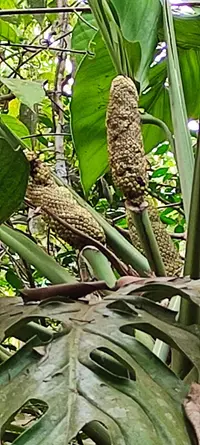
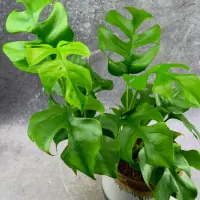
Monstera lechleriana is a tropical aroid vine valued for its elongated, glossy green leaves with neat oval fenestrations that appear as the plant matures. It usually grows as a climbing plant and benefits from a support such as a moss pole.
This species is native to humid tropical forests of Central and South America, where it attaches to tree trunks and climbs toward dappled light. In home conditions, its relatively steady growth and tolerance of typical indoor humidity make it manageable for most plant owners.
Understanding how to care for Monstera lechleriana starts with providing stable warmth, bright indirect light, and a well-draining, airy potting mix that allows the roots to breathe.

Care Difficulty
Moderate Care

Light Preference
Bright Indirect Light

Water Requirements
Moderate Water

Temperature Preference
Tropical / Frost Sensitive

Hardiness Zone
11–12

Soil Texture
Loamy, Peaty, Organic-rich

Soil pH
Acidic (5.5–6.5), Slightly acidic (6.5–7.0)

Soil Drainage
Moist but well-drained

Fertilization
Light (every 4–6 weeks)
Scan your plant to receive care tips personalized for your specific plant
Available on iOS and Android
This species prefers bright, filtered light that mimics a forest understory.
Watering should keep roots moist but never saturated for long periods.
Stable, warm conditions support steady growth and reduce stress.
This species benefits from elevated humidity to support large, healthy foliage and steady growth.
This plant prefers a loose, airy, organic-rich mix that drains quickly but does not dry out instantly.
This species is very suitable for container growing due to its controllable root system and climbing habit.
This plant responds well to moderate feeding during active growth for balanced Monstera lechleriana care.
Thoughtful pruning keeps Monstera lechleriana compact, balanced, and healthy indoors.
Container-grown plants benefit from occasional repotting to support steady growth.
New plants are most commonly produced from stem cuttings with nodes.
This tropical species is frost sensitive and needs mild, stable conditions in winter.

Plant Health Check
Not sure what's wrong with your plant? Check your plant's health inside the app.
In the wild, this species often grows on trees along wet Andean streambanks, using its roots to cling to mossy bark in very humid, shaded habitats.
Young plants produce narrow, entire leaves, but as they climb and receive more light, the leaves become larger and develop characteristic oval perforations and side splits, a process called heteroblasty, meaning distinct juvenile and adult forms.
Mature stems can develop a noticeably corky, porous outer layer that helps protect aerial roots and inner tissues as the vine thickens on its host tree.
Brown edges or tips usually result from low humidity, underwatering, or salt buildup from fertilizer. Increase humidity, water thoroughly but less often, and flush the potting mix with plain water to remove accumulated salts.
Keep your plants happy and healthy with plant identification, disease detection, and easy care guidance.