Giant Taro Care (Alocasia macrorrhizos)

Also known as: Elephant Ear, Giant Alocasia

About Giant Taro

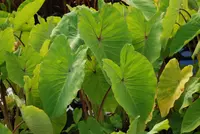
Giant taro (Alocasia macrorrhizos) is a large, tropical aroid grown for its dramatic, upright clumps of huge, glossy, arrow-shaped leaves. In warm climates it forms an architectural focal point in gardens or large containers. Native to humid forests and disturbed areas in Southeast Asia and the Pacific, it prefers consistently warm, moist conditions. It can adapt to bright shade outdoors or bright indirect light indoors. The plant grows fast but needs space, regular moisture, and nutrient-rich, well-drained soil, so it is not low-maintenance. With attention to its size, humidity, and watering, it is manageable for intermediate growers who want to learn how to care for Giant Taro.

Main Plant Requirements

Care Difficulty

Moderate Care

Light Preference

Partial Shade

Water Requirements

Keep Soil Moist

Temperature Preference

Tropical / Frost Sensitive

Hardiness Zone

9–11

Soil Texture

Loamy, Peaty, Organic-rich

Soil pH

Acidic (5.5–6.5), Slightly acidic (6.5–7.0)

Soil Drainage

Moist but well-drained

Fertilization

Moderate (every 2–4 weeks)

Get Personalized Care Plan

Scan your plant to receive care tips personalized for your specific plant

Personalized Care in the App

Available on iOS and Android

How to Care for the Giant Taro

Alocasia macrorrhizos prefers bright, indirect light with some protection from harsh midday sun.

  • Provide 4–6 hours of bright, filtered light daily, such as dappled shade under taller plants or a sheer-curtained east or west window for Giant Taro.
  • Tolerates partial shade (2–4 hours of indirect light), but growth slows and petioles may stretch toward the light source.
  • Avoid strong midday or afternoon sun that can scorch leaves; in winter, move slightly closer to the light source or remove some shading to compensate for shorter days.

This plant prefers consistently moist but not waterlogged soil that dries slightly between waterings.

  • Water when the top 3–5 cm of soil feels dry, allowing moisture below to stay slightly damp while avoiding soggy conditions around the roots.
  • Use well-draining soil and, if in containers, a pot with drainage holes; yellowing, limp leaves often indicate overwatering, while crisp edges and drooping can signal underwatering.
  • During active growth in spring and summer, expect more frequent watering, then reduce in fall and winter as growth slows and evaporation decreases, but do not let the root zone fully dry.

This tropical species grows best in warm, stable temperatures without sudden cold drafts.

  • Ideal growth occurs at 70–85°F (21–29°C), where leaves expand quickly and roots stay active.
  • Tissue damage can begin below about 55°F (13°C); protect from frost, and move plants or cover them if temperatures approach 40°F (4°C).
  • Tolerates short heat waves up to about 95°F (35°C) if soil moisture and humidity are maintained, but prolonged extreme heat or hot, drying winds can scorch leaves and slow growth.

This species prefers high, stable humidity to maintain healthy foliage.

  • Target 60–80% humidity, as Giant Taro foliage loses moisture quickly through its large leaf surface.
  • In 30–40% air, expect brown leaf edges, curling, and stalled new growth as signs of humidity stress.
  • Increase humidity with a nearby cool-mist humidifier, grouped plants, and trays of water and stones placed under but not touching the pot.

Alocasia macrorrhizos needs airy, moisture-retentive but fast-draining soil to protect its large rhizomes from rot.

  • Use a loose, organic-rich mix such as 50% peat or coco coir, 25% perlite or pumice, and 25% pine bark fines.
  • Aim for slightly acidic to neutral pH around 6.0–7.0 to support nutrient availability and root activity.
  • Ensure excess water runs through quickly; avoid compacted or heavy clay-based soil that stays wet for more than 2–3 days.
  • Improve aeration by adding coarse bark or chunky perlite rather than sand, which can fill air spaces and cause compaction.

This species is suitable for container growing when pots are chosen to support its large, top-heavy structure.

  • Select a wide, heavy container to counterbalance the tall foliage and prevent tipping in wind or when the soil is moist.
  • Choose a pot material with some weight and moderate porosity, such as thick ceramic, to stabilize the plant while avoiding rapid drying.
  • Ensure drainage holes are large and unobstructed so high water volumes from deep watering leave the root zone within seconds.

Alocasia macrorrhizos is a fast-growing aroid that benefits from steady, moderate feeding during its active season.

  • Use a balanced liquid fertilizer (e.g., 10-10-10 or 20-20-20) at 1/4–1/2 strength every 2–4 weeks in spring and summer.
  • Alternatively, apply a slow-release, balanced granular fertilizer at the start of the growing season, following label rates.
  • Pause or reduce feeding to once every 6–8 weeks in fall and winter when growth slows or Giant Taro enters dormancy.
  • On established outdoor plants, supplement with a light top-dressing of compost to support soil structure and micronutrients.

Alocasia macrorrhizos needs light, targeted pruning mainly to keep foliage healthy and the plant tidy.

  • In late winter or early spring, remove dead, yellowing, or diseased leaves at the base with clean, sharp pruners.
  • Cut back damaged or storm-torn stalks to a healthy point to prevent rot and encourage new shoots.
  • Thin out crowded inner leaves if necessary to improve air flow and reduce fungal issues.
  • Disinfect tools before and after use with alcohol or a 10% bleach solution to limit disease spread.

This large Alocasia forms chunky corms and thick roots that sometimes need more space in containers or the ground.

  • Check for roots circling the pot, pushing out drainage holes, or slowed growth as signs it needs repotting or transplanting.
  • Plan major moves in late spring to early summer, when the plant is actively growing and recovers faster.
  • Repot every 2–3 years into a container 2–5 cm wider, using a chunky, well-drained mix rich in organic matter.
  • Handle the root ball gently, keep it at the same soil level, water thoroughly after moving, and shade for a few days to reduce stress.

New plants of Alocasia macrorrhizos are most reliably produced by division rather than seed.

  • Divide offsets or side shoots in late spring or early summer, when the plant is growing strongly.
  • Lift the clump or remove the pot, then gently separate corms or pups, ensuring each division has roots and at least one growth point.
  • Plant divisions in a loose, moist, well-drained medium, keeping temperatures around 70–80°F and humidity high.
  • Keep soil lightly moist, provide bright indirect light, and avoid heavy fertilizing until strong new growth appears.

This tropical species is frost-sensitive and needs thoughtful winter management in most temperate climates.

  • In regions below 30–35°F, grow in containers and move indoors before the first frost, placing in bright, indirect light.
  • Keep indoor temperatures above 60°F and slightly reduce watering to prevent cold, soggy soil and root rot.
  • In mild climates, apply a 5–10 cm mulch layer around the root zone to insulate corms and conserve moisture.
  • Remove mushy, frost-damaged leaves promptly and monitor for rot at the crown during cold, wet periods.

Care Tips

Rotate Container Regularly

Turn the pot 90° every 1–2 weeks so the petioles do not lean excessively toward the light and the plant maintains a stable, balanced canopy that is less likely to topple.

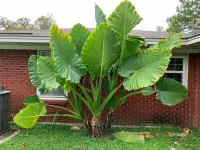
Provide Structural Support

Install a sturdy stake or discreet plant support ring early, then loosely tie thick petioles with soft ties so the heavy leaves are supported and the corm is not rocked in the pot.

Manage Corm Offsets

Inspect the soil surface and upper root zone once or twice a year, remove or pot up offsets with a clean knife, and avoid overcrowding so the main plant keeps strong, upright growth.

Seasonal Growth Pause

If growth slows in cooler months, reduce disturbance, avoid repotting, and keep the soil just barely moist to let the plant rest without forcing active growth.

Prevent Leaf Damage

Place the plant away from narrow walkways and door swings, and wipe large leaves with a soft, damp cloth every few weeks so they are less prone to mechanical tears and pests when growing Giant Taro.

Common Pests and Diseases

Spider mites

This pest often appears in warm, dry indoor conditions and feeds on the undersides of large leaves, causing fine stippling, dull patches, and webbing along veins and leaf edges.

Solution

Rinse foliage thoroughly with a strong but gentle stream of lukewarm water, focusing on leaf undersides, then apply insecticidal soap or a neem oil spray every 5–7 days until no new damage or webbing appears and increase humidity to make conditions less favorable.

Taro planthopper

These insects, also known as taro or alocasia planthoppers, cluster on stems and leaf bases, sucking sap and leaving sticky honeydew that can attract sooty mold.

Solution

Remove heavily infested leaves or stems, then treat remaining foliage and petiole bases with insecticidal soap or a systemic insecticide labeled for ornamental aroids, and reduce plant crowding to improve airflow and reduce hiding places.

Pythium root rot

This disease is favored by waterlogged soil and poor drainage, leading to black, mushy roots, wilting, and collapse despite wet potting mix.

Solution

Unpot the plant, trim away all affected roots, repot in a fresh, chunky, well-draining mix, and water only when the top 3–5 cm of soil are dry while also ensuring the container has unobstructed drainage holes and no standing water in saucers to support Alocasia macrorrhizos plant care.

Bacterial leaf blight

This disease causes water-soaked, translucent spots that quickly turn brown with yellow halos, often starting where water remains on leaves or at mechanical wounds.

Solution

Remove and discard affected leaves, avoid overhead watering, increase air circulation, and disinfect tools; in severe or recurring cases, isolate the plant and consider using a copper-based bactericide according to label directions.

Xanthomonas leaf spot

Symptoms include angular, dark, sunken spots limited by leaf veins, sometimes with a yellow edge, which can merge into larger dead patches on the broad foliage.

Solution

Isolate the plant, prune out infected areas well into healthy tissue, keep leaves dry, and improve spacing and airflow; if the problem persists, apply a copper-based fungicide/bactericide and avoid reusing contaminated water or tools on healthy alocasias.

Interesting Facts

Massive leaf size

Individual leaves can reach 1–1.5 m long in ideal outdoor conditions, creating a strong shade canopy that helps the plant cool its own root zone and reduce water loss from the soil.

Starch‑rich corms

The underground corm is rich in starch and has been traditionally used as a food source in parts of tropical Asia and the Pacific after thorough processing to remove naturally occurring calcium oxalate crystals, which are irritant if not properly treated.

Tropical rainforest origins

This species is native to humid lowland tropical forests of Southeast Asia and the western Pacific, where it typically grows at forest edges and gaps, taking advantage of bright, filtered light rather than deep shade.

Botan icon

Did you know?

In some Pacific island cultures, giant taro has long served as a prestige crop, with very large, well-grown plants used in ceremonial plantings and as a traditional indicator of good land stewardship and agricultural skill.

FAQs about Giant Taro

Brown tips or edges usually result from low humidity, inconsistent watering, or fertilizer salts accumulating in the soil. Improve ambient humidity, keep the potting mix evenly moist but not wet, and flush the soil occasionally to remove excess salts.

Grow Healthy Plants with Botan Care

Keep your plants happy and healthy with plant identification, disease detection, and easy care guidance.

Botan plant care app — identify plants on mobile

Explore More Plants