Provide climbing support
Install a sturdy moss pole, coco pole, or bark plank and loosely tie new vines as they elongate so the plant can climb and develop larger, more fenestrated leaves.

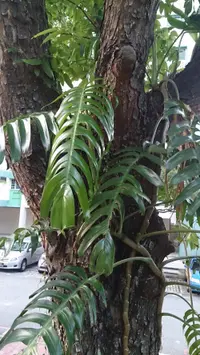
Centipede tongavine (Epipremnum pinnatum) is a tropical climbing aroid grown mainly for its elongated, fenestrated leaves and strong vining habit. In the wild it scrambles up tree trunks, forming long stems that root as they climb.
This species is native to tropical regions of Southeast Asia and the western Pacific, where it grows in warm, humid forests with dappled light. In homes it adapts well to containers, hanging baskets, or moss poles, which support upright growth and larger leaves.
Its toughness, tolerance of indoor conditions, and relatively fast growth make it a forgiving choice for beginners learning how to care for Centipede tongavine. It generally prefers bright, indirect light, evenly moist but not waterlogged soil, and good drainage.

Care Difficulty
Easy Care

Light Preference
Bright Indirect Light

Water Requirements
Moderate Water

Temperature Preference
Tropical / Frost Sensitive

Hardiness Zone
11–12

Soil Texture
Loamy, Peaty, Organic-rich

Soil pH
Acidic (5.5–6.5), Slightly acidic (6.5–7.0)

Soil Drainage
Moist but well-drained

Fertilization
Light (every 4–6 weeks)
Scan your plant to receive care tips personalized for your specific plant
Available on iOS and Android
Epipremnum pinnatum prefers bright, indirect light with brief periods of gentle sun.
Moist but never soggy soil supports healthy Epipremnum pinnatum growth.
Stable, warm conditions help this aroid maintain steady growth.
This species prefers moderate to moderately high humidity and usually adapts to typical home levels.
This plant grows best in a loose, well-aerated, organic-rich potting medium that drains rapidly.
This species is very suitable for container growing.
Epipremnum pinnatum benefits from modest feeding during active growth but does not need heavy fertilization.
Pruning Epipremnum pinnatum helps manage size, encourage branching, and maintain a tidy vine.
This species adapts well to containers but benefits from periodic repotting to maintain healthy root growth.
New Epipremnum pinnatum plants are most commonly produced from stem cuttings rather than seed.
Epipremnum pinnatum is frost-sensitive and needs protection in climates with cold winters.

Plant Health Check
Not sure what's wrong with your plant? Check your plant's health inside the app.
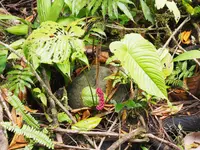
In the wild, this species starts as a shade-tolerant ground plant, then climbs tree trunks toward higher light using aerial roots that anchor into bark and absorb moisture from the humid air.
Juvenile plants have narrow, entire leaves, but as the vine matures and gains height and light, the leaves become much larger and often develop deep splits or perforations, a process called heteroblasty, meaning distinct juvenile and adult leaf forms.
This aroid is native to parts of Southeast Asia and the western Pacific, including areas such as the Philippines and Papua New Guinea, where it grows in lowland tropical forests and coastal habitats exposed to salt-laden winds.

In some Pacific island ecosystems, mature vines can reach many meters up host trees and form dense curtains of foliage that significantly alter the light and moisture conditions on the tree trunk, creating microhabitats for mosses, ferns, and small invertebrates.
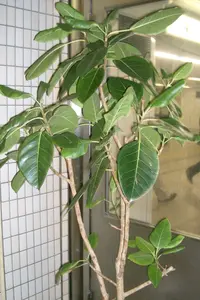
This species grows very reliably indoors in bright, stable conditions and controlled warmth. Outdoors it only thrives in frost-free, humid climates. In most US regions, Centipede tongavine indoor care offers better long-term results and appearance.
Keep your plants happy and healthy with plant identification, disease detection, and easy care guidance.