Train the Vines
Use a small trellis, hoop, or clips to guide the vines as they lengthen.
This prevents heavy stems from bending or tangling.

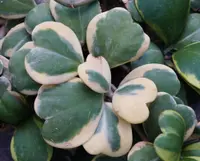
This species is a tropical succulent-like vining plant with interesting, thick leaves. Thanks to its foliage, it has got some funny nicknames like sweetheart vine and Valentine hoya. Mature plants can grow as either trailing or climbing vines. At the same time, single-leaf cuttings usually stay compact for a long time.
The plant grows in Southeast Asia, including Thailand, Laos, Cambodia, and Vietnam, in humid forests. Thus, to care for hoya hearts successfully, the main challenge is balancing light, moisture, and very well-draining soil. It is generally easygoing, but it grows slowly and dislikes staying wet for too long.
That's interesting: As the name suggests, these plants become especially popular every year around Valentine’s Day.

Care Difficulty
Moderate Care

Light Preference
Bright Indirect Light

Water Requirements
Low Water

Temperature Preference
Tropical / Frost Sensitive

Hardiness Zone
10-11

Soil Texture
Loamy, Organic-rich

Soil pH
Acidic (5.5–6.5), Slightly acidic (6.5–7.0)

Soil Drainage
Well-drained

Fertilization
Light (every 4–6 weeks)
Scan your plant to receive care tips personalized for your specific plant
Available on iOS and Android
This plant needs a lot of strong filtered light, as it receives in the wild. However, limit direct sun exposure.
Tip: If your home doesn’t provide enough light, supplement it with artificial lighting. Hoyas respond well to LED grow lights, which can help support growth when natural sunlight is limited.
Remember that Hoya kerrii needs cautious watering and should dry well between soakings.
Life hack: If the leaves are firm and full, the houseplant likely still has enough moisture. If they start to feel softer, thinner, or lightly wrinkled, it’s usually a sign that it’s ready for a watering.
These species like warm and humid conditions, so try to provide them at home. A similar-to-nature environment reduces stress for the houseplant.
Note: In the United States, Hoya kerrii is usually kept as an indoor houseplant, but in very warm climates (USDA hardiness zone 11), it can also live outside all year.
Moderate humidity helps this species grow well, but it usually tolerates average indoor air. Another option is to place it in one of the more humid areas of your home, such as a bathroom, kitchen, or laundry room, where moisture levels are naturally higher.
Like all epiphytes, Hoya kerrii grows best in an airy, fast-draining mix that prevents roots from staying wet.
Note: Don’t neglect special potting mixes. Without added materials to improve drainage and airflow, the mix can become dense, restrict the roots, and slow overall growth.
As a rule, people don't have any problems growing this houseplant in containers. Use a small, snug container of about 4-6 inches (10-15 cm) because oversized pots hold moisture around the roots too long. Also, add a trellis or support when vines become longer and heavier.
Light feeding during active growth helps your Hoya kerrii produce stronger vines and leaves.
Warning: Feeding too frequently or using overly concentrated fertilizer can leave excess mineral salts in the potting mix. Over time, this buildup may damage the roots and show up as burned leaf tips.
This species needs only light pruning, mainly in spring or after flowering. Just remove dead, damaged, or yellowing stems and trim overly long vines to control shape, but avoid heavy cutting. Use healthy cut stems for propagation if desired.
Note: Do not remove old flower spurs, because hoyas can bloom again from them.
Do this procedure every 2-3 years in spring or summer, not very often. Move it only one pot size larger to avoid excess wet soil.
There are two main ways to propagate: from stem cuttings with at least one node or from leaf cuttings. The first method is used more often:
Note: Single leaves without a node usually do not form vines.
Winter care is important because Hoya kerrii is frost sensitive and slows down in cooler months. Keep it away from cold windows or drafts, water less often while growth is slow, and stop fertilizing until active growth returns in spring.

Plant Health Check
Not sure what's wrong with your plant? Check your plant's health inside the app.
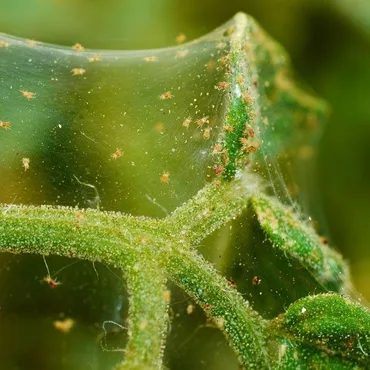
This pest is more likely when air is dry and the plant is stressed, especially around leaf undersides and growing tips.
Symptoms include fine webbing, pale speckling, or dull-looking foliage.
Solution
Rinse the foliage and increase air moisture slightly if conditions are very dry.
Treat repeated infestations with insecticidal soap, covering both sides of the leaves.
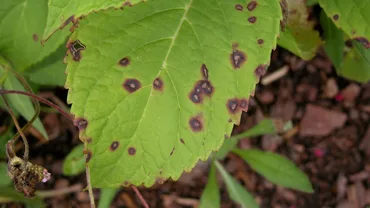
Symptoms of this issue include small dark, yellow-edged, or water-soaked marks on leaves, often linked to poor airflow or wet foliage.
Thick leaves of Hoya kerrii can hold moisture on the surface if the plant is crowded.
Solution
Remove affected leaves and avoid splashing water on the foliage.
Improve spacing, airflow, and light exposure, and keep tools clean when cutting damaged growth.
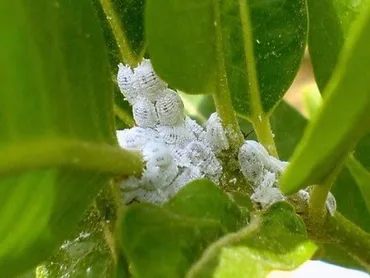
They often hide in leaf joints, vine nodes, and the undersides of thick leaves, appearing as small white cottony clusters.
It can weaken growth by feeding on plant sap.
Solution
Remove visible insects with a cotton swab with alcohol, then wipe leaves and stems carefully.
Repeat inspections weekly and isolate the houseplant until no new pests appear.
Hoya kerrii was first collected by Arthur Francis George Kerr in northern Thailand around 1910-1911.
It was later grown at Kew Gardens, where it flowered in 1911 and was formally described by William Grant Craib.
Mature plants can produce clustered star-shaped flowers that release abundant reddish-brown nectar.
This nectar may drip from the blooms and stain nearby surfaces.
Hoya kerrii can grow as either an epiphyte or a lithophyte in nature.
In other words, it can live on trees or on rocks rather than in ordinary ground soil.
Yes, mature hoya hearts produce blooms with a light sweet fragrance. Flowering is usually more likely on established vines that have reached enough maturity and stability.
Keep your plants happy and healthy with plant identification, disease detection, and easy care guidance.