Silver Queen plant Care (Aglaonema commutatum)

Also known as: Silver Queen, Philippine evergreen

About Silver Queen plant

Aglaonema commutatum, commonly called silver queen, is a compact tropical foliage plant grown mainly for its patterned leaves rather than its flowers. It is an evergreen perennial with upright to gently arching stems and dense foliage, making it suitable for tabletops or low, bushy displays.

In its native habitat in Southeast Asia, it grows on the forest floor under tree canopies, adapted to low, filtered light. Its thick, variegated leaves tolerate typical indoor conditions and some neglect, so many people find it relatively easy to care for Silver Queen plant.

It generally prefers stable indoor temperatures, moderate moisture, and a well-drained potting mix that stays lightly moist but not waterlogged.

Main Plant Requirements

Care Difficulty

Easy Care

Light Preference

Bright Indirect Light

Water Requirements

Moderate Water

Temperature Preference

Tropical / Frost Sensitive

Hardiness Zone

10–11

Soil Texture

Loamy, Peaty, Organic-rich

Soil pH

Acidic (5.5–6.5), Slightly acidic (6.5–7.0)

Soil Drainage

Moist but well-drained

Fertilization

Light (every 4–6 weeks)

Get Personalized Care Plan

Scan your plant to receive care tips personalized for your specific plant

Personalized Care in the App

Available on iOS and Android

How to Care for the Silver Queen plant

Aglaonema commutatum thrives in soft, filtered light that mimics a bright forest understory.

  • Provide 6–8 hours of bright, indirect light each day, such as near an east or north window or under a sheer curtain; direct midday sun can scorch leaves.
  • Tolerates partial shade and indoor corners, but Silver Queen plant may develop darker, stretched foliage and slower growth if light is too low.
  • In summer, shield from strong afternoon sun; in winter, move closer to windows or use supplemental light to offset shorter days.

This species prefers evenly moist but not saturated soil, with short dry periods between waterings.

  • Water when the top 2–4 cm of soil feels dry, using enough to moisten the root zone, then let excess drain away to avoid standing water.
  • Reduce watering in winter as growth slows, allowing the top 4–5 cm to dry; in active growing seasons, drying should be shallower and faster.
  • Watch for yellowing, mushy stems or a sour smell as signs of overwatering, and for drooping, curling, or crisp leaf edges as signs of underwatering in Aglaonema commutatum.

This plant prefers warm, stable temperatures similar to a tropical understory environment.

  • Aim for 65–80°F (18–27°C) for steady growth; short exposure up to 85°F (29°C) is tolerated if humidity and soil moisture are adequate.
  • Avoid temperatures below 60°F (16°C); prolonged exposure near 50°F (10°C) can cause leaf yellowing, tissue damage, and root stress.
  • Protect from frost and cold drafts in winter and from hot, drying air near heaters or sunbaked windows, which can cause leaf scorch and rapid wilting.

This species prefers moderately humid air but usually adapts to typical home conditions.

  • Aim for 50–60% humidity to keep foliage of the Silver Queen plant lush and reduce browning edges.
  • Tolerates short periods at 30–40%, but prolonged dry air may cause crispy tips and curling leaves.
  • Increase humidity with a nearby humidifier, grouping plants, or a wide pebble tray rather than misting leaves.

Aglaonema commutatum grows best in a loose, airy, organic-rich potting medium that drains quickly yet holds some moisture.

  • Use a peat- or coco-based houseplant mix amended with 20–30% perlite and 10–20% fine bark for structure and aeration.
  • Aim for slightly acidic to neutral pH around 6.0–7.0, which supports nutrient availability for steady growth.
  • Avoid heavy garden soil, pure compost, or mixes that stay wet for more than 3–4 days, as these promote root rot.
  • Improve drainage further by adding coarse perlite or pumice and ensuring water can move freely through the entire root zone.

This species is well suited to container growing for both homes and shaded patios.

  • Choose a pot that is slightly wider than the root ball so roots can spread laterally without large unused pockets of wet mix.
  • Select a stable, heavier container or wider base if the plant grows tall and foliage-heavy to prevent tipping.
  • Use a pot material that matches your watering habits, such as breathable terra-cotta for drier roots or glazed ceramic for slower moisture loss.

Aglaonema commutatum benefits from light, consistent feeding during the active growing season for steady foliage growth.

  • Apply a balanced liquid fertilizer (such as 10-10-10 or 20-20-20) diluted to 1/4–1/2 strength every 4–6 weeks in spring and summer.
  • Use either a balanced NPK houseplant fertilizer or a small amount of high-quality compost mixed into the potting medium.
  • Avoid feeding during late fall and winter when growth slows; resume only when new leaves appear.
  • For a Silver Queen plant, flush the soil with plain water 2–3 times per year to reduce salt buildup from fertilizers.

Pruning Aglaonema commutatum is mainly used to keep the plant compact, tidy, and to encourage fresh foliage.

  • Best time to prune is in spring or early summer when the plant is actively growing.
  • Remove yellow, brown, damaged, or diseased leaves at the base with clean, sharp scissors or pruners.
  • Thin out crowded stems to improve light penetration and maintain a balanced, bushy shape.
  • Cut back leggy stems just above a node to stimulate branching and denser new growth.

Repotting supports healthy root development and stable growth for Aglaonema commutatum kept in containers.

  • Check for roots circling the pot, pushing through drainage holes, or slowed growth as signs it needs a larger container.
  • Plan to repot every 2–3 years in spring, moving to a pot only 2–5 cm wider with fresh, well-draining mix.
  • Water the plant a day before repotting, then gently loosen the root ball and remove old, compacted soil from the outer layer.
  • After repotting, water thoroughly, keep in bright, indirect light, and avoid fertilizing for 4–6 weeks to limit root stress.

Aglaonema commutatum is most reliably propagated by stem cuttings or by division of mature clumps.

  • Take 8–12 cm stem cuttings with at least 2 nodes in late spring or summer when growth is strongest.
  • Root cuttings in moist, sterile potting mix or water, keeping temperatures around 70–80°F and humidity at 50–70%.
  • For division, unpot a well-established plant, gently separate rooted sections, and replant each in a small container.
  • Provide bright, indirect light and consistently lightly moist soil until new leaves show that roots are established.

This tropical species requires indoor overwintering or consistently warm conditions, as it has very low frost tolerance.

  • Bring container plants indoors before outdoor temperatures drop below 55°F, as foliage is damaged near 50°F and killed by frost.
  • Place in bright, indirect light away from cold drafts, exterior doors, and uninsulated windows.
  • Maintain room temperatures around 65–75°F and avoid overwatering; allow the top soil layer to dry slightly between waterings.
  • Skip or greatly reduce fertilization in winter, since growth is slower and nutrient demand is low.

Care Tips

Rotate For Symmetry

Turn the pot 90° every 2–3 weeks to prevent the plant from leaning and to keep the leaf pattern and height even on all sides, which is especially helpful when growing Silver Queen plant in a fixed light position.

Refresh Compact Soil

Every 12–18 months, slide the root ball out, loosen the outer 1–2 cm of compacted mix with your fingers, trim any dead roots, and repot into the same container with fresh mix to restore aeration without forcing size up.

Lower-Leaf Management

As older bottom leaves yellow naturally, remove them cleanly at the stem base with sterile scissors so the plant keeps a neat form and energy shifts to new foliage instead of failing leaves.

Quarantine New Plants

Keep any new houseplant at least 1–2 m away for 3–4 weeks and inspect weekly so pests such as spider mites, mealybugs, or scale do not spread unnoticed onto your established Aglaonema.

Dry-Surface Check

Before watering, slide a finger or moisture probe along the inner pot wall down 3–5 cm, because this area often stays wet longer than the center and helps prevent hidden overwatering in decorative cachepots.

Common Pests and Diseases

Mealybugs

These insects hide in leaf axils and along stems, leaving white, cottony clusters and causing leaf yellowing and stunted growth.

Solution

Wipe affected areas with cotton pads dipped in 70% isopropyl alcohol, then rinse leaves with lukewarm water; repeat weekly until no new insects appear and isolate the plant from others during treatment.

Spider mites

These pests thrive in dry indoor air, causing fine stippling on leaves, dull foliage, and delicate webbing on leaf undersides and between petioles.

Solution

Shower the plant with lukewarm water to remove mites, then increase humidity to 40–60% and use repeated applications of insecticidal soap or horticultural oil on leaf undersides every 5–7 days for several cycles.

Scale insects

This pest appears as small, brown or tan bumps on stems and leaf midribs, drawing sap and leading to sticky honeydew and sooty mold on leaves.

Solution

Manually scrape or wipe off visible scale with a soft cloth or cotton swab dipped in alcohol, then follow with 2–3 treatments of horticultural oil at 7–10 day intervals to target remaining crawlers.

Bacterial leaf blight

This disease causes irregular, water-soaked, translucent lesions on leaves that may turn brown with yellow halos, often starting on older foliage in warm, wet conditions.

Solution

Remove and discard affected leaves, avoid wetting foliage, improve air circulation, and keep leaves dry by watering only the soil; if spread continues, discard heavily infected plants to protect nearby Aglaonema commutatum specimens.

Fusarium stem and root rot

Symptoms include yellowing, wilting, and collapse of stems at the soil line, with brown, mushy roots and sometimes pinkish fungal growth on affected tissue.

Solution

Discard severely affected plants, as recovery is unlikely; for mild early cases, unpot, trim off all rotted roots and stems, dust cuts with a fungicidal product if available, and repot in fresh, well-draining mix while reducing watering frequency and avoiding waterlogged conditions as part of Aglaonema commutatum care.

Interesting Facts

Naturally variegated leaves

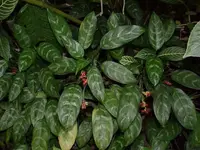
This species naturally develops pale green to silvery markings along the midrib and between veins, caused by uneven chlorophyll distribution in the leaf tissue rather than by viral infection or nutrient deficiency.

Shade-forest origin

In the wild it grows on the shaded forest floor of the Philippines and nearby regions, where it adapts to very low light by producing broad leaves with relatively high chlorophyll content.

Hybrid parent species

This species has been widely used as a parent in breeding modern ornamental aglaonema cultivars, contributing its silver leaf patterning and tolerance of indoor light levels to many popular houseplant selections.

FAQs about Silver Queen plant

Brown, crispy leaf edges usually result from low humidity, excess fertilizer salts, or irregular watering. Flush the potting mix, trim damaged tips, and maintain stable moisture and moderate humidity to prevent further damage on new growth.

Grow Healthy Plants with Botan Care

Keep your plants happy and healthy with plant identification, disease detection, and easy care guidance.

Botan plant care app — identify plants on mobile

Explore More Plants