Star jasmine Care (Trachelospermum jasminoides)

Also known as: Star-jasmine or Confederate-jasmine, Star jasmine

About Star jasmine

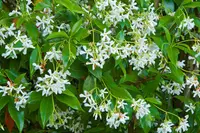
Star jasmine, Trachelospermum jasminoides, is an evergreen woody vine grown for its fragrant white, star-shaped flowers and glossy dark green leaves. It typically climbs on supports or can be trained as a groundcover, forming dense, tidy growth.

This species occurs naturally in East Asia, including parts of China, Korea, and Japan, but is widely used in warm-temperate gardens. It is considered relatively easy to grow when given enough light, moderate moisture, and well-drained soil.

Understanding how to care for Star jasmine mainly involves providing suitable support, avoiding waterlogged conditions, and protecting it from severe frost in cooler climates.

Main Plant Requirements

Care Difficulty

Moderate Care

Light Preference

Full Sun

Water Requirements

Moderate Water

Temperature Preference

Warm Climate

Hardiness Zone

8–11

Soil Texture

Sandy, Loamy, Organic-rich

Soil pH

Acidic (5.5–6.5), Slightly acidic (6.5–7.0)

Soil Drainage

Moist but well-drained

Fertilization

Light (every 4–6 weeks)

Get Personalized Care Plan

Scan your plant to receive care tips personalized for your specific plant

Personalized Care in the App

Available on iOS and Android

How to Care for the Star jasmine

This vine relies on strong light to bloom well but needs some protection from harsh sun.

  • Provide 4–6 hours of direct sun daily, ideally morning sun with light afternoon shade, especially in hotter regions.
  • Tolerates bright partial shade, but Star jasmine may flower less and grow more sparsely if it receives under 3–4 hours of direct light.
  • In summer, avoid all-day intense afternoon sun that can scorch leaves; in winter, choose the brightest site available to maintain strong growth.

This plant prefers steady moisture in well-drained soil rather than extremes of wet or dry.

  • Water when the top 3–5 cm of soil feels dry, soaking the root zone deeply and allowing excess to drain away.
  • In spring and summer, expect to water more often during hot, windy periods; reduce frequency in cool or rainy weather so the soil never stays soggy.
  • Watch for yellowing, soft leaves as a sign of overwatering, and limp, curling leaves or dry, brittle stems as indicators of underwatering in Trachelospermum jasminoides.

This climber grows best in mild to warm conditions and does not tolerate severe frost.

  • Aim for active growth in 65–80°F (18–27°C); plants generally slow down outside this range but remain stable if other conditions are good.
  • Mature plants can tolerate brief drops to about 15–20°F (-9 to -6°C) once established, but young plants are more easily damaged by frost.
  • In hot spells above 90°F (32°C), provide extra water and some afternoon shade to limit heat stress, and avoid planting in frost pockets that trap cold air.

This climber handles typical home and outdoor humidity but benefits from moderately moist air.

  • Aim for 40–60% humidity, which suits Star jasmine without encouraging fungal problems.
  • Dry air may cause crisp leaf tips and slower growth; check that soil moisture is correct before adjusting humidity.
  • Increase humidity locally with grouped plants or a wide pebble tray under the pot, keeping the pot base above the waterline.

This species prefers a loose, well-drained but moisture-retentive substrate.

  • Use a loamy, organic-rich mix that holds moisture yet drains freely, such as 50% peat-free compost, 30% fine bark, and 20% perlite or coarse sand.
  • Ensure rapid drainage; water should flow through within seconds, with no puddling on the surface or waterlogging in the saucer.
  • Keep pH slightly acidic to neutral, around 6.0–7.0, as this range supports nutrient availability for Trachelospermum jasminoides.
  • Improve aeration by adding chunky bark or extra perlite if the mix compacts or stays wet longer than 2–3 days after watering.

This vine is very suitable for container growing when the pot is chosen for drainage and stability.

  • Choose a deep, heavy container to anchor the vine and support the weight of a trellis without tipping in wind.
  • Select terracotta if faster drying is helpful in wet climates, or glazed/ plastic pots where moisture retention is needed.
  • Use a pot 30–40 cm wide for mature plants to allow lateral root spread without crowding the root zone.

Trachelospermum jasminoides benefits from light, consistent feeding during the active growing season.

  • Use a balanced, slow-release fertilizer (for example 10-10-10) or a thin layer of compost on the soil surface in spring.
  • Feed every 6–8 weeks from mid-spring to late summer for container-grown Star jasmine; in-ground plants often need less.
  • Dilute liquid feed to 1/2 strength and apply to moist soil to avoid root burn.
  • Stop fertilizing in fall and winter so growth can slow naturally during dormancy.

Pruning Trachelospermum jasminoides keeps the vine controlled, encourages branching, and maintains flowering performance.

  • Carry out main pruning in late winter or very early spring before strong new growth starts.
  • Remove dead, damaged, or crossing stems first, then shorten overly long or tangled shoots to shape the plant.
  • Use clean, sharp secateurs and cut just above a leaf node to encourage bushier growth.
  • Lightly trim after flowering if needed to tidy growth, avoiding very hard cuts into old, bare wood.

This vine adapts well to both ground planting and containers but sometimes needs root space adjustments.

  • Check for roots circling the pot, pushing through drainage holes, or slowed growth as signs a container plant needs a larger pot.
  • Plan major transplanting or repotting in early spring so Trachelospermum jasminoides can recover during the growing season.
  • Expect to repot container plants every 2–3 years into a pot 1–2 in wider, using free-draining soil.
  • Water thoroughly before and after moving, keep roots shaded, and avoid disturbing the rootball more than necessary to limit stress.

Trachelospermum jasminoides is most commonly propagated from semi-ripe cuttings or by simple layering.

  • Take 8–10 in semi-ripe stem cuttings in late spring to mid-summer, including several leaf nodes.
  • Remove lower leaves, dip the cut end in rooting hormone, and place in moist, free-draining mix under bright, indirect light.
  • Maintain high humidity around cuttings with a clear cover and keep temperatures around 70–75°F for best rooting.
  • For layering, pin a flexible stem to the soil, cover a section with mix, keep moist, then sever and pot once well rooted.

This plant is moderately cold hardy but benefits from some winter care in cooler regions.

  • In-ground plants tolerate light frosts once established, typically down to about 10–15°F depending on local conditions.
  • Apply a 5–8 cm mulch over the root zone in late fall, keeping it slightly away from the main stems.
  • In colder climates, wrap trellised stems with breathable horticultural fleece during severe freezes.
  • Move container plants into a sheltered, frost-free spot such as an unheated garage or bright porch for Star jasmine indoor care.

Care Tips

Early vine training

Install a sturdy trellis or wires when the plant is young and loosely tie new stems horizontally with soft garden ties; horizontal training encourages more flowering side shoots instead of a few long, bare leaders.

Root-zone mulching

Apply a 5–8 cm layer of bark mulch or composted wood chips around the base, keeping it 5 cm away from stems, to keep roots cool, conserve moisture, and reduce competition from weeds.

Salt and wind protection

In coastal or exposed sites, use a windbreak screen or plant on the sheltered side of a fence or wall to reduce leaf scorch and salt spray damage, which can otherwise stunt flowering and new growth.

Container stabilization

For plants in pots, choose a heavy, wide container and secure any tall trellis into the pot before the vine gets large so strong winds or top-heavy growth do not tip the whole plant over.

Structured pest checks

Once a month during active growth, inspect leaf undersides and stem joints for scale and mealybugs and wipe or spray early infestations with insecticidal soap, as consistent monitoring is more effective than occasional reactive treatments when caring for Star jasmine.

Common Pests and Diseases

Scale insects

This pest feeds on stems and leaves, causing yellowing, leaf drop, and sticky honeydew that can lead to sooty mold.

Solution

Wipe or gently scrape off visible scale with a cotton pad dipped in alcohol, then wash the foliage with lukewarm soapy water and improve airflow; for heavier infestations, use a horticultural oil spray, making sure to coat stems, leaf undersides, and any trellis or support the plant is climbing on.

Spider mites

These insects thrive in hot, dry conditions and cause fine speckling, dull foliage, and delicate webbing on the undersides of leaves and between twining stems.

Solution

Increase humidity around the plant, regularly hose down or shower the foliage to dislodge mites, and apply insecticidal soap or horticultural oil, repeating every 5–7 days until new growth appears clean.

Mealybugs

This pest appears as white, cottony clusters in leaf axils and on young shoots, weakening plants and causing distorted growth and sticky residue.

Solution

Isolate the plant, dab visible mealybugs with a cotton swab dipped in alcohol, rinse foliage thoroughly, and follow up with repeated applications of insecticidal soap, paying extra attention to leaf joints and crowded twining sections.

Sooty mold

This disease is a black, powdery fungal growth that develops on the sugary honeydew left by sap-sucking insects, reducing light reaching the leaves and impairing photosynthesis.

Solution

Control the underlying pests such as scale or aphids, then gently wash affected leaves with mild soapy water or a soft cloth, and keep the canopy better ventilated by lightly thinning dense growth if needed for easier Trachelospermum jasminoides care.

Leaf spot

This disease causes brown or tan spots with possible yellow halos on leaves, which can merge to form larger dead areas, especially in humid, poorly ventilated conditions.

Solution

Remove and dispose of affected leaves, avoid overhead watering, space vines so air can move through the foliage, and if the problem persists, apply a labeled copper or other ornamental shrub fungicide, coating both upper and lower leaf surfaces.

Interesting Facts

Evergreen twining strategy

This species is an evergreen woody climber that twines by wrapping its stems around supports rather than using tendrils or aerial roots, which allows it to climb without penetrating or damaging surfaces like some true ivies do.

Pinwheel flower design

Its white, star-shaped flowers have twisted petals arranged like a pinwheel, an adaptation that increases visibility to night- and dusk-active pollinators in its native East Asian habitats.

Latex-like defensive sap

The stems and leaves exude a white, latex-like sap when cut, which helps seal wounds and likely deters herbivores due to its sticky texture and bitter taste.

Botan icon

Did you know?

In mild climates this vine can develop a woody framework that functions almost like a small shrub, allowing gardeners to prune and maintain it as a fragrant, free-standing mound rather than a traditional climber.

FAQs about Star jasmine

Poor flowering usually comes from inadequate light, heavy pruning at the wrong time, or excess nitrogen fertilizer. Focus on balanced feeding, good light, and only light trimming after flowering when following general Trachelospermum jasminoides care.

Grow Healthy Plants with Botan Care

Keep your plants happy and healthy with plant identification, disease detection, and easy care guidance.

Botan plant care app — identify plants on mobile

Explore More Plants