Pacová Care (Philodendron martianum)

About Pacová

Pacová, Philodendron martianum, is a compact aroid valued for its thick, glossy leaves and swollen base that stores water. It usually forms a low, architectural clump rather than a climbing vine.

This species is native to forested areas of Brazil, where it grows in warm, humid, shaded habitats. Its sturdy structure and water-storing tissues make it relatively forgiving of short dry periods and minor care mistakes.

For many homes, Pacová is considered an easy to moderate plant, as long as it receives bright, indirect light, a free-draining potting mix, and consistent, moderate moisture. These traits help explain why people often find it straightforward to care for Pacová indoors.

Main Plant Requirements

Care Difficulty

Easy Care

Light Preference

Bright Indirect Light

Water Requirements

Moderate Water

Temperature Preference

Tropical / Frost Sensitive

Hardiness Zone

10–11

Soil Texture

Loamy, Peaty, Organic-rich

Soil pH

Acidic (5.5–6.5), Slightly acidic (6.5–7.0)

Soil Drainage

Moist but well-drained

Fertilization

Light (every 4–6 weeks)

Get Personalized Care Plan

Scan your plant to receive care tips personalized for your specific plant

Personalized Care in the App

Available on iOS and Android

How to Care for the Pacová

Philodendron martianum prefers bright, filtered conditions that mimic dappled forest light.

  • Provide 4–6 hours of bright, indirect light daily, such as near an east-facing window or under 30–50% shade cloth outdoors for Pacová.
  • Tolerates partial shade and can grow with 2–3 hours of gentle morning sun, but avoid harsh midday or afternoon sun to prevent leaf scorch.
  • If stems stretch or leaves pale, increase light by moving it closer to a bright window or using sheer curtains to filter stronger sun, especially in winter.

Philodendron martianum prefers evenly moist but not saturated soil around its thick, water-storing stems.

  • Water when the top 2–4 cm of soil feels dry, allowing water to drain fully so no water remains standing around the roots.
  • Reduce watering in cooler months, letting the top 4–5 cm dry; in warm active growth, dry only the top 2–3 cm before watering again.
  • Watch for yellow, mushy leaves as a sign of overwatering and crisp, curling leaves or very light pots as signs the plant needs more water.

This species performs best in warm, stable temperatures without sudden extremes.

  • Aim for 65–80°F (18–27°C) for strong growth, keeping conditions consistently warm for this tropical plant.
  • Protect it from cold; growth slows below 60°F (16°C) and tissue damage can occur below 50°F (10°C), with no tolerance to frost.
  • In hot spells above 86°F (30°C), increase shade and airflow, and avoid placing the plant near heat sources or on sun-baked surfaces that raise root temperatures.

This species prefers moderately high humidity but adapts to typical indoor air if kept evenly watered.

  • Aim for 50–70% humidity; it tolerates brief dips lower but growth is slower in very dry rooms.
  • In dry air Pacová may show browned leaf tips, rolled edges, or stalled new leaves as signs of humidity stress.
  • Increase humidity by grouping plants, using a small humidifier nearby, or placing the pot on a pebble tray above, not in, water.

Philodendron martianum grows best in loose, airy, organic-rich soil that drains quickly yet holds some moisture.

  • Use a mix of roughly 40% peat or coco coir, 30% pine bark, 20% perlite, and 10% compost for structure and nutrients.
  • Aim for slightly acidic to neutral pH around 6.0–7.0, which supports nutrient uptake and healthy root function.
  • Ensure the mix feels chunky, not dense; increase bark or perlite if water takes longer than 2–3 minutes to drain through.
  • Avoid compacted, clay-heavy, or constantly soggy mixes, which promote root rot and reduce oxygen around the roots.

This species is very suitable for container growing due to its compact, chunky root system.

  • Choose a pot that is wider than it is tall to support the heavy rosette and prevent tipping as stems thicken.
  • Use a stable, heavier container material if the plant sits in exposed or high-traffic spots to reduce the risk of toppling.
  • Leave a clear gap between soil surface and pot rim so top watering does not overflow and can drain away freely.

Philodendron martianum benefits from modest, consistent feeding during its active growing season.

  • Use a balanced liquid NPK fertilizer at 1/4–1/2 strength every 4–6 weeks from spring to early fall.
  • Alternatively, apply a slow-release granular fertilizer at the start of spring for Pacová in containers.
  • Avoid fertilizing in winter or when growth is very slow, as roots are less active.
  • Water before applying fertilizer to reduce root burn and keep salts from building up in the potting mix.

Philodendron martianum needs only light pruning to maintain a clean, compact form.

  • Best time for pruning is in spring or early summer when the plant is actively growing.
  • Remove yellowing, dead, or damaged leaves at the base with clean, sharp scissors or pruners.
  • Thin out crowded or inward-facing leaves to improve air flow and light penetration around the rosette.
  • Avoid heavy cutting into the thick stem; focus on leaf removal to preserve the plant’s symmetrical shape.

This species prefers a snug pot but benefits from timely repotting to support healthy roots.

  • Repot every 2–3 years in spring when roots circle the pot, push through drainage holes, or growth slows.
  • Choose a container 2–5 cm wider, with drainage holes, and use a chunky, airy aroid mix.
  • Gently loosen circling roots, remove rotten portions, and keep the original root ball mostly intact.
  • Water lightly after repotting, keep in bright, indirect light, and avoid fertilizing for 2–3 weeks to reduce stress.

Philodendron martianum is most reliably propagated by division rather than stem cuttings.

  • Plan division for spring or early summer, when the plant is actively growing and recovers faster.
  • Lift the plant during repotting and separate offsets, ensuring each division has healthy roots and at least a few leaves.
  • Plant divisions in a small pot with airy, well-drained mix and keep humidity around 60–70%.
  • Maintain bright, indirect light and slightly moist soil until new roots and leaves show stable growth.

This tropical species is frost-sensitive and needs warm, stable conditions through winter.

  • Keep indoor temperatures around 65–75°F and never below 55°F to avoid cold damage.
  • Move container plants away from drafts, cold windows, and heating vents that cause temperature swings.
  • Reduce watering in winter, allowing the top layer of mix to dry more, and withhold fertilizer until spring.

Care Tips

Pot weight check

Use the weight of the pot as a guide and only repot when the plant and mix together feel noticeably top-heavy or unstable, since this species prefers to be slightly root-bound in a snug container.


Support thick petioles

In tall or leaning specimens, place low, discreet supports near the base to stabilize the heavy petioles and prevent mechanical damage if the pot is bumped.

Controlled leaf cleaning

Wipe the thick leaves every 4–6 weeks with a damp, soft cloth only, avoiding leaf-shine products that can clog stomata and reduce gas exchange.

Salt buildup management

Every 2–3 months, flush the potting mix thoroughly with clean water until it runs freely from the drainage holes to reduce fertilizer salt accumulation that can burn the succulent roots.

Seasonal growth audit

At the end of winter, examine root health and remove any soft, dark, or sour-smelling roots before the main growth period, as this quick inspection keeps the plant vigorous when caring for Pacová over many years.

Common Pests and Diseases

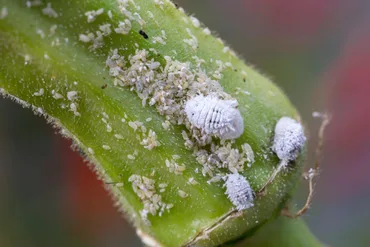
Mealybugs

This pest often hides in the thick leaf bases and around the swollen petioles, feeding on sap and causing yellowing and sticky residue. Symptoms include cottony white clusters in leaf axils and slowed growth.

Solution

Isolate the plant, then dab visible clusters with cotton swabs dipped in 70% isopropyl alcohol and gently wipe leaf bases and sheaths. Repeat weekly and use a mild insecticidal soap on all foliage, while reducing excess nitrogen fertilization that encourages soft new growth.
Scale insects

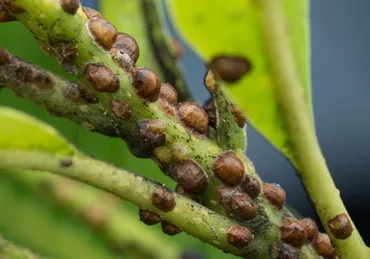
These insects attach to the smooth, fleshy stems and undersides of leaves, appearing as small brown or tan bumps. Symptoms include sticky honeydew, gradual yellowing, and a dull, dirty appearance on foliage.

Solution

Scrape or wipe off adults with a soft cloth or fingernail, then apply insecticidal soap or a horticultural oil spray, making sure to coat stems and leaf undersides. Improve light and avoid overfertilizing to reduce stress that makes the plant more susceptible.
Spider mites

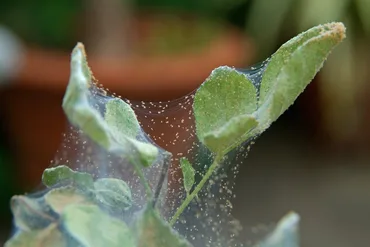
This pest may appear when plants are kept in warm, dry indoor air, causing fine webbing between thick leaves and stippled, faded patches. Symptoms include a dusty look on foliage and tiny moving dots on the underside of leaves.

Solution

Rinse foliage thoroughly with lukewarm water, including leaf undersides and crowns, then apply insecticidal soap at 5–7 day intervals until no activity is seen. Slightly raising humidity and avoiding direct blasts from heaters or vents can help prevent reinfestation.

Bacterial leaf spot

This disease causes water-soaked, translucent spots on the thick leaves that can turn dark and sometimes ooze, often starting where water sits in the leaf bases. Symptoms include irregular lesions with yellow halos and a soft, collapsed texture in severe cases.

Solution

Remove and discard affected leaves, keep foliage dry, and avoid overhead watering or letting water sit in the crown. Improve air movement around the plant, disinfect tools, and if spread continues, use a copper-based bactericide according to label directions.

Fungal crown rot

This disease develops when the plant is kept in constantly wet, poorly drained mix, leading to browning and collapse where the thick petioles meet the root zone. Symptoms include a mushy, foul-smelling crown and outer leaves yellowing from the base inward.

Solution

Remove the plant from its pot, cut away all soft, brown tissue with sterile tools, and repot into a fresh, fast-draining aroid mix in a container with drainage holes. Water only when the upper 3–5 cm of mix is dry, and ensure the plant sits in bright, indirect light to support recovery as part of overall Philodendron martianum plant care.

Interesting Facts

Swollen water-storing stems

This species develops thick, bottle-shaped leaf bases that store water and nutrients, an adaptation that helps it tolerate short dry periods in its native habitat.

Atlantic forest native

It is naturally found in Brazil’s Atlantic forest, where it usually grows as a terrestrial plant on the forest floor rather than climbing like many other philodendrons.

Compact rosette growth

Instead of producing long vines, it forms a tight rosette of upright, arching leaves, which is one reason Philodendron martianum plant care indoors differs from that of typical trailing philodendrons.

FAQs about Pacová

Yellowing leaves usually result from chronic overwatering, compacted soil, or low light. Check that the pot drains well, let the top layer dry between waterings, and remove yellow leaves so the plant can redirect energy to healthy tissue.

Grow Healthy Plants with Botan Care

Keep your plants happy and healthy with plant identification, disease detection, and easy care guidance.

Botan plant care app — identify plants on mobile

Explore More Plants