


Support And Training
Use a thin trellis, hoop, or mesh and gently clip or loop vines onto it so the plant can form a dense curtain rather than a tangled mass that shades its own inner leaves.

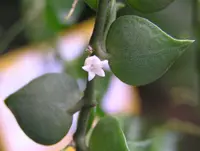
Million Hearts (Dischidia ruscifolia) is a compact trailing epiphyte, often grown in hanging containers for its small, paired, heart-shaped leaves. Stems can form long, cascading chains that create a dense, textured curtain of foliage.
In the wild, it grows on trees in tropical forests of the Philippines and Southeast Asia, where it enjoys warm temperatures and good air movement. This background makes it generally forgiving indoors, as long as it is protected from cold and severe drying.
It tends to be moderately easy to grow, but sensitive to overwatering and heavy, compact potting mixes. Bright, filtered light and a fast-draining, airy substrate are key to how to care for Million Hearts.

Care Difficulty
Moderate Care

Light Preference
Bright Indirect Light

Water Requirements
Moderate Water

Temperature Preference
Tropical / Frost Sensitive

Hardiness Zone
11–12

Soil Texture
Sandy, Loamy, Organic-rich

Soil pH
Acidic (5.5–6.5), Slightly acidic (6.5–7.0)

Soil Drainage
Well-drained

Fertilization
Light (every 4–6 weeks)
Scan your plant to receive care tips personalized for your specific plant
Available on iOS and Android
Dischidia ruscifolia prefers bright, indirect light that mimics dappled tropical sun.
Water Dischidia ruscifolia lightly but consistently, allowing it to dry slightly between waterings.
This plant prefers warm, stable conditions similar to its native tropical habitat.
This species prefers moderately humid air but usually adapts to typical home levels.
This plant performs best in a light, airy, fast-draining mix that mimics an epiphytic environment.
This species is very suitable for container growing, especially in hanging pots or wall planters.
This epiphytic species has modest nutrient needs, so light, consistent feeding is better than heavy doses.
Light pruning keeps Dischidia ruscifolia compact and encourages fuller, branching stems.
This plant prefers slightly tight quarters and infrequent repotting, as long as drainage remains excellent.
New plants are most commonly produced from short stem cuttings taken from healthy vines.
This tropical species is not frost tolerant and needs mild, stable conditions through winter.

Plant Health Check
Not sure what's wrong with your plant? Check your plant's health inside the app.
This species often grows as an epiphyte on trees and is frequently found near ant nests, using leaf litter and debris collected by ants as a nutrient source in its natural habitat in the Philippines.
Its small, opposite, heart-shaped leaves have a relatively thick, water-retentive structure, which helps the plant tolerate brief dry periods despite living in humid forest environments.
In nature, its long, thin stems can form dense, trailing mats that drape over branches and trunks, maximizing light capture while keeping roots anchored in pockets of organic material.

This species naturally inhabits lowland tropical forests in the Philippines, where it often occupies high, airy positions on host trees, taking advantage of bright filtered light and frequent moisture without ever rooting in the ground.
Yellowing leaves usually result from overwatering, poor drainage, or prolonged low light. Check that the potting mix drains quickly, empty saucers after watering, and remove affected foliage so new growth can develop normally.
Keep your plants happy and healthy with plant identification, disease detection, and easy care guidance.

Amethyst flower
Browallia speciosa
pinto peanut
Arachis pintoi
 POPULAR
Philodendron squamiferum
Philodendron squamiferum
crested Philippine violet
Barleria cristata
apple mangrove
Sonneratia caseolaris
 POPULAR
Swiss Cheese Vine
Monstera adansonii
String of Nickels
Dischidia nummularia
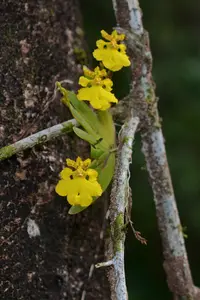
Erycina pusilla
Erycina pusilla