Anthurium magnificum Care

About Anthurium magnificum

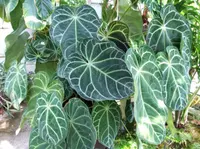
Anthurium magnificum is a tropical aroid grown mainly for its large, velvety, heart-shaped leaves with strong, pale veins. It is usually kept as a compact to medium-sized indoor foliage plant. Native to the rainforests of Colombia, it grows as an epiphyte or lithophyte, anchoring to trees or rocks rather than typical garden soil. This background explains its preference for airy substrates, stable warmth, and moderate humidity. It is not the easiest species for beginners, but it is manageable if its basic needs are understood. Those learning how to care for Anthurium magnificum should focus on bright, indirect light, consistent but not waterlogged moisture, and a very well-drained, chunky mix.

Main Plant Requirements

Care Difficulty

Moderate Care

Light Preference

Bright Indirect Light

Water Requirements

Moderate Water

Temperature Preference

Tropical / Frost Sensitive

Hardiness Zone

11–12

Soil Texture

Loamy, Peaty, Organic-rich

Soil pH

Acidic (5.5–6.5), Slightly acidic (6.5–7.0)

Soil Drainage

Moist but well-drained

Fertilization

Light (every 4–6 weeks)

Get Personalized Care Plan

Scan your plant to receive care tips personalized for your specific plant

Personalized Care in the App

Available on iOS and Android

How to Care for the Anthurium magnificum

This plant thrives in bright, indirect light that mimics a shaded rainforest canopy.

  • Provide 8–10 hours of bright, filtered light each day, such as near an east- or north-facing window or under light sheer curtains.
  • Tolerates partial shade, but very low light leads to slow growth, smaller leaves, and duller color in Anthurium magnificum.
  • Avoid harsh midday and afternoon sun; direct rays can scorch leaves within hours, especially in summer, so move it back 1–2 m from strong windows.

Watering should keep the root zone evenly moist but never saturated.

  • Allow the top 2–4 cm of soil to dry before watering, using a finger test rather than a fixed schedule to guide timing.
  • Use a chunky, free-draining mix; water thoroughly until excess drains away, then empty saucers to reduce root rot risk for Anthurium magnificum.
  • In winter or low light, drying will slow, so extend intervals slightly and watch for soft, yellowing leaves from overwatering or crisp edges from underwatering.

Stable, warm conditions support strong foliage and root growth.

  • Aim for 65–80°F (18–27°C) as the main growing range, which suits most homes and shaded outdoor spots in mild climates.
  • Protect from cold; growth slows below 60°F (16°C), and exposure under 50°F (10°C) can cause leaf damage, blackened edges, and root stress.
  • Tolerates short heat spikes up to 85–90°F (29–32°C) if humidity and shade are good, but avoid hot, drying drafts from heaters, vents, or reflective windows.

This aroid needs elevated humidity to keep its large leaves healthy and reduce edge damage.

  • Aim for 60–80% humidity; it tolerates brief drops to 50% but leaves become more prone to browning.
  • Dry indoor air causes crisp leaf tips, brown margins, and slower unfolding of new leaves.
  • Increase humidity with a nearby humidifier, grouping plants, and placing the pot on a pebble tray with water below the pot base.

Anthurium magnificum prefers a loose, airy, organic-rich mix that mimics epiphytic rainforest conditions.

  • Use a chunky mix such as 40% fine orchid bark, 30% peat or coco coir, 20% perlite, and 10% compost.
  • Ensure very fast drainage; water should run through within seconds and the mix should never stay waterlogged.
  • Keep pH slightly acidic to neutral, roughly 5.5–6.8, to support nutrient uptake and root health.
  • Increase aeration by adding more bark or perlite and avoid dense garden soil or mixes dominated by fine peat alone.

This species adapts very well to container growing when the pot supports its large leaves and chunky roots.

  • Choose a pot slightly wider than the root mass so roots can spread horizontally without a deep, soggy column of mix.
  • Use a stable, heavier container or cachepot to prevent tipping as the foliage becomes large and top-heavy.
  • Select porous materials like unglazed terracotta if the mix stays wet too long, or glazed plastic/ceramic if drying is very fast in your climate.

This aroid benefits from light, consistent feeding rather than heavy applications.

  • Use a balanced liquid fertilizer (for example 10-10-10 or 20-20-20) diluted to 1/4–1/2 strength for Anthurium magnificum.
  • Feed every 4–6 weeks during the active growing season, spring through early fall.
  • Reduce or stop feeding in winter when growth slows, to avoid salt buildup and weak tissue.
  • Optionally supplement with a small amount of fine compost or a slow-release fertilizer mixed into the top layer of the potting mix.

Pruning is mainly hygienic and shaping, not intensive, for this species.

  • Best time for light pruning of Anthurium magnificum is late winter to early spring, before strong new growth.
  • Remove yellow, brown, or damaged leaves at the base with clean, sharp scissors or pruners.
  • Thin crowded stems to improve airflow and light distribution, which supports healthier foliage and flowers.
  • Disinfect tools before and after use to reduce disease risk and make clean cuts that heal faster.

Container-grown plants appreciate periodic repotting to maintain root health and vigor.

  • Check for roots circling the pot, pushing through drainage holes, or slow, stalled growth as signs Anthurium magnificum needs a larger container.
  • Plan to repot every 2–3 years in spring, moving up only 2–5 cm in pot diameter.
  • Use a very airy mix (orchid bark, perlite, and peat or coco coir), handling roots gently and keeping them spread out.
  • Water thoroughly after repotting, keep in bright, indirect light, and avoid heavy feeding for 2–3 weeks to reduce transplant stress.

This plant is most reliably propagated by division rather than from seed.

  • Divide Anthurium magnificum in late spring or early summer when repotting, choosing clumps with several healthy roots and at least one growth point.
  • Use a sterile, sharp knife to separate sections, minimizing root damage and removing any rotted tissue.
  • Plant divisions in a warm (70–80°F), humid environment with bright, indirect light and an airy aroid mix.
  • Keep the medium lightly moist, not wet, and cover with a clear humidity dome or bag if air is very dry to encourage quick rooting.

This tropical houseplant requires warm, stable indoor conditions during winter in most climates.

  • Anthurium magnificum is not frost tolerant and should be kept indoors when outdoor temperatures fall below 60°F.
  • Maintain indoor temperatures around 65–75°F and avoid cold drafts from windows or doors.
  • Provide bright, indirect light and slightly reduce watering, allowing the top of the mix to dry more between waterings.
  • Increase humidity with a pebble tray or humidifier if indoor air drops below 40%.

Care Tips

Root support staking

Install a thin, smooth stake or moss pole close to the main stem and loosely tie petioles with soft ties to keep large leaves upright and reduce mechanical stress on the roots and stem joints.

Prevent calcium buildup

Use filtered, rain, or distilled water in hard-water areas and flush the pot with plain water every 4–6 weeks to reduce mineral deposits that can burn roots and leaf edges.

Targeted pest checks

Inspect the undersides of leaves, petiole bases, and where petioles meet the stem every 1–2 weeks with a hand lens, since thrips and spider mites often hide along the prominent veins and in these tight junctions.

Airflow without drafts

Position a small fan on a low setting several feet away to keep gentle air movement around the foliage, which helps prevent fungal spots and bacterial issues without chilling the plant.

Repot timing strategy

Schedule repotting at the start of active growth when new leaves or roots appear and move up only 2–5 cm in pot diameter to avoid an oversized, wet root zone while growing Anthurium magnificum indoors.

Common Pests and Diseases

Bacterial blight

This disease causes water-soaked, translucent leaf spots that quickly turn brown, often starting along veins or leaf edges on large velvety leaves. Symptoms include irregular lesions that may coalesce and lead to rapid tissue collapse in warm, humid conditions.

Solution

Remove and discard affected leaves, sterilizing tools between cuts, and avoid overhead watering to keep foliage dry. Improve air circulation, reduce humidity spikes, and, if spread continues, use a copper-based bactericide labeled for aroids, following label directions carefully as part of broader Anthurium magnificum care instructions.

Rhizoctonia leaf and stem rot

This disease leads to brown, sunken lesions at the soil line, wilting petioles, and yellowing leaves, often where potting mix stays warm and consistently moist. Symptoms include a webby fungal growth at the base and collapse of new growth.

Solution

Cut away and discard all affected tissue, then repot into fresh sterile mix, discarding old soil and thoroughly cleaning the pot. Lower watering frequency, increase airflow around the base, and consider a targeted fungicide drench labeled for Rhizoctonia if conditions remain favorable to the fungus.

Thrips

These insects scrape and suck sap from the thin leaf surface, causing silvery streaks, distorted new leaves, and dark specks of excrement, especially on young growth and along veins. This pest also increases risk of virus transmission between Anthurium plants.

Solution

Isolate the plant, rinse foliage thoroughly with a strong but gentle stream of water, and wipe leaves to remove adults and larvae. Follow with several rounds of insecticidal soap or neem oil spray on all leaf surfaces and petioles every 5–7 days, and use yellow or blue sticky traps to monitor remaining adults.

Spider mites

These pests feed on the undersides of leaves, causing fine stippling, dulling of the velvety surface, and eventual bronzing, sometimes with fine webbing between veins. This pest thrives in warm, dry indoor air around large-leaf aroids.

Solution

Shower the plant with lukewarm water, focusing on leaf undersides, then apply insecticidal soap or horticultural oil, ensuring full coverage. Increase ambient humidity, keep the plant out of hot dry drafts, and repeat treatments weekly until new growth appears clean.

Bacterial leaf spot

This disease produces small, water-soaked spots that enlarge into dark, angular lesions often surrounded by a yellow halo on thick Anthurium leaves. Symptoms include spotting that follows leaf veins and may ooze slightly when very humid.

Solution

Promptly remove and discard spotted leaves, avoiding splashing water onto healthy foliage, and sterilize cutting tools between each cut. Improve spacing and airflow, water at the soil level in the morning, and if necessary apply a copper-based bactericide according to label directions to protect uninfected leaves.

Interesting Facts

Velvety leaf surface

The large heart-shaped leaves have a velvety, matte texture due to tiny surface cells that scatter light, which makes the pale veins stand out strongly against the darker green blade.

Prominent white venation

Its leaves show thick, contrasting pale to silvery-white primary veins that follow the main leaf ribs, a trait used by botanists to distinguish it from similar Colombian Anthurium species.

Terrestrial aroid habit

Unlike many climbing Anthurium relatives, this species typically grows as a terrestrial or semi-terrestrial plant on the forest floor in Colombia, producing robust petioles and short stems rather than long vining shoots.

Botan icon

Did you know?

In botanical collections, this species has been important as a parent in breeding programs aimed at creating hybrids with very large, velvety, prominently veined foliage, influencing the modern market for decorative foliage Anthurium magnificum plant care and display specimens.

FAQs about Anthurium magnificum

Leaf browning usually results from low humidity, underwatering, or fertilizer burn along the edges. Direct sun can also scorch the velvety blades. Trim only fully brown areas and adjust humidity, watering consistency, and light exposure.

Grow Healthy Plants with Botan Care

Keep your plants happy and healthy with plant identification, disease detection, and easy care guidance.


Botan plant care app — identify plants on mobile

Explore More Plants