Encourage Compact Growth
Pinch back the soft tips of each stem every 4–6 weeks during active growth to keep the plant dense, reduce legginess, and encourage more branching and foliage color near the pot rim.


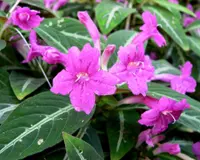
Ruellia makoyana, commonly called trailing velvet plant, is a compact tropical perennial grown mainly for its textured foliage. It forms trailing stems with oval, velvety leaves marked by silver veins and purple undersides, giving it strong visual contrast in hanging baskets or on shelves.
This species is native to Brazil, where it grows in warm, shaded forest environments. It is considered moderately easy to grow when its need for stable warmth, even moisture, and good airflow is respected.
It prefers bright, indirect light, a lightly moist but not waterlogged substrate, and a loose, well-drained potting mix. With these basics in mind, it is straightforward to care for Trailing Velvet Plant indoors.

Care Difficulty
Moderate Care

Light Preference
Bright Indirect Light

Water Requirements
Keep Soil Moist

Temperature Preference
Tropical / Frost Sensitive

Hardiness Zone
11–12

Soil Texture
Loamy, Organic-rich

Soil pH
Acidic (5.5–6.5), Slightly acidic (6.5–7.0)

Soil Drainage
Moist but well-drained

Fertilization
Light (every 4–6 weeks)
Scan your plant to receive care tips personalized for your specific plant
Available on iOS and Android
Like the Peruvian wild petunia, this species prefers bright, gentle light to maintain strong growth and leaf color.
This plant prefers evenly moist but not waterlogged soil.
Stable, warm conditions support compact growth and healthy foliage.
This species benefits from moderately high indoor humidity to keep foliage lush and reduce edge browning.
Ruellia makoyana prefers a loose, airy, organic-rich mix that drains quickly yet holds steady moisture.
This species is well suited to container growing due to its compact, trailing habit.
Ruellia makoyana benefits from light, consistent feeding during its active growth period.
Ruellia makoyana responds well to light, planned pruning that maintains a compact, trailing form.
This species prefers modest, periodic repotting to refresh the root zone and support steady growth.
Ruellia makoyana is commonly propagated by soft stem cuttings under warm, humid conditions.
Ruellia makoyana is frost-sensitive and needs protection in regions with cold winters.

Plant Health Check
Not sure what's wrong with your plant? Check your plant's health inside the app.
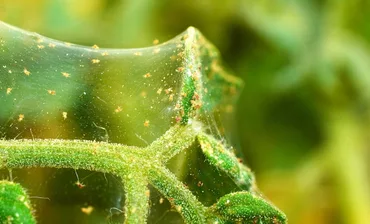
This pest often appears on velvet-textured leaves in warm, dry indoor air and causes fine speckling, dulling, and webbing on the foliage.
Solution
Rinse both sides of the leaves under a gentle stream of lukewarm water, then increase humidity to around 50–60% and isolate the plant.
If webs or stippling persist, treat with insecticidal soap or a ready-to-use neem oil spray every 5–7 days.
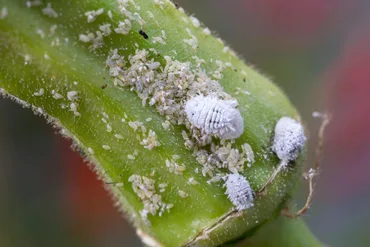
These insects hide in leaf axils and along stems, where they form white, cottony clusters that sap plant juices and cause stunted, distorted growth.
Solution
Dab visible insects with cotton swabs dipped in isopropyl alcohol, then wash the foliage and repeat inspections weekly.
Apply insecticidal soap to all leaf surfaces and stems, repeating at 7–10 day intervals until no new clusters appear.
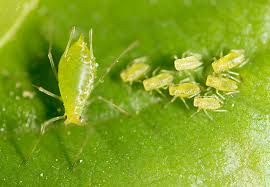
These insects gather on tender shoot tips and the undersides of young leaves, leading to curling, sticky honeydew, and sometimes sooty mold on the foliage.
Solution
Prune heavily infested shoot tips, then spray the plant with a strong but controlled stream of water to dislodge remaining aphids.
Follow with insecticidal soap or a low-toxicity horticultural oil, ensuring full coverage and repeating every 5–7 days.
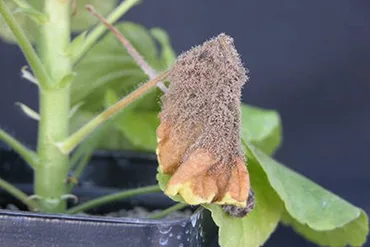
This disease thrives in cool, humid, low-light conditions and causes soft brown spots on leaves, gray fuzzy mold on damaged tissue, and rapid decline of affected parts.
Solution
Remove and discard all affected leaves and spent flowers, improve airflow, reduce overhead watering, and allow the top of the soil to dry slightly between waterings.
Aply a fungicide labeled for botrytis and keep foliage as dry as possible.
This species has softly hairy, velvety leaves that help reduce water loss and protect the leaf surface from intense light in its native understory habitat in Brazil.
Its dark green to purplish leaves are crossed by contrasting pale to silvery veins, a pigmentation pattern that enhances light capture in low-light forest interiors while also making it a distinctive ornamental species.
The tubular purple-pink flowers typically open during the day and close or fade by night, a pattern linked to its pollination by daytime visitors such as bees.
Poor flowering usually comes from low light, spent old stems, or nutrient imbalance. Provide bright, indirect light, avoid heavy nitrogen fertilizer, and trim back long, woody stems after flowering to stimulate new, flower-producing growth.
Keep your plants happy and healthy with plant identification, disease detection, and easy care guidance.