Leaf cleaning routine
Wipe the thick leaves with a slightly damp, soft cloth every 2–4 weeks to remove dust, which improves light capture and helps you spot early signs of scale or mealybugs while caring for White Bloodlily.

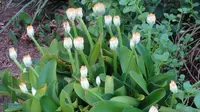
White bloodlily, Haemanthus albiflos, is a compact bulbous plant grown mainly as a foliage and flowering houseplant. It forms low clumps of thick, tongue-shaped green leaves with a smooth, slightly glossy surface.
The plant produces short stems topped with rounded white flower heads, often edged with yellow anthers, followed by decorative red berries. In nature it occurs in shaded coastal and forest habitats of South Africa, which helps explain its preference for bright, indirect light and moderate moisture.
Its slow growth, tolerance of indoor conditions, and ability to handle some neglect make it suitable for beginners who want to learn how to care for White Bloodlily.

Care Difficulty
Easy Care

Light Preference
Bright Indirect Light

Water Requirements
Moderate Water

Temperature Preference
Tropical / Frost Sensitive

Hardiness Zone
10–11

Soil Texture
Sandy, Loamy, Organic-rich

Soil pH
Slightly acidic (6.5–7.0), Neutral (7.0)

Soil Drainage
Well-drained

Fertilization
Light (every 4–6 weeks)
Scan your plant to receive care tips personalized for your specific plant
Available on iOS and Android
Haemanthus albiflos prefers bright, gentle light that mimics dappled woodland conditions.
Haemanthus albiflos prefers moderate watering with periods of slight dryness between soakings.
This species prefers mild, frost-free conditions with modest seasonal cooling.
Humidity is a minor factor, as this species adapts well to typical indoor levels.
Soil for Haemanthus albiflos must drain very quickly yet hold moderate, even moisture around the roots.
This species is very suitable for container growing.
Haemanthus albiflos benefits from light, controlled feeding rather than heavy fertilization.
Haemanthus albiflos needs minimal pruning, mainly to keep foliage healthy and tidy.
This bulb prefers to be slightly rootbound and does not need frequent repotting.
New Haemanthus albiflos plants are most reliable from division of offsets rather than seed.
This subtropical bulb is frost sensitive and needs mild, frost-free conditions in winter.

Plant Health Check
Not sure what's wrong with your plant? Check your plant's health inside the app.
The white flower head is actually a tight cluster of many small flowers packed on a short stalk, with bright yellow stamens giving it a brush or shaving-brush appearance rather than a single simple bloom.
Unlike many bulb species that die back in the off-season, this plant keeps its thick, paddle-shaped leaves year-round and often produces new growth and flowers in the cooler months in its native South African range.
In the wild, this species commonly grows on shaded rocky ledges and forest margins, where its thick leaves, slow growth, and bulb storage tissues allow it to tolerate low light and periodic drought.

This species is naturally distributed along the southeastern and southern coasts of South Africa, from the Eastern Cape to KwaZulu-Natal and Western Cape, and is one of the few in its genus that thrives both in the ground and as a long-lived container plant in cultivation worldwide.
Lack of flowering often comes from insufficient light, overcrowded bulbs, or no cool, slightly drier rest period. Provide bright indirect light, avoid deep pots, let the top layer dry between waterings, and give a cooler, drier winter rest.
Keep your plants happy and healthy with plant identification, disease detection, and easy care guidance.