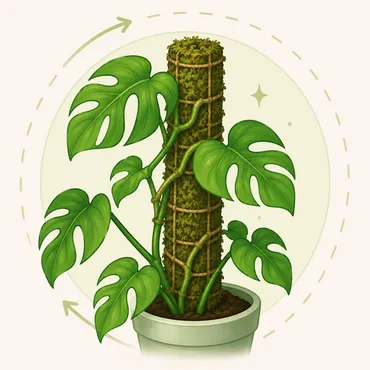
Use a Moss Support
A moss support provides anchorage for the aerial roots of Rhaphidophora tetrasperma. Make the support slightly moist — the roots will attach on their own within a few weeks.

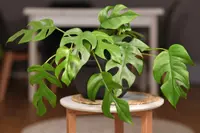
Mini Monstera, or Rhaphidophora tetrasperma, is a tropical climbing vine from Thailand and Malaysia. It belongs to the Araceae family. The leaves are deeply lobed and shaped like Monstera deliciosa, but stay compact, usually under 6 inches (15 cm) per leaf. This is why it is called a Mini Monstera, although it is not actually related to true Monsteras.
Indoors, it climbs fast. New leaves appear regularly during the growing season. It tolerates moderate indoor humidity and doesn't fall apart over minor watering mistakes. Care for Mini Monstera begins with providing bright and filtered light. It also requires loose soil and thorough watering.
This species tolerates typical indoor growing conditions well, as long as you don't keep it in a cold draft or overwater the roots.

Care Difficulty
Moderate Care

Light Preference
Bright Indirect Light

Water Requirements
Moderate Water

Temperature Preference
Tropical / Frost Sensitive

Hardiness Zone
11–12

Soil Texture
Loamy, Peaty, Organic-rich

Soil pH
Acidic (5.5–6.5), Slightly acidic (6.5–7.0)

Soil Drainage
Moist but well-drained

Fertilization
Light (every 4–6 weeks)
Scan your plant to receive care tips personalized for your specific plant
Available on iOS and Android
Rhaphidophora tetrasperma thrives in bright and indirect light. Direct sunlight quickly burns the leaves.
Note: No splits on new leaves almost always means insufficient light — not a pest or disease issue.
For stable growth, Mini Monstera requires consistently moist soil — not soggy, but not completely dry. Never allow the soil to dry out completely for a long period of time, as this plant has a less developed root system.
Note: Yellow leaves with damp soil indicate overwatering. Crispy brown leaf edges mean underwatering or dry air.
As a tropical vine, Rhaphidophora tetrasperma prefers steady warmth, while sudden cold may damage it.
Note: This houseplant tolerates short-term temperature increases up to 85°F (29°C) provided sufficient humidity and watering. Short-term nighttime drops to 60°F (15°C) are also acceptable.
Proper humidity is important for the plant, although it's not as demanding as most aroids. Aim for a relative humidity of 50-60% — normal home conditions are usually sufficient. Brown leaf tips indicate too-dry air. A small humidifier nearby or grouping plants together will help in rooms with year-round heating or air conditioning.
Tip: You can pair Mini Monstera with Epipremnum aureum or Pothos. Similar humidity and lighting requirements make them easy to group together.
A well-draining mix is one of the main preferences of Mini Monstera. Dense or compacted soil stresses the roots over time.
Note: The roots need as much air as moisture. Overwatering is the main cause of root rot in Rhaphidophora tetrasperma.
This houseplant grows well in containers, but you should always use a pot with drainage holes. Choose a pot 2-3 inches (5-8 cm) wider than the current root ball. Terracotta pots dry out faster. Plastic pots retain moisture longer, so they are a better choice for warm and dry rooms.
Tip: When repotting, provide a moss or trellis support. Aerial roots cling well to vertical supports.
The plant requires moderate fertilization during the active growth period. This also stimulates new leaf growth.
Note: White crusty deposits on the soil surface mean salt buildup from overfertilizing. Rinse the pot with clean water to remove it.
You can prune Rhaphidophora tetrasperma in spring and early summer — this is the best time.
Typically, you need to repot Mini Monstera every 1-2 years.
Note: Drooping leaves after repotting are normal. This usually resolves within 1-2 weeks.
In order to propagate Rhaphidophora tetrasperma, you will typically need stem cuttings with at least one node.
Note: Place the new plant in a room with indirect light. Strong sunlight can dry out a fresh cutting before it has a chance to develop roots.
In winter, this plant grows more slowly. Move it to the sunniest spot and reduce watering to once every 10-14 days. The plant gets through the winter without any problems. Keep the pot away from cold drafts and intense heat, and fertilize it only in the spring.

Plant Health Check
Not sure what's wrong with your plant? Check your plant's health inside the app.
A moss support provides anchorage for the aerial roots of Rhaphidophora tetrasperma. Make the support slightly moist — the roots will attach on their own within a few weeks.
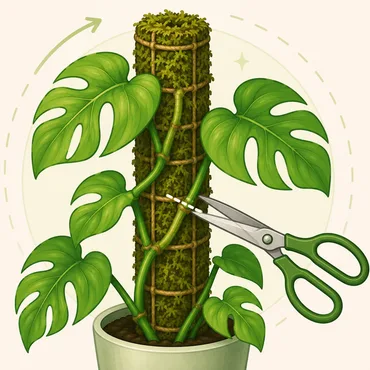
When pruning or propagating, make each cut just below a node, as new shoots occur only from nodes. Cuts between nodes will shorten the vine and will not stimulate new shoots.
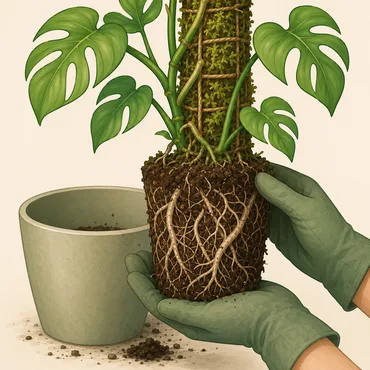
Brown, soft, or foul-smelling roots indicate rot. Trim away any damaged sections with sterile scissors.
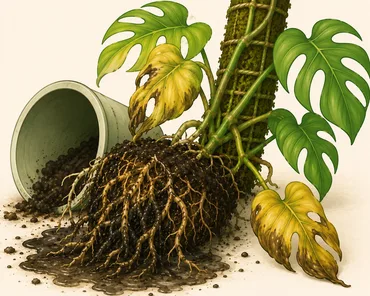
Root rot starts after overwatering or as a result of bad drainage. Early signs of rot in Rhaphidophora tetrasperma include yellowing leaves, wilting despite moist soil, and a sour odor from the root zone.
Phytophthora and Pythium are often the culprits.
Solution
Remove the plant from the pot and trim any damaged roots. Allow the roots to dry out for 30-60 minutes.
Repot the plant in fresh soil with good drainage. Reduce watering.
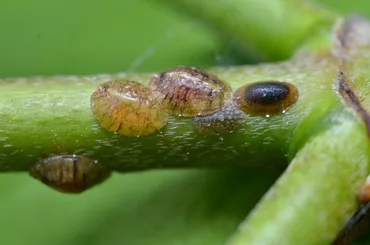
Scale insects attach to stems and the underside of leaves and appear as small brown bumps. They feed on plant sap.
A severe infestation causes yellowing, stunted growth, and a sticky coating on the leaves.
Solution
Remove scale insects manually with a soft toothbrush or a cotton swab dipped in rubbing alcohol. Then apply horticultural oil or neem oil.
Repeat this procedure every 7-10 days for 3-4 weeks.
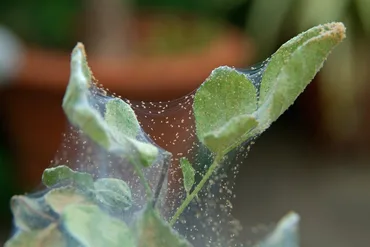
They thrive in dry conditions. They feed on leaves and leave tiny yellow or white spots on the surface, as well as fine webs between the stems.
If you don’t remove them, they will spread quickly.
Solution
Isolate the plant and wipe the leaves with a damp cloth. Then treat it with neem oil or insecticidal soap every 5-7 days until the infestation is gone.
Increased humidity reduces the risk of the pest returning.
Many people confuse Rhaphidophora tetrasperma with Monstera, but it actually belongs to a completely different genus. It is more closely related to Epipremnum.
The deeply split leaves are the result of convergent evolution — a similar leaf shape that developed independently in two separate plant lineages.
Young mini-monsteras often have solid leaves without any splits. Fenestrations become more visible as the plant grows.
Plants that grow along the surface without vertical support tend to have smaller and less divided leaves.
Rhaphidophora tetrasperma is one of the fastest-growing aroids.
Under favorable conditions, it can produce one new leaf per week.

In New Zealand in 2021, a single specimen of a rare white Rhaphidophora tetrasperma was sold at the online auction "Trade Me" for a record NZ$27,100 (approximately US$19,300).
Yes. Rhaphidophora tetrasperma contains calcium oxalate crystals, which are toxic to cats and dogs. If ingested, it can cause salivation, vomiting, and irritation of the oral mucosa. Keep the plant out of the reach of pets.
Keep your plants happy and healthy with plant identification, disease detection, and easy care guidance.