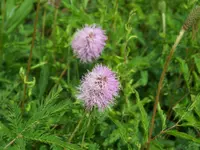
Limit Touching
Avoid triggering the leaf-closing response. Constant movement uses the plant’s energy reserves.
Excessive handling can slow growth and reduce overall vigor.

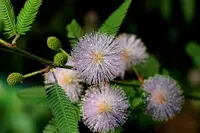
This is a low-growing tropical perennial. People love it for its unusual leaf movements. Its foliage seems like a fern and folds inward when touched. That’s why another name of this houseplant is the shy or shame plant.
Naturally, this American species grows in warm regions with plenty of sunlight. It often develops a spreading habit and produces fluffy pink flowers. If you're a beginner, don't worry: it is moderately easy to grow, but it can be sensitive to changes in temperature and moisture. From this article, you will learn how to properly care for a sensitive plant without causing stress for it or its owner.

Care Difficulty
Moderate Care

Light Preference
Full Sun

Water Requirements
Keep Soil Moist

Temperature Preference
Tropical / Frost Sensitive

Hardiness Zone
10-11

Soil Texture
Sandy, Loamy

Soil pH
Acidic (5.5–6.5), Slightly acidic (6.5–7.0)

Soil Drainage
Moist but well-drained

Fertilization
Light (every 4–6 weeks)
Scan your plant to receive care tips personalized for your specific plant
Available on iOS and Android
The first thing you should know is that Mimosa pudica doesn't like shade and grows best in sunny locations under direct light every day.
Note: If the leaflets stay folded even in daylight, the plant is likely growing in light that is too weak.
Here, you need to keep a balance: this species needs consistently moist soil but suffers if roots stay waterlogged.
As Mimosa pudica is a tropical species, it likes warm temperatures and can be vulnerable to cold conditions.
Humidity helps support healthy growth and leaf function in the sensitive plant. Keep humidity levels above 50%, ideally 60-70%, and keep in mind that very dry air can cause brown leaf edges.
Life hack: Group houseplants together to increase local humidity. The best neighbors for Mimosa pudica are Peperomia obtusifolia and Philodendron gloriosum.
Choose loose, moisture-retentive soil that still drains freely, as the plant’s roots cannot live and develop in compacted soil.
Container growing is definitely possible. Just choose pots which usually reach 12-24 inches (30-60 cm) tall that have drainage holes. Also, use a moderately deep container to support fine but spreading roots.
Tip: A wider pot helps balance the branching growth habit.
Usually, that's not a very important aspect for Mimosa pudica, as it can normally grow without feeding. However, it helps the plant to feel better indoors.
Note: In its natural habitat, the sensitive plant often grows in relatively lean soils, so it can grow without heavy feeding or an overly rich potting mix.
Do light pruning during active growth to control shape and remove weak stems.
This species can grow rapidly, so move yours to a larger pot once you notice roots emerging from the drainage holes.
Note: It’s normal for the leaves to droop for a while after repotting. Give the plant time to adjust, and it will recover once it settles into its new container.
Do this procedure from seeds, as it's easier. Anyway, stem cuttings can also root with proper care.
Cold weather can damage Mimosa pudica, so winter protection is needed outside tropical zones. When temperatures fall below 50°F (10°C), move containers indoors and keep them away from cold drafts and frosty windows.

Plant Health Check
Not sure what's wrong with your plant? Check your plant's health inside the app.
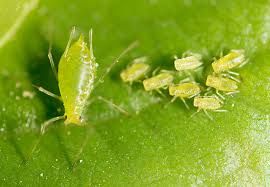
They are insects that cluster on tender shoots, flower buds, and new leaves. There, they suck sap and distort fresh growth.
Solution
Remove small colonies with a strong water spray. Then, use insecticidal soap on affected areas if they return.
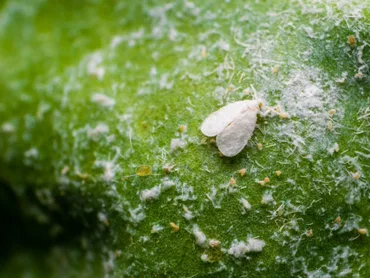
These pests rise in small clouds when the plant is disturbed and can leave sticky residue on leaves.
Solution
Use yellow sticky traps to monitor adults, wash foliage regularly, and treat leaf undersides where immature stages develop.
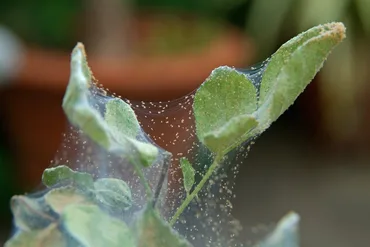
This pest often appears in warm, dry conditions and causes pale speckling, fine webbing, and weakened leaf movement.
Solution
Rinse the foliage thoroughly, especially leaf undersides, and treat repeated infestations with insecticidal soap or horticultural oil.
The leaflets fold together within seconds when touched or disturbed.
This defensive response, known as thigmonasty, is one of the fastest visible movements in the plant kingdom.
The touch response is triggered by electrical signals that travel through the plant's tissues.
These signals cause rapid changes in water pressure, leading the leaves to fold.
The movement of Mimosa pudica has been studied by botanists for centuries and played an important role in early research on plant behavior.
It helped scientists understand that plants can actively respond to their environment.
The rapid folding response is a defensive adaptation that may help discourage herbivores and reduce physical damage. Cells quickly change internal water pressure, causing the leaflets to collapse.
Keep your plants happy and healthy with plant identification, disease detection, and easy care guidance.