Avoid Leaf Damage
Handle leaves carefully. Remember that broken Aloe vera tissue does not heal and may lead to rot or infection.

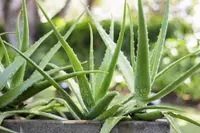
Aloe vera is a succulent plant. It has a natural ability to store water in its leaves and form a compact rosette. Its foliage is typically green to gray-green, with small, soft teeth along the edges.
In its native environment on the Arabian Peninsula, this plant grows in warm climates with dry air. Thus, its resilience makes it well-suited to indoor environments. The plant is considered low-maintenance because it tolerates drought and adapts well to neglect. In most cases, only overwatering can be a serious problem. In this article, you'll learn how to care for Aloe vera indoors to keep it healthy and happy.
That’s interesting: Although originally this species is from the Arabian Peninsula, now it grows around the world, including areas like Texas, New Mexico, Arizona, and California.

Care Difficulty
Easy Care

Light Preference
Full Sun

Water Requirements
Low Water

Temperature Preference
Tropical / Frost Sensitive

Hardiness Zone
10-11

Soil Texture
Sandy, Rocky

Soil pH
Slightly acidic (6.5–7.0), Slightly alkaline (7.0–7.5)

Soil Drainage
Well-drained

Fertilization
Minimal (feed rarely)
Scan your plant to receive care tips personalized for your specific plant
Available on iOS and Android
This tropical species naturally prefers strong sunlight and adapts best to bright, open conditions, so you can confidently place it on the balcony or terrace.
Note: If your brightest window isn’t enough, use artificial lighting. A white fluorescent lamp placed 6-12 inches (15-30 cm) above the plant works well, but it needs to run around 14-16 hours daily.
Aloe vera doesn’t prefer too much water, as it usually grows in dry conditions, so watering your succulent requires care.
Note: This species is sensitive to fluoride, which can cause brown spots on the leaves. Use rainwater or purified water instead.
Like all succulents, this one prefers stable temperatures and warmth. In summer, a windowsill is the best option to place a pot on.
Note: Your aloe may become discolored if it gets too cold from sitting on a chilly windowsill or near a draft.
Humidity is not an important factor for this species and does not require special attention. Aloe vera tolerates dry air well and grows without issues in low-humidity environments. Aloe vera tolerates a wide range of humidity levels but generally prefers dry air.
This plant requires fast-draining soil that prevents moisture from lingering around the roots.
Life hack: You can buy a soil mix for succulents in special shops. It will definitely suit your plant, as it is already well-drained and with added perlite.
This species grows well in containers when drainage is carefully managed. Thus, use a pot with holes and choose a heavy clay or terracotta container to guarantee stability.
Tip: Select a container 1-2 inches (3-5 cm) wider than the root base to avoid unused wet soil.
It is naturally adapted to lean, nutrient-poor desert soils, so it usually grows well without fertilizer. Container-grown plants, however, may benefit from a light feeding once in spring to support healthy growth. If you fertilize, use a liquid houseplant formula such as 10-40-10 at 1/2 concentration. Outdoor plants typically need no feeding.
Aloe vera rarely needs pruning beyond removing leaves that are dead, shriveled, or damaged by stress. You can trim away browned leaves or tip damage to keep the plant tidy. Always remove the leaf at its base and don't cut across the middle, as this leaves a wound on the succulent.
Repotting is needed for container-grown plants. Transplanting may be done when moving them outdoors.
Tip: Aloe vera develops a broad, shallow root system that spreads near the soil surface rather than growing downward. Choose a pot that offers more width instead of depth, as this better suits its natural growth habit.
Aloe vera is most easily propagated by separating and replanting the small offsets, or pups. They appear around the base of a mature plant. As it ages, aloe produces many such pups, so you can start new plants in separate containers or transplant them into other areas of the garden.
Tip: Use a good-quality commercial propagation mix or a packaged "cacti and succulent mix."
Succulents need a clear dormant period, so adjust their care when active growth slows. Between October and February, they should receive less water, no fertilizer, and cooler conditions. However, keep them in bright, direct light.

Plant Health Check
Not sure what's wrong with your plant? Check your plant's health inside the app.
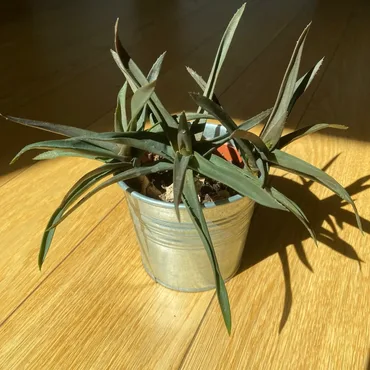
Flopping is often caused by too little sunlight, which leads to weak, stretched, drooping growth. Overwatering can also make the leaves soft and unable to stay upright.
Solution
Move the plant to a brighter spot with plenty of direct sun, let the soil dry, and make sure the pot drains well so the leaves can regain firmer growth.
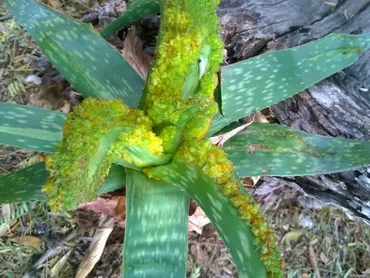
This pest causes abnormal, distorted growth and rough, wart-like tissue on leaves. It often spreads unnoticed until deformities become clearly visible.
Solution
Cut away affected parts immediately and isolate the plant to prevent spreading, as damage is usually permanent.
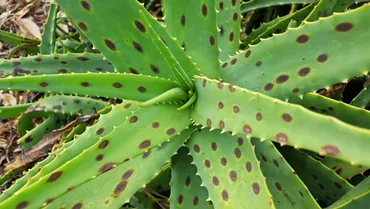
This pest feeds on plant sap and hides in tight leaf bases, often appearing as white, cotton-like clusters.
Solution
Remove insects from Aloe vera manually with a cotton swab dipped in alcohol and repeat cleaning regularly until the infestation is gone.
Aloe vera has been valued since ancient times in Greece, Rome, Babylonia, and China.
It was traditionally applied to treat skin problems and was also believed to support wound healing.
This plant yields 2 commercially used substances: a clear inner gel and a yellow latex. The aloe vera gel is commonly included in topical products for burns and dry skin.
The latex has been used in oral remedies for stomach issues.
It uses Crassulacean Acid Metabolism, opening stomata at night to reduce water loss in arid environments.

Aloe vera was historically known as the “plant of immortality” in ancient Egypt and was sometimes included in burial rituals.
Brown tips or patches usually come from underwatering, intense direct sun through glass, salt buildup from fertilizer, or cold drafts. Flush the pot with clean water occasionally, trim dead tissue, and adjust exposure gradually.
Keep your plants happy and healthy with plant identification, disease detection, and easy care guidance.