


Rotate for symmetry
Turn the pot 90° every 2–3 weeks so all sides receive similar light, which keeps the cushion-like clumps compact and prevents lopsided, elongated growth.

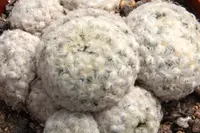
Feather cactus, Mammillaria plumosa, is a small clustering cactus known for its soft, white, feathery spines that form dense, rounded mounds. It stays compact, so it suits windowsills, small containers, and mixed cactus displays.
This species comes from arid limestone areas of northeastern Mexico, where it grows in rocky, well-drained soils with strong sun and little rainfall. Its slow growth, drought tolerance, and minimal feeding needs make it relatively easy for patient growers who learn how to care for Feather Cactus.
It prefers bright light, low to moderate watering, and a very gritty, fast-draining substrate that dries quickly between waterings.

Care Difficulty
Moderate Care

Light Preference
Partial Sun

Water Requirements
Low Water

Temperature Preference
Tropical / Frost Sensitive

Hardiness Zone
9–11

Soil Texture
Sandy, Loamy, Rocky

Soil pH
Slightly acidic (6.5–7.0), Neutral (7.0)

Soil Drainage
Well-drained

Fertilization
Minimal (feed rarely)
Scan your plant to receive care tips personalized for your specific plant
Available on iOS and Android
Mammillaria plumosa thrives in bright conditions that balance strong light with protection from harsh midday sun.
This cactus prefers infrequent, deep watering and thorough drying between events.
This species prefers warm, dry conditions with a marked difference between summer growth and cool, dry winter rest.
This cactus prefers dry air and rarely needs humidity adjustment in typical indoor environments.
This species needs a very fast-draining, mineral-based substrate to prevent root and stem rot.
This small cactus is very suitable for container growing due to its compact, clumping habit.
Mammillaria plumosa has low nutrient needs but responds well to light feeding in the growing season.
Mammillaria plumosa needs minimal pruning, focused mainly on hygiene rather than shaping.
This cactus grows slowly and rarely needs frequent repotting, but occasional intervention supports root health.
Mammillaria plumosa is commonly propagated from offsets, with seeds as a slower alternative.
This cactus is not frost tolerant and benefits from careful winter management, especially in containers.

Plant Health Check
Not sure what's wrong with your plant? Check your plant's health inside the app.
In the wild, this species often grows in shallow pockets of limestone on steep cliffs in northeastern Mexico, where its dense clustering helps anchor it against erosion and falling rock.
The soft, plume-like covering is made of many fine, interlocking spines that reduce water loss, reflect intense sun, and protect the plant from sudden temperature swings while still allowing gas exchange.
Its small white to pale-yellow flowers open in a ring near the crown and are often partly concealed by the feathery spines, so flowering can be overlooked unless viewed closely from above.

Mammillaria plumosa has been assessed as Near Threatened in parts of its native Mexican range because of habitat disturbance and over-collection, so many plants in cultivation now come from seed propagation rather than wild collection.
Flowering depends on maturity, strong light, and a cool, dry winter rest. Older, well-established plants bloom more reliably. Overfertilizing, warm winters, or frequent watering in winter often reduce bud formation and cause poor or absent flowering.
Keep your plants happy and healthy with plant identification, disease detection, and easy care guidance.

-1-200x133.webp)
Pencil Cactus
Euphorbia tirucalli
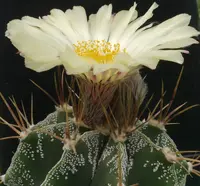
bishop's hat
Astrophytum ornatum
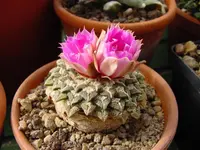
star rock
Ariocarpus kotschoubeyanus
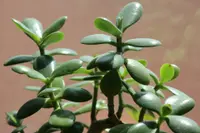 POPULAR
Jade plant
Crassula ovata
 POPULAR
Spiny pincushion cactus
Mammillaria spinosissima
Goat's Horn Cactus
Astrophytum capricorne
Giant Chin Cactus
Gymnocalycium saglionis
Cumulopuntia sphaerica
Cumulopuntia sphaerica