


Cluster division timing
Divide crowded rosettes only in late spring to early summer, when roots are actively growing, so offsets establish quickly and are less prone to rot or sunburn.

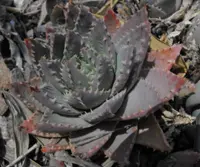
Short-leaved aloe, Aloe brevifolia, is a compact, clump-forming succulent from South Africa’s Western Cape. It grows in tight rosettes with short, triangular blue-green leaves edged with small, firm teeth.
Plants stay low and slowly form dense mats, which makes them suitable for pots, rock gardens, and small indoor collections. The foliage may turn slightly pinkish or grayish in strong light or dry conditions.
This species prefers bright light, fast-draining gritty soil, and infrequent watering, which generally makes it straightforward to care for Short-leaved aloe in dry indoor environments.

Care Difficulty
Easy Care

Light Preference
Full Sun

Water Requirements
Low Water

Temperature Preference
Warm Climate

Hardiness Zone
9–11

Soil Texture
Sandy, Loamy, Rocky

Soil pH
Acidic (5.5–6.5), Slightly acidic (6.5–7.0)

Soil Drainage
Well-drained

Fertilization
Minimal (feed rarely)
Scan your plant to receive care tips personalized for your specific plant
Available on iOS and Android
This compact South African succulent thrives in bright, dry conditions with plenty of sun exposure.
This species prefers infrequent, deep watering that allows the root zone to dry between waterings.
This succulent favors warm, dry conditions and is sensitive to prolonged cold and frost.
This species thrives in dry indoor air and does not need supplemental humidity.
Use a fast-draining, mineral-rich mix that mimics arid, rocky ground.
This compact aloe is well suited to container growing.
This compact succulent needs modest feeding to support steady growth in containers.
Pruning Aloe brevifolia is mainly hygienic, helping maintain a compact, healthy rosette cluster.
This slow-growing aloe prefers slightly snug containers and only occasional repotting.
Aloe brevifolia is most often multiplied by offsets, forming dense clumps over time.
This aloe is only mildly frost tolerant and needs protection in most cold-winter climates.

Plant Health Check
Not sure what's wrong with your plant? Check your plant's health inside the app.
This species naturally forms tight, low rosettes that slowly offset to create dense, mound-like colonies, a growth habit that helps stabilize shallow, rocky soils in its native South African habitat.
Its short blue-green leaves are covered with firm, triangular teeth along both the margins and underside, which help deter herbivores and slightly shade the leaf surface from intense sun.
In habitat it typically flowers in late spring to early summer, producing upright spikes of tubular orange flowers that are specialized to attract and feed nectar-seeking sunbirds.

In the wild, Aloe brevifolia is considered vulnerable because its naturally limited distribution in the Western Cape of South Africa overlaps with areas heavily transformed by agriculture and development, making habitat loss a major conservation concern.
Brown leaves usually result from overwatering, poor drainage, or sun scorch on newly moved plants. Check for soft, mushy tissue, improve drainage, remove damaged leaves, and allow the soil to dry more between waterings.
Keep your plants happy and healthy with plant identification, disease detection, and easy care guidance.

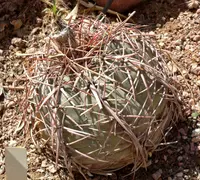
turk's head cactus
Echinocactus horizonthalonius
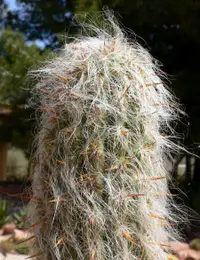
Old Man of the Andes
Oreocereus celsianus
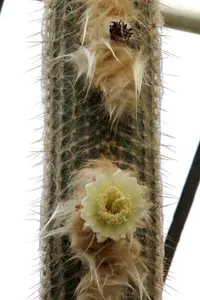
Espostoa melanostele
Espostoa melanostele
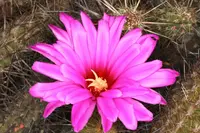
Brandegee's Hedgehog Cactus
Echinocereus brandegeei
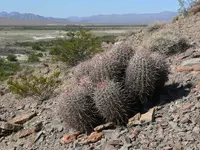
cottontop cactus
Echinocactus polycephalus
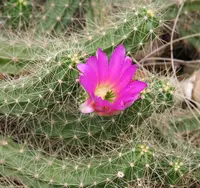
Echinocereus cinerascens
Echinocereus cinerascens
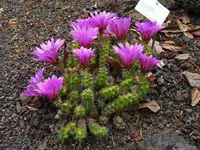
Berlandier's hedgehog cactus
Echinocereus berlandieri
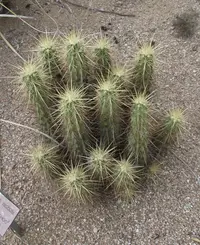
Nichol's hedgehog cactus
Echinocereus nicholii