Rotate for symmetry
Turn the pot 90° every 1–2 weeks so the rosette receives even light from all sides and does not lean or stretch toward a single window.

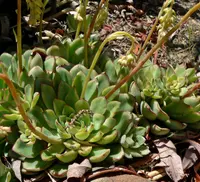
Echeveria pulidonis is a compact rosette-forming succulent from Mexico, valued for its clean shape and distinct leaf edging. The leaves are bluish to gray-green with fine red margins, creating a neat, symmetrical look as the plant matures. It stays relatively low and slowly clumps over time, which makes it suitable for small pots, windowsills, and mixed succulent planters. As a typical succulent, it stores water in its leaves and prefers bright light, infrequent watering, and sharply drained soil. These traits make it straightforward to care for Echeveria pulidonis, provided it is protected from prolonged cold and excess moisture.

Care Difficulty
Easy Care

Light Preference
Full Sun

Water Requirements
Low Water

Temperature Preference
Tropical / Frost Sensitive

Hardiness Zone
9–11

Soil Texture
Sandy, Loamy, Rocky

Soil pH
Slightly acidic (6.5–7.0), Neutral (7.0)

Soil Drainage
Well-drained

Fertilization
Minimal (feed rarely)
Scan your plant to receive care tips personalized for your specific plant
Available on iOS and Android
This sun-loving succulent needs bright, direct light for compact, colorful rosettes and steady growth.
Watering should mimic dry, desert-like cycles, with thorough soakings followed by clear drying of the soil.
Stable, warm conditions support healthy growth and reduce stress for this drought-adapted succulent.
This species prefers dry household air and does not need extra humidity.
This succulent needs a sharply draining, mineral-rich substrate to protect its roots from rot.
This species is very suitable for container growing due to its compact rosette habit.
Light feeding supports compact growth without forcing soft, weak tissue in Echeveria pulidonis.
Pruning is minimal and mainly keeps this succulent clean and well-shaped.
Repotting is infrequent and mostly needed when roots outgrow the container or soil ages.
This species responds well to vegetative propagation when handled during warm, bright months.
Cold-sensitive rosettes need dry, bright, cool-to-mild conditions in winter.

Plant Health Check
Not sure what's wrong with your plant? Check your plant's health inside the app.
This species is known for its narrow, bright red edge tracing the otherwise bluish-green leaves, a stable trait that helps distinguish it from many similar Echeveria species with plain margins.
It typically stays small and forms tight rosettes that slowly produce offsets around the base, creating low, symmetrical clumps rather than long, sprawling colonies.
Its inflorescences carry nodding, urn-shaped yellow flowers with occasional orange tones, a color combination that contrasts strongly with the cool leaf color and attracts pollinating insects in its native range.
Lack of flowers is usually due to insufficient light, overly rich or frequent fertilization, or no cool, dry rest in winter. Provide several months of bright conditions, slightly cooler nights, and restrained watering to encourage flower stalk formation.
Keep your plants happy and healthy with plant identification, disease detection, and easy care guidance.