Rosary Vine Care (Ceropegia woodii)

Also known as: Rosary Vine

About Rosary Vine

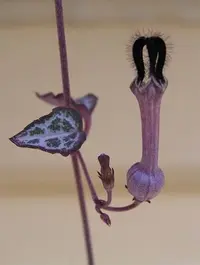
Rosary vine, Ceropegia woodii, is a trailing succulent often grown in hanging pots or on shelves for its long, bead-like vines. Its small, heart-shaped leaves are usually mottled silver and green, with slender stems that can reach impressive lengths indoors. Tiny tubular flowers appear in good conditions but are usually a bonus rather than the main feature. Native to South Africa and nearby regions, it is adapted to bright light and dry periods. Its drought tolerance and modest growth needs make it relatively easy to care for Rosary Vine, as long as it is not overwatered and sits in a free-draining soil mix.

Main Plant Requirements

Care Difficulty

Easy Care

Light Preference

Bright Indirect Light

Water Requirements

Low Water

Temperature Preference

Tropical / Frost Sensitive

Hardiness Zone

11–12

Soil Texture

Sandy, Loamy, Organic-rich

Soil pH

Acidic (5.5–6.5), Slightly acidic (6.5–7.0)

Soil Drainage

Well-drained

Fertilization

Light (every 4–6 weeks)

Get Personalized Care Plan

Scan your plant to receive care tips personalized for your specific plant

Personalized Care in the App

Available on iOS and Android

How to Care for the Rosary Vine

Ceropegia woodii prefers bright, indirect light for compact growth and clear leaf markings.

  • Provide 6–8 hours of bright, filtered light daily, such as an east window with gentle morning sun or a few hours of early sun outdoors.
  • Plant tolerates light partial shade, but in too dim conditions vines stretch, internodes elongate, and leaves lose marbling.
  • Avoid harsh midday/afternoon sun, especially in summer, which can scorch foliage; shift Rosary Vine slightly back from south or west windows in bright seasons.

Watering for this succulent-like vine focuses on drying cycles and strong drainage.

  • Allow the top 3–5 cm of soil to dry fully before watering, then soak thoroughly so excess drains away, preventing waterlogged roots.
  • In spring and summer, expect more frequent watering as growth is active; in fall and winter, extend drying periods and water less often.
  • Watch for signs: yellowing, mushy leaves indicate overwatering, while wrinkled, thin leaves on Ceropegia woodii suggest it has stayed dry too long.

This species prefers warm, stable conditions and reacts poorly to cold or sudden extremes.

  • Aim for 65–80°F (18–27°C) during active growth; short spikes to 85°F (29°C) are tolerated if light is filtered and soil is not constantly wet.
  • Protect from cold drafts and temperatures below 55°F (13°C), as growth slows and roots become more prone to rot in cool, damp soil.
  • Plant is not frost-hardy; brief exposure near 40°F (4°C) can damage foliage, so move it or provide protection before the first frost in your area.

This species handles typical indoor humidity well and rarely needs adjustment.

  • Target 30–50% humidity, similar to most living rooms, for steady growth of Rosary Vine foliage.
  • Plants tolerate drier heated air if watering is conservative and soil is allowed to dry between waterings.
  • If leaves shrivel yet soil is not dry, reduce nearby heating or fans rather than adding extra humidity.

This succulent vine prefers a very airy, fast-draining mix that dries quickly between waterings.

  • Use a sandy, gritty structure such as 50–70% cactus mix with extra perlite or pumice for sharp drainage.
  • Aim for slightly acidic to neutral pH around 6.0–7.0, which most commercial cactus mixes already provide.
  • Incorporate coarse mineral components like pumice, perlite, or small orchid bark to improve aeration around the tuberous roots.
  • Avoid dense peat-heavy or clay-based mixes that stay wet for more than 2–3 days, as Ceropegia woodii roots rot easily in soggy conditions.

This species is highly suitable for container growing due to its compact root system and trailing habit.

  • Choose a shallow but wide pot to accommodate the spreading tubers while keeping the root zone easy to dry out.
  • Use a container material that matches your watering style, such as unglazed terracotta if you tend to water generously.
  • Ensure drainage holes stay unobstructed so excess water leaves the pot within seconds rather than pooling at the base.

Light feeding supports steady growth in Rosary Vine without risking root damage.

  • Use a balanced liquid fertilizer (around 10-10-10 or 20-20-20) diluted to 25–50% strength for indoor plants.
  • Feed every 4–6 weeks during spring and summer when growth is active.
  • Skip or reduce feeding to 1 light dose for the whole period in fall and winter.
  • Avoid slow-release granules that can accumulate salts in the small, sensitive root system.

Pruning Ceropegia woodii is mainly used to control length and keep the plant dense.

  • Best time is late winter to early spring before active growth resumes.
  • Use clean, sharp scissors to shorten overly long vines and remove dead, damaged, or tangled stems.
  • Cut just above a node to encourage branching and a fuller hanging habit.
  • Remove weak, sparse strands to improve light penetration and stimulate new growth from the crown.

This species prefers to be slightly root-bound and needs only infrequent repotting.

  • Plan to repot every 2–3 years in spring, or when roots circle the pot and growth slows.
  • Choose a pot only 2–3 cm wider with drainage holes and a gritty, fast-draining mix.
  • Gently loosen circling roots but avoid heavy disturbance of the tubers to reduce stress.
  • Water lightly after repotting, then allow the mix to dry partially before the next watering.

Ceropegia woodii is commonly propagated to rejuvenate older plants and share cuttings.

  • Best season is spring to early summer when light and temperatures are stable.
  • Take 5–10 cm stem cuttings with several nodes and place nodes on or slightly in a moist, airy mix.
  • Maintain bright, indirect light and warm conditions around 70–75°F for rooting.
  • Alternatively, pin sections of vine onto soil in the original pot to encourage simple layering.

This plant is frost-sensitive and needs mild, dry conditions through winter.

  • Keep indoor temperatures above 55°F; short dips lower than this can damage foliage and tubers.
  • Move outdoor containers indoors before frost and place in bright, indirect light.
  • Reduce watering, allowing the potting mix to dry almost completely between waterings.
  • Avoid cold drafts and keep the pot away from freezing window glass or unheated spaces.

Care Tips

Train The Vines

Guide young vines around small hooks, a wire hoop, or a mini trellis so the plant fills out evenly and does not tangle into a dense knot that is hard to untangle or inspect.

Refresh Leggy Plants

If vines become very sparse near the pot, coil a few healthy strands onto the soil surface and pin them down gently so nodes touch the mix, encouraging new rooted segments and denser top growth.

Smart Propagation Backup

Root a few stem cuttings each spring in a separate pot to keep a backup plant, which protects against sudden loss from overwatering, pests, or accidental damage.

Tuber Health Check

When repotting, inspect the small tubers and remove any that are soft, moldy, or shriveled, keeping only firm, potato-like tubers to reduce rot and maintain vigorous growth.

Tangle-Free Watering

Before watering or moving the pot, gently loop and gather long vines onto the pot surface or a support so they stay organized and are not accidentally snapped or crushed while caring for Rosary Vine.

Common Pests and Diseases

Mealybugs

This pest appears as small white cottony clusters in leaf nodes, on vines, and sometimes on tubers. Symptoms include sticky honeydew, yellowing leaves, and overall decline in vigor.

Solution

Isolate the plant, then dab visible insects with cotton swabs dipped in 70% isopropyl alcohol and gently wipe affected areas. Rinse vines with lukewarm water, improve light and airflow, and repeat alcohol or insecticidal soap treatments weekly until no new insects appear.

Spider mites

These insects are tiny and often cause fine webbing between the delicate vines and leaves, especially in warm, dry air. Symptoms include pale, speckled leaves that may curl and drop, and generally dusty-looking foliage.

Solution

Shower the plant with a gentle stream of lukewarm water to remove mites and webbing, then increase humidity slightly and avoid hot, dry spots near heaters. For persistent infestations, use insecticidal soap or horticultural oil on both sides of the leaves, repeating every 7–10 days.

Fungus gnats

This pest typically appears in very light, peat-based or succulent mixes kept too moist, especially in hanging baskets. Symptoms include small black flies hovering around the pot and larvae feeding on fine roots, which can slow growth and cause yellowing vines.

Solution

Allow the soil to dry more thoroughly between waterings, especially in the top 3–5 cm, and remove any soggy debris on the soil surface. Use yellow sticky traps for adults and, if needed, apply a biological control such as Bacillus thuringiensis israelensis (BTi) or a soil drench with hydrogen peroxide diluted in water to target larvae.

Edema

This disorder occurs when roots absorb water faster than the plant can transpire it, often in cool, low-light conditions. Symptoms include corky, blister-like bumps or rough patches on leaves, sometimes followed by leaf drop.

Solution

Reduce watering frequency so that the potting mix dries more between waterings, especially in winter or low light. Improve light levels, avoid sudden temperature drops, and ensure the pot has free-draining soil and unobstructed drainage holes.

Interesting Facts

Tuber Storage Strategy

This species forms bead-like tubers along its stems that can root where they touch the soil, allowing the plant to spread and store water and carbohydrates efficiently in a dry environment.

Moth-Trapping Flowers

Its tubular, lantern-shaped flowers are pitfall traps that temporarily hold small flies, especially certain moth flies, to ensure pollination before releasing them once the flower matures.

Cliffside Native Habitat

In the wild, this plant often grows on rocky slopes and cliffs in parts of South Africa, Eswatini, and Zimbabwe, where its stems cascade down rock faces and benefit from sharp drainage and strong light.

Botan icon

Did you know?

The species was first described to science in the late 19th century after being collected in South Africa, and it quickly became a popular windowsill plant in Europe due to its unusual trailing habit and patterned leaves, making it one of the earliest widely grown indoor members of the Apocynaceae family.

FAQs about Rosary Vine

Lack of flowers usually comes from insufficient light, overly rich soil, or excess watering. Mild stress encourages blooming. Slightly cooler, drier winter conditions and bright light often trigger flowering in mature plants with well-established tubers.

Grow Healthy Plants with Botan Care

Keep your plants happy and healthy with plant identification, disease detection, and easy care guidance.

Botan plant care app — identify plants on mobile

Explore More Plants