Penwiper Care (Kalanchoe marmorata)

About Penwiper

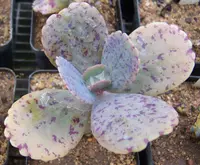
Penwiper, Kalanchoe marmorata, is a compact succulent shrub known for its thick, flat leaves patterned with purple-brown blotches that resemble ink stains. It stays relatively low and forms a tidy clump, sometimes producing upright stems topped with white, starry flowers.

This species is native to rocky, arid regions of central and eastern Africa, where it stores water in its leaves to survive dry periods. Its slow growth, drought tolerance, and preference for bright, indirect light make it suitable for containers and indoor displays.

Because it dislikes overwatering and cold, consistent warmth, sharp-draining soil, and careful watering are the main points to understand when learning how to care for Penwiper.

Main Plant Requirements

Care Difficulty

Easy Care

Light Preference

Bright Indirect Light

Water Requirements

Low Water

Temperature Preference

Tropical / Frost Sensitive

Hardiness Zone

10–11

Soil Texture

Sandy, Loamy, Rocky

Soil pH

Slightly acidic (6.5–7.0), Neutral (7.0)

Soil Drainage

Well-drained

Fertilization

Light (every 4–6 weeks)

Get Personalized Care Plan

Scan your plant to receive care tips personalized for your specific plant

Personalized Care in the App

Available on iOS and Android

How to Care for the Penwiper

This succulent prefers bright, indirect light with some gentle direct sun each day.

  • Provide 4–6 hours of bright, indirect light, such as an east- or west-facing exposure, with soft morning sun best for Penwiper leaves.
  • Tolerates light partial shade, but stems may stretch and leaf spots fade if grown in less than 3–4 hours of strong indirect light.
  • In summer, protect from intense midday sun to avoid leaf scorch; in winter, move closer to the brightest window or a grow light.

This species stores water in its leaves and needs a thorough but infrequent watering approach.

  • Water only when the top 3–5 cm of soil are completely dry, using well-draining, gritty soil to prevent root rot.
  • In spring and summer, drying may happen faster; in cooler months, drying can take much longer, so reduce watering frequency significantly.
  • Signs of overwatering include mushy stems and yellowing, translucent leaves; severe wrinkling and leaf drop suggest Kalanchoe marmorata is too dry.

This plant prefers warm, stable conditions with no exposure to frost.

  • Ideal growth occurs at 65–80°F (18–27°C), with slower growth but acceptable tolerance down to about 60°F (16°C).
  • Avoid temperatures below 40–45°F (4–7°C); brief exposure near freezing can damage leaves, and hard frost may kill the plant.
  • In hot weather above 90°F (32°C), give light shade and extra airflow to limit heat stress, especially for container-grown plants on patios or balconies.

Humidity is rarely critical for Kalanchoe marmorata, which prefers relatively dry air.

  • Aim for 30–50% relative humidity, similar to most heated indoor homes.
  • Penwiper tolerates dry air but may show leaf edge browning if combined with underwatering and intense sun.
  • If air is extremely dry, group plants together or place the pot on a pebble tray, avoiding wet contact with the base.

Kalanchoe marmorata needs a sharply draining, airy mix to prevent root rot.

  • Use a sandy, gritty structure such as 50–60% cactus mix combined with coarse perlite, pumice, or horticultural grit.
  • Maintain pH around 6.0–7.5; most commercial cactus or succulent mixes already fall within this range.
  • Increase aeration and drainage by avoiding fine peat-heavy mixes that compact and stay wet around the roots.
  • Do not use dense garden soil or containers without drainage holes, as prolonged saturation quickly damages this succulent’s roots.

This species is well suited to container growing for better control of moisture and temperature.

  • Choose a broad, stable pot so the tall, top-heavy stems do not tip when the mix is dry and light.
  • Terracotta or other porous materials help moisture evaporate faster, reducing the risk of root rot in cool or dim conditions.
  • Select a pot only slightly wider than the root ball so the mix dries evenly instead of staying wet in unused outer zones.

Kalanchoe marmorata benefits from light, controlled feeding during its active growing season.

  • Use a balanced liquid fertilizer (such as 10-10-10) diluted to 25–50% strength for Penwiper.
  • Feed once every 4–6 weeks in spring and summer when growth is active.
  • Avoid feeding in fall and winter when growth slows and the plant rests.
  • Compost or slow-release granules are optional; apply sparingly to prevent soft, weak growth.

Pruning Kalanchoe marmorata is useful for maintaining compact shape and removing weak growth.

  • Best time is late winter to early spring, just before strong new growth begins.
  • Use clean, sharp scissors or pruners to remove dead, damaged, or stretched stems.
  • Shorten overly long shoots above a leaf node to encourage branching and a fuller form.
  • Pinch spent flower stalks at the base to keep the plant tidy and direct energy to foliage.

This succulent prefers slightly snug pots and only occasional repotting when clearly rootbound.

  • Check for roots circling the pot, pushing through drainage holes, or unexplained slow growth as signs to repot.
  • Plan to move it to a slightly larger container every 2–3 years in spring.
  • Use a fresh, free-draining cactus or succulent mix and a pot with large drainage holes.
  • Minimize root stress by handling the root ball gently, watering lightly after repotting, and keeping in bright, indirect light for 5–7 days.

Kalanchoe marmorata is commonly propagated from stem or leaf cuttings during warm months.

  • Best season is late spring to summer when temperatures are consistently above 65°F.
  • Take healthy, non-flowering stem sections or firm leaves, then allow cut surfaces to dry 1–3 days.
  • Place calloused cuttings on or in barely moist, gritty succulent mix with bright, indirect light.
  • Maintain warm conditions and low to moderate moisture until roots form, then pot individually.

This species is frost-sensitive and needs protection in regions with cold winters.

  • Keep indoor temperatures around 60–75°F and avoid exposure below 50°F.
  • In cold climates, grow Kalanchoe marmorata in containers that can be brought indoors before the first frost.
  • Provide bright, indirect light indoors and reduce watering, letting soil dry well between waterings.
  • If grown outdoors in mild climates, use a light, dry mulch around the root zone to buffer brief cool spells.

Care Tips

Rotate For Symmetry

Turn the pot 90° every 1–2 weeks so the rosette stays balanced and does not lean or flatten toward the light on one side.

Prevent Stem Flop

As stems elongate, top-dress with a 1–2 cm layer of clean coarse grit around the base to anchor the plant and reduce the risk of stems snapping at the soil line.

Encourage Compact Growth

After a flush of new leaves, lightly pinch only the soft tips of overly tall shoots to promote branching and a denser outline rather than a single leggy stem.

Quarantine New Plants

Keep any new succulents at least 2–3 weeks in a separate area and inspect weekly for mealybugs or scale before placing them near existing Penwiper plants.

Seasonal Light Shift

If possible, move the plant slightly closer to the window from late fall to early spring to compensate for weaker sun, then pull it back a little in summer to avoid scorch, which supports more reliable Kalanchoe marmorata care year-round.

Common Pests and Diseases

Mealybugs

This pest feeds on leaf sap and hides in leaf axils, often appearing as white cottony clusters on the speckled leaves and stems. Symptoms include sticky honeydew, distorted new growth, and gradual decline in vigor.

Solution

Isolate the plant, then dab visible insects with cotton swabs dipped in 70% isopropyl alcohol and gently wipe crevices where colonies hide. Repeat weekly until clear, and improve air movement and light levels; for heavier infestations, use a labeled insecticidal soap or neem oil spray, ensuring the plant dries quickly to avoid leaf spotting on Kalanchoe marmorata.

Aphids

These insects cluster on the soft new growth and flower stalks, sucking sap and causing curling or puckering of the patterned leaves. Sticky honeydew and black sooty mold may appear on the leaf surface under the colonies.

Solution

Rinse the plant under a gentle stream of lukewarm water to dislodge colonies, then treat remaining insects with insecticidal soap, coating both upper and lower leaf surfaces. Repeat every 5–7 days for several cycles, and avoid excess nitrogen fertilizer, which encourages the soft growth aphids prefer.

Powdery mildew

This disease appears as pale, powdery white patches on the upper surface of the mottled leaves, often starting in shaded, stagnant areas. Symptoms include dull, blotchy foliage and slowed growth, especially in crowded indoor displays with poor air circulation.

Solution

Remove heavily affected leaves and improve spacing, airflow, and light while avoiding overhead misting. If needed, apply a sulfur-based or potassium bicarbonate fungicide labeled for ornamentals, making sure leaves dry quickly and adjusting watering so the soil dries partly between waterings as part of good Kalanchoe marmorata care.

Leaf spot

This disease causes brown or tan spots with darker margins on the pale, patterned leaves, which can coalesce into larger necrotic patches. Symptoms include premature leaf drop, especially when foliage stays damp in cool conditions.

Solution

Prune and discard spotted leaves, avoid wetting the foliage, and water early in the day so any splashes dry fast. Improve air circulation and, in persistent cases, use a copper- or chlorothalonil-based fungicide according to label directions, monitoring new growth for clean, unspotted leaves.

Spider mites

These pests thrive on Kalanchoe marmorata in warm, dry indoor air, causing fine stippling on the leaves and a faded, dusty look that obscures natural marbling. Symptoms include very fine webbing on leaf undersides and along stems, with leaves eventually yellowing and dropping.

Solution

Increase humidity around the plant without wetting the leaves excessively, then rinse foliage thoroughly, especially undersides, to remove mites and webbing. Follow up with repeated applications of insecticidal soap or horticultural oil at 5–7 day intervals, making sure the plant is not stressed by strong sun immediately after treatment.

Interesting Facts

Madagascar rock specialist

This species is naturally restricted to dry, rocky slopes and limestone outcrops in central and western Madagascar, where it anchors in shallow, mineral-poor pockets of soil.

Nighttime acid storage

Like many Crassulaceae, it uses CAM photosynthesis, opening stomata at night to store carbon dioxide as organic acids and closing them by day to reduce water loss in its arid habitat.

Leaf spotting function

The purple-brown blotches on the pale leaves are not just decorative; they act as a form of pigment-based shading that can reduce light stress on the leaf surface in intense sun.

Botan icon

Did you know?

Herbarium and field records show that this species is highly localized and scattered in its native range, which makes wild populations vulnerable to habitat disturbance and over-collection for the ornamental succulent trade.

FAQs about Penwiper

Blooming is reduced if light intensity, daylength, or plant age are not suitable. Flowers form best after a bright, cool, short-day period and on mature growth. Avoid heavy pruning just before the natural flowering season.

Grow Healthy Plants with Botan Care

Keep your plants happy and healthy with plant identification, disease detection, and easy care guidance.

Botan plant care app — identify plants on mobile

Explore More Plants