Painted Nettle Care (Coleus scutellarioides)

Also known as: Painted nettle, common coleus

About Painted Nettle

Painted nettle, Coleus scutellarioides, is a tender, fast-growing ornamental grown mainly for its colorful foliage rather than its flowers. It is usually treated as a compact, bushy annual or short-lived perennial.

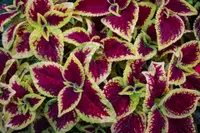
Leaves can be patterned in vivid combinations of green, burgundy, pink, yellow, and cream, with many cultivars offering striking contrasts. Stems are soft and easily pinched to keep the plant dense.

This species comes from tropical regions of Southeast Asia and surrounding areas, where it grows in warm, bright, partly shaded locations. It adapts well to containers indoors or outdoors, which makes it relatively easy to care for Painted Nettle.

It prefers bright, indirect light, evenly moist but not waterlogged soil, and good drainage to maintain healthy foliage color and growth.

Main Plant Requirements

Care Difficulty

Moderate Care

Light Preference

Partial Shade

Water Requirements

Keep Soil Moist

Temperature Preference

Tropical / Frost Sensitive

Hardiness Zone

10–11

Soil Texture

Loamy, Peaty, Organic-rich

Soil pH

Acidic (5.5–6.5), Slightly acidic (6.5–7.0)

Soil Drainage

Moist but well-drained

Fertilization

Light (every 4–6 weeks)

Get Personalized Care Plan

Scan your plant to receive care tips personalized for your specific plant

Personalized Care in the App

Available on iOS and Android

How to Care for the Painted Nettle

Coleus scutellarioides prefers bright, indirect light to maintain strong color and compact growth.

  • Provide 4–6 hours of bright, filtered light daily; gentle morning sun is ideal, but protect from harsh midday and afternoon sun.
  • Tolerates partial shade, especially in hot climates, though very deep shade leads to dull colors and leggy, stretched stems.
  • Outdoors, place Painted Nettle where nearby plants or light shade cloth provide dappled shade in summer, adjusting position as sun angles change seasonally.

This plant prefers evenly moist, well-drained soil without staying soggy or drying out completely.

  • Water when the top 2–3 cm of soil feels dry, using enough water to moisten the root zone, then let excess drain away.
  • In hot weather, expect more frequent watering; in cooler seasons or cloudy spells, extend the interval and always check soil by touch first.
  • Signs of underwatering include limp, drooping leaves, while yellowing, soft stems or a sour smell suggest overwatering and poor drainage.

Stable, warm conditions support dense foliage and continuous growth for this species.

  • Aim for 65–80°F (18–27°C) for best growth; short spikes to 85°F (29°C) are tolerated if soil moisture and shade are adequate.
  • Protect the plant from temperatures below 50°F (10°C); growth slows near this point and tissue damage occurs close to 40°F (4°C).
  • Coleus scutellarioides is extremely frost-sensitive, so move container plants or cuttings indoors or under cover well before the first 32°F (0°C) frost.

This species grows best in moderately humid air and reacts quickly to very dry conditions.

  • Aim for 40–60% humidity to keep Painted Nettle foliage full and reduce leaf edge crisping.
  • Tolerates short spells of drier air, but watch for curling, browning margins, and faster wilting as signs of humidity stress.
  • Increase humidity with a nearby humidifier or grouping plants; avoid misting leaves heavily to reduce fungal risk.

This plant prefers a loose, airy, organic-rich substrate that drains freely yet holds some moisture.

  • Use a peat- or coir-based potting mix with added compost for nutrients and structure suitable for Coleus scutellarioides.
  • Improve drainage and aeration by mixing in 20–30% perlite or fine bark, especially in heavy or compacted mixes.
  • Target a slightly acidic to neutral pH around 6.0–7.0, which supports nutrient availability and healthy root growth.
  • Avoid dense garden soil, mixes that stay waterlogged, or high sand content alone, which can cause root rot or rapid drying.

This species is very suitable for container growing and adapts well to patio or balcony conditions.

  • Choose a wide, stable pot so the spreading foliage does not tip the container in wind or when the soil is moist.
  • Select slightly porous materials like terracotta if the mix stays wet too long, or plastic if containers dry out very quickly.
  • Leave space at the rim of the pot for even watering so water does not run off one side and leave pockets of dry substrate.

Coleus scutellarioides responds well to modest, consistent feeding during its active growing season.

  • Use a balanced, water-soluble fertilizer (around 10-10-10 or 20-20-20) diluted to 1/4–1/2 strength.
  • Feed every 2–3 weeks in spring and summer, applying to moist soil to avoid root burn.
  • Reduce feeding to once every 6–8 weeks in fall and winter, or pause if growth is very slow.
  • Alternatively, mix in a thin layer of compost or a light dose of slow-release fertilizer at the start of the season.

Pruning keeps Coleus scutellarioides compact, bushy, and with dense foliage color.

  • Pinch soft shoot tips in spring and summer to encourage branching and a fuller shape.
  • Remove dead, damaged, or overly long stems back to just above a leaf node.
  • Use clean, sharp scissors or small pruners to make neat cuts and reduce disease risk.
  • Snip off flower spikes when they appear to direct energy into foliage rather than seeds.

Growing Painted Nettle in containers or beds benefits from timely repotting or transplanting to support vigorous growth.

  • Repot or transplant in spring once frost risk is past and plants start active growth.
  • Check for roots circling the pot, emerging from drainage holes, or slowed growth as signs space is limited.
  • Shift to a pot 2–5 cm wider with fresh, well-draining mix, keeping the root ball at the same soil level.
  • Water thoroughly after moving, then keep out of strong sun for a few days to limit transplant shock.

Coleus scutellarioides is commonly renewed through vegetative cuttings and also from seed.

  • Take 8–10 cm stem cuttings in late spring or summer, removing lower leaves.
  • Root cuttings in water or a light, moist mix at 70–80°F with bright, indirect light.
  • Optional rooting hormone can improve success and speed root formation.
  • For seeds, sow on the surface of moist mix, provide warmth and light, and do not cover heavily.

This plant is frost-tender and needs protection in regions with cold winters.

  • Before first frost, move container plants indoors into bright, indirect light at 60–70°F.
  • Outdoors in mild climates, add a light mulch layer around the base to buffer short cool spells.
  • Reduce watering in winter so soil stays just slightly moist, not wet, to prevent root issues.
  • Many growers treat it as an annual and restart from cuttings or seed each spring in cold zones.

Care Tips

Pinch Growth Tips

Regularly pinch out the youngest shoot tips every 2–3 weeks to encourage dense, bushy plants and prevent lanky, top-heavy stems that break easily.

Rotate For Symmetry

Turn containers 90° every 7–10 days so foliage colors develop evenly and stems do not lean or twist toward a single light source.

Refresh Leggy Plants

If stems become stretched or bare at the base, cut them back by 1/3–1/2 and re-root healthy tip cuttings in fresh mix to quickly renew the planting.

Use Cuttings As Backup

Keep a few rooted cuttings growing in small pots indoors as insurance so you can easily replace outdoor plants after storm damage or unexpected cold.

Seasonal Color Management

Trial a few different named cultivars each year in your exact light and temperature conditions and keep notes, so over time you select the most stable colors and strongest growers for your site when growing Painted Nettle.

Common Pests and Diseases

Mealybugs

This pest feeds on sap and often hides in leaf axils and along stems, causing stunted growth and distorted new leaves. Symptoms include white, cottony clusters and sticky honeydew on foliage.

Solution

Isolate the plant, then dab visible insects with cotton swabs dipped in 70% isopropyl alcohol and gently wipe affected areas. Rinse foliage with lukewarm water, improve air circulation, and repeat alcohol spot-treatments weekly until no new mealybugs appear; for heavy infestations, use a labeled insecticidal soap on all leaf surfaces.

Aphids

These insects cluster on tender shoot tips and the undersides of colorful leaves, sucking sap and causing leaf curling and distorted growth. Symptoms include sticky honeydew, sooty mold, and a decline in vigor.

Solution

Spray the plant with a strong stream of water to dislodge aphids, then follow with an application of insecticidal soap, covering both upper and lower leaf surfaces. Repeat every 5–7 days until populations drop, and avoid excess nitrogen fertilization, which encourages lush, aphid-prone growth when growing Painted Nettle outdoors or indoors.

Spider mites

This pest thrives on coleus grown in warm, dry indoor air, causing tiny yellow stippling on leaves and fine webbing between stems and foliage. Symptoms include dull, faded leaf color and premature leaf drop.

Solution

Increase humidity around the plant, then rinse foliage thoroughly in the sink or shower to wash off mites and webs. After rinsing, apply a miticidal product labeled for houseplants or a horticultural oil, making sure to coat the undersides of leaves, and repeat weekly until no new damage appears.

Downy mildew

This disease is favored by cool, humid conditions and dense foliage, especially in shaded beds or crowded containers. Symptoms include pale or yellow patches on the upper leaf surface and gray-white, fuzzy growth on the undersides, followed by leaf drop.

Solution

Remove and discard all affected leaves and plant debris, then improve spacing and airflow and avoid wetting the foliage when watering. In areas with recurring issues, choose resistant coleus cultivars and use a fungicide labeled for downy mildew on ornamental plants as a preventive spray at the first sign of symptoms.

Stem rot

This disease often affects soft, succulent stems in overly wet soil or poorly drained containers. Symptoms include dark, mushy stem bases, wilting despite moist soil, and rapid collapse of affected shoots.

Solution

Promptly discard plants with extensive stem rot and do not reuse contaminated potting mix. For mild cases, cut and root healthy, firm tip cuttings in fresh, well-draining medium, then adjust watering so the top 2–3 cm of soil dries slightly between waterings and use pots with drainage holes.

Interesting Facts

Origins and wild habitat

This species is native to Southeast Asia and parts of the Pacific, where it grows as a short-lived perennial in warm, humid, partially shaded forest edges and disturbed ground rather than in deep forest shade.

Leaf color genetics

Its intense red, purple, yellow, and green patterns are controlled by multiple genes affecting anthocyanin and chlorophyll distribution, so seedlings grown from mixed parent plants often show highly variable and unpredictable leaf coloration.

Rapid growth strategy

In suitable warmth and light it can complete its life cycle quickly, putting energy into fast stem and leaf production and early flowering, which is why it is often treated as an annual in ornamental planting even though it is botanically perennial in frost-free climates.

Botan icon

Did you know?

This species has been used extensively as a model plant in research on leaf pigmentation and pattern formation, helping scientists understand how different plant pigments are regulated and arranged within a single leaf surface.

FAQs about Painted Nettle

Brown leaf edges usually result from low humidity, underwatering, or excess fertilizer salts. Sudden brown patches can follow direct sun scorch or cold drafts. Flush the pot, trim damaged leaves, and stabilize moisture and temperature conditions.

Grow Healthy Plants with Botan Care

Keep your plants happy and healthy with plant identification, disease detection, and easy care guidance.

Botan plant care app — identify plants on mobile

Explore More Plants