Timed rejuvenation pruning
Every 12–18 months, cut the oldest, woodiest stems back to just above a node in early spring to encourage fresh, compact growth and prevent the plant from becoming leggy and sparse at the base.

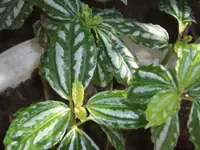
Watermelon pilea, Pilea cadierei, is a compact tropical foliage plant valued for its silvery, patterned leaves that resemble a watermelon rind. It usually grows as a low, bushy plant indoors. Native to the humid forests of Vietnam and surrounding regions, it is adapted to warm, sheltered conditions with consistent moisture. This background explains why it prefers moderate, indirect light and evenly moist but well-drained soil. It is considered a relatively easy plant for beginners who want to learn how to care for Watermelon Pilea, as long as temperature and watering stay stable.

Care Difficulty
Moderate Care

Light Preference
Bright Indirect Light

Water Requirements
Moderate Water

Temperature Preference
Tropical / Frost Sensitive

Hardiness Zone
11–12

Soil Texture
Loamy, Peaty, Organic-rich

Soil pH
Acidic (5.5–6.5), Slightly acidic (6.5–7.0)

Soil Drainage
Moist but well-drained

Fertilization
Light (every 4–6 weeks)
Scan your plant to receive care tips personalized for your specific plant
Available on iOS and Android
Pilea cadierei prefers bright, indirect light with some protection from intense midday sun.
This species likes evenly moist but not waterlogged soil and reacts quickly to extremes in watering.
This plant prefers stable, warm conditions without sudden temperature swings or drafts.
This species benefits from moderately humid air but usually adapts to typical home conditions.
This plant prefers a light, airy, organic-rich mix that drains freely yet holds some moisture.
This species is well suited to container growing, both alone and in mixed plantings.
Pilea cadierei benefits from light, consistent feeding during active growth but is sensitive to excess salts.
Pruning Pilea cadierei keeps the plant compact, encourages bushy growth, and removes weak tissue.
Container-grown Pilea cadierei responds well to occasional repotting that refreshes soil and relieves root congestion.
Pilea cadierei is most often propagated from stem cuttings taken during the active growing season.
This tropical species is frost-sensitive and needs indoor protection in regions with cold winters.

Plant Health Check
Not sure what's wrong with your plant? Check your plant's health inside the app.
This species occurs naturally in the understory of tropical forests in Vietnam, where it grows in shaded, humid conditions on the forest floor and lower slopes.
The characteristic silver patches follow the raised veins of the leaf and are due to specialized leaf tissue that reflects light, creating a metallic effect in its dark, low-light native habitat.
It has been grown as an ornamental foliage plant since at least the mid-20th century, becoming a common indoor species around the 1960s because its patterned leaves adapt well to typical home conditions and make it easy to grow Pilea cadierei.
Brown leaf edges usually come from low humidity, irregular watering, or fertilizer buildup. Increase humidity slightly, water evenly once the top soil dries, and flush the pot with plain water to remove excess salts if needed.
Keep your plants happy and healthy with plant identification, disease detection, and easy care guidance.