African Dragon Tree Care (Dracaena arborea)

About African Dragon Tree

The African dragon tree, Dracaena arborea, is a woody, tree-forming dracaena with a sturdy trunk and a rounded crown of narrow, sword-like leaves. It is often grown as a striking indoor specimen or as a landscape feature in warm climates.

This species comes from dry regions of West and Central Africa, so it is adapted to bright light, heat, and periods of drought. Its slow to moderate growth and tolerance of indoor conditions make it relatively straightforward for those learning how to care for African Dragon Tree.

It generally prefers bright, filtered light, modest but regular watering, and a free-draining, airy potting mix that prevents the roots from staying wet for long periods.

Main Plant Requirements

Care Difficulty

Moderate Care

Light Preference

Bright Indirect Light

Water Requirements

Moderate Water

Temperature Preference

Tropical / Frost Sensitive

Hardiness Zone

10–11

Soil Texture

Sandy, Loamy, Organic-rich

Soil pH

Acidic (5.5–6.5), Slightly acidic (6.5–7.0)

Soil Drainage

Well-drained

Fertilization

Light (every 4–6 weeks)

Get Personalized Care Plan

Scan your plant to receive care tips personalized for your specific plant

Personalized Care in the App

Available on iOS and Android

How to Care for the African Dragon Tree

This species prefers bright, filtered light that mimics high, open woodland conditions.

  • Provide 4–6 hours of bright, indirect light daily; light morning sun is acceptable if filtered through a sheer curtain or light shade.
  • Tolerates partial shade, but growth of African Dragon Tree slows and lower leaves may yellow if light stays low for several months.
  • Avoid intense midday or afternoon sun, which can scorch leaves and cause brown patches, especially during summer at south- or west-facing exposures.

Watering should keep the root zone lightly moist but never saturated.

  • Allow the top 3–5 cm of soil to dry before watering; check with a finger or wooden stick rather than using a fixed schedule.
  • Water more often in warm, active growth periods and reduce frequency in cooler months, ensuring free drainage so no water stands around the roots.
  • Signs of overwatering include yellowing leaves, soft stems, and sour-smelling soil; underwatering shows as dry, curling leaf tips and slow recovery after watering.

Stable, warm conditions support healthy growth and reduce stress for Dracaena arborea.

  • Aim for 65–80°F (18–27°C) for steady growth; brief peaks to 85°F (29°C) are usually tolerated if humidity and soil moisture are not extremely low.
  • Protect from cold; growth slows below about 60°F (16°C) and tissue damage can occur below 50°F (10°C), especially if the plant is wet.
  • This species is not frost hardy; avoid any exposure near 32°F (0°C) and shield from hot, drying winds or heat sources that can scorch foliage.

This species manages well in typical indoor humidity but benefits from slightly moist air.

  • Aim for 40–60% humidity; it tolerates brief dips lower without major stress.
  • Dry air may cause brown, crispy leaf tips and edges, especially on the African Dragon Tree.
  • Increase humidity by grouping plants, using a nearby humidifier, or placing the pot on a water-and-pebble tray without submerging the base.

Dracaena arborea prefers a loose, well-aerated mix that drains quickly yet retains light, even moisture.

  • Use a peat- or coco-based potting mix blended with 20–30% perlite or pumice for drainage and aeration.
  • A slightly acidic to neutral pH around 6.0–7.0 supports nutrient uptake and root health.
  • Avoid heavy garden soil, dense clay, or mixes that stay wet longer than 3–4 days after watering.
  • Add coarse bark chips or chunky perlite to standard houseplant soil to prevent compaction over time.

This species is suitable for container growing when the pot supports its tall, woody form.

  • Choose a deep, heavy container that counterbalances the top-heavy stem and reduces tipping risk.
  • Select a pot with large, unobstructed drainage holes so water can exit quickly after each watering.
  • Use a slightly wider rather than very narrow pot to allow the woody root system to anchor firmly and stabilize the trunk.

Dracaena arborea benefits from light, controlled feeding during the active growing season.

  • Use a balanced liquid fertilizer (around 10-10-10 or 20-20-20) diluted to 1/2–1/4 strength for African Dragon Tree indoor care.
  • Feed every 4–6 weeks in spring and summer when growth is active.
  • Avoid fertilizing in late fall and winter, or apply at very weak strength only if growth continues.
  • Flush the pot with plain water a few times per year to limit salt buildup in the soil.

Pruning helps maintain a clean structure and controlled height in Dracaena arborea.

  • Best time is late winter to early spring, before strong new growth starts.
  • Remove dead, yellowing, or damaged leaves and any crossing or congested stems.
  • Shorten tall canes with clean, sharp pruners to encourage new shoots below the cut and a fuller crown.
  • Disinfect blades with alcohol between plants to reduce disease spread.

Container-grown plants tolerate being slightly root-bound but sometimes need a larger pot or outdoor planting site.

  • Plan to repot or transplant every 2–3 years, or when roots circle the pot, emerge from drainage holes, or growth slows.
  • Best timing is spring to early summer, when warmer conditions support new root growth.
  • Move into a pot 2–5 cm wider with free-draining mix, keeping the root ball at the same depth as before.
  • Handle roots gently, water thoroughly after moving, and keep in bright, indirect light for 1–2 weeks to reduce stress.

New Dracaena arborea plants are most often produced from stem cuttings taken from healthy canes.

  • Take 8–15 cm tip or stem sections in late spring or early summer using sterile, sharp pruners.
  • Allow cut ends to dry for a few hours, then place in moist, free-draining mix or water, keeping nodes buried.
  • Maintain warmth around 70–80°F, high humidity, and bright, indirect light for rooting.
  • Once roots are several cm long and growth resumes, pot each cutting individually and resume normal care.

This species is frost-tender and needs protection in regions with cold winters, especially in containers.

  • Keep temperatures above 50°F; prolonged exposure below this level can damage foliage and stems.
  • In the ground, apply 5–8 cm of mulch around the root zone, keeping it slightly away from the trunk.
  • For potted plants, move containers indoors or into a greenhouse before the first frost.
  • Provide bright, indirect light and reduce watering in winter so the soil dries slightly between waterings.

Care Tips

Stake early

Install a sturdy stake and soft ties while the plant is still small so the developing trunk stays straight and stable as it gains height and weight.

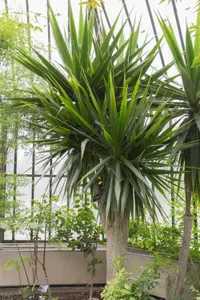
Rotate for symmetry

Turn the container 90° every 2–3 weeks so the canopy develops evenly and the trunk does not lean toward the brightest side of the room.

Clean leaf crowns

Every 1–2 months, gently flush dust and debris out of the tight leaf rosettes with a light stream of lukewarm water to reduce fungal issues and hidden pests.

Salt management

If leaf tips brown despite correct watering, leach the pot thoroughly with distilled or rainwater every few months to wash out built-up fertilizer salts around the root zone.

Plan for repotting

Choose tall, heavy-bottomed containers and step up only 2–5 cm in diameter at a time so the root ball stays anchored and the top-heavy plant does not tip as it matures, which is especially useful when growing African Dragon Tree indoors.

Common Pests and Diseases

Fluoride leaf tip burn

Symptoms include brown, dried leaf tips and margins on older leaves while the rest of the leaf stays mostly green. This disorder is linked to fluoride buildup in soil or water, which dracaenas are unusually sensitive to.

Solution

Use low-fluoride or distilled water, and avoid superphosphate fertilizers and fluoridated tap water when possible. Flush the potting mix thoroughly with clean water every 1–2 months, trim damaged tips for appearance, and repot in a fresh, peat-free, well-draining mix if damage is progressing.

Spider mites

This pest causes very fine yellow stippling on leaves, dull foliage, and thin webbing in leaf axils, especially in dry indoor air. Infestations often start on the upper part of canes and spread along the plant under warm, low-humidity conditions.

Solution

Rinse foliage under a gentle shower or with a handheld sprayer, focusing on leaf undersides, then wipe leaves with a soft cloth. Increase humidity around the plant, isolate it from others, and apply insecticidal soap or horticultural oil every 5–7 days for several cycles to break the life cycle.

Soft scale

These insects appear as small, dome-shaped, tan to brown bumps on stems and leaf midribs and excrete sticky honeydew that can lead to sooty mold on leaves and nearby surfaces. This pest often builds up slowly on long-lived dracaena canes kept indoors for many years.

Solution

Wipe canes and leaf midribs with a cotton pad dipped in diluted alcohol or insecticidal soap, then rinse with water. Repeat inspections weekly, remove heavily infested stems if necessary, and maintain good light and moderate fertilization so the plant can regrow healthy foliage as the population declines.

Fusarium leaf spot

This disease produces small, water-soaked or tan spots with darker purple to reddish margins, often along leaf edges or tips. Spots may enlarge and merge, causing premature yellowing and drop of older leaves on stressed plants.

Solution

Remove and discard affected leaves, keep foliage dry by watering at the soil level, and improve air movement around the plant. Avoid overhead misting, reduce crowding with other plants, and if new spots continue to appear, repot into fresh, well-draining mix and keep tools and pots clean to limit spread.

Mealybugs

These insects form white, cottony clusters in leaf axils, on roots, and along stems, causing leaf yellowing and stunted new growth. Honeydew deposits from feeding can attract sooty mold and make leaves sticky.

Solution

Inspect leaf bases and cane joints closely, then dab visible insects with a cotton swab dipped in alcohol and wipe off residue. Follow with regular applications of insecticidal soap or a light horticultural oil, repeat every 7–10 days until no new insects appear, and isolate the plant from others during treatment as part of Dracaena arborea plant care.

Interesting Facts

West African origins

Dracaena arborea is native to tropical West Africa, where it grows in savanna and dry forest margins rather than deep rainforest, which explains its tolerance for bright light and relatively dry conditions compared with many other dracaenas.

Tree-like growth habit

Unlike many shrubby dracaena species, this plant develops a distinct woody trunk and a rounded, branching crown, allowing it to be pruned and maintained as a true small tree in large interior landscapes and conservatories.

Urban interior workhorse

Because of its upright form, strong trunk, and dense leaf heads, this species is frequently used in commercial lobbies and malls as a structural accent plant, especially where a tall, narrow footprint is needed for African Dragon Tree indoor care in containers.

FAQs about African Dragon Tree

Yellowing leaves usually result from overwatering, poor drainage, or sudden light changes. Older leaves naturally yellow and drop over time. Check the root zone for sogginess, reduce watering, and remove only fully yellow, dry foliage.

Grow Healthy Plants with Botan Care

Keep your plants happy and healthy with plant identification, disease detection, and easy care guidance.

Botan plant care app — identify plants on mobile

Explore More Plants