Ruby Glow Care (Peperomia graveolens)

About Ruby Glow

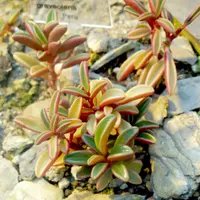
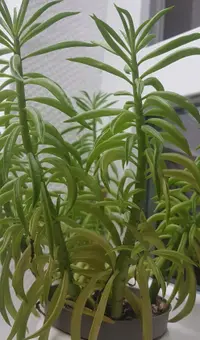
Peperomia graveolens, commonly called ruby glow, is a compact succulent-type houseplant grown for its red-backed, boat-shaped leaves and upright, branching stems. It stays small, which suits desks, shelves, and windowsills.

This species comes from dry, rocky habitats in Ecuador, so it stores water in its fleshy leaves and stems and prefers conditions on the drier side. Its slow growth and tidy form make it suitable for small spaces and for owners who want to care for Ruby Glow without frequent pruning.

Peperomia graveolens typically does best in bright, indirect light, airy soil that drains quickly, and moderate indoor temperatures.

Main Plant Requirements

Care Difficulty

Easy Care

Light Preference

Bright Indirect Light

Water Requirements

Low Water

Temperature Preference

Tropical / Frost Sensitive

Hardiness Zone

11–12

Soil Texture

Sandy, Loamy, Organic-rich

Soil pH

Acidic (5.5–6.5), Slightly acidic (6.5–7.0)

Soil Drainage

Well-drained

Fertilization

Minimal (feed rarely)

Get Personalized Care Plan

Scan your plant to receive care tips personalized for your specific plant

Personalized Care in the App

Available on iOS and Android

How to Care for the Ruby Glow

This succulent Peperomia prefers bright, indirect light with limited direct sun exposure.

  • Provide 6–8 hours of bright, filtered light daily; gentle morning sun is fine, but shield Ruby Glow from harsh midday and afternoon rays to prevent leaf scorch.
  • Position in an east- or bright north-facing spot, or under a sheer curtain; it tolerates light partial shade but growth becomes sparse and leggy in dim rooms.
  • In winter, move closer to a bright window or supplement with a grow light, keeping foliage 20–30 cm from the bulb to avoid overheating or bleaching.

Water Peperomia graveolens sparingly, allowing the soil to dry between waterings.

  • Before watering, let the top 3–5 cm of soil dry; check with a finger rather than following a fixed schedule, as light and temperature change drying speed.
  • Reduce watering in fall and winter when growth slows, but never let the mix stay soggy; use a fast-draining succulent or cactus substrate to limit root rot risk.
  • Watch for signs of stress: mushy, yellowing, dropping leaves suggest overwatering, while thin, wrinkled leaves and very light pots indicate the plant needs water.

This compact succulent thrives in warm, stable conditions without temperature extremes.

  • Aim for 65–80°F (18–27°C) for steady growth; short dips to 60°F (16°C) are usually tolerated if the soil is dry and exposure is not prolonged.
  • Protect from cold; Peperomia graveolens can suffer damage below 50°F (10°C) and should be shielded from frost, cold drafts, and unheated windowsills in winter.
  • In hot spells above 85°F (29°C), increase air movement, shade from intense afternoon sun, and avoid watering during the hottest part of the day to reduce heat stress.

This succulent Peperomia handles typical indoor humidity but benefits from moderate levels.

  • Aim for 40–60% humidity; avoid sustained levels below 30% in heated homes.
  • Dry, curling leaf edges or slow growth may signal air that is too dry for Ruby Glow.
  • Increase humidity locally with nearby pebble trays or grouping plants, rather than misting foliage.

This species needs a fast-draining, airy mix that behaves more like a succulent medium than standard houseplant soil.

  • Use a loose, gritty mix such as 50% cactus mix combined with 25% perlite and 25% fine orchid bark.
  • Ensure drainage is rapid; water should pass through in seconds, not sit on the surface or in the pot base.
  • Aim for slightly acidic to neutral pH (6.0–7.0), which most commercial peat- or coir-based mixes already provide.
  • Avoid heavy garden soil or peat-heavy mixes without extra grit, as they compact, limit aeration, and promote root rot in Peperomia graveolens.

This compact succulent is very suitable for container growing.

  • Choose a wide, shallow pot so the fibrous roots can spread without deep, wet pockets that stay saturated.
  • Use unglazed terracotta if extra evaporation is needed in low-light or cooler spots, since it helps the mix dry faster.
  • Elevate the pot slightly on feet or a stand to let drainage holes clear freely and prevent water pooling under the base.

Peperomia graveolens is a light feeder that benefits from modest, diluted nutrition during active growth for compact, healthy foliage.

  • Use a balanced liquid fertilizer (around 10-10-10 or 20-20-20) diluted to 1/4–1/2 strength for Ruby Glow.
  • Apply every 4–6 weeks in spring and summer when growth is active, skipping feedings if soil is very wet or plant is stressed.
  • Avoid fertilizing in late fall and winter, or limit to 1 very light feeding if the plant continues growing under strong indoor light.
  • Do not use heavy compost or rich slow-release fertilizers; excess nutrients can cause soft, weak growth and root stress.

Peperomia graveolens benefits from light, occasional pruning to maintain a compact, tidy form.

  • Best time for pruning is late spring to early summer when the plant is actively growing and can recover quickly.
  • Remove dead, yellowing, or damaged stems and leaves with clean, sharp scissors or small pruning shears.
  • Pinch or cut back leggy, stretched stems above a node to encourage branching and a denser shape.
  • Limit pruning to a small portion of growth at one time to avoid shocking this slow-growing succulent.

This compact succulent rarely needs frequent repotting and prefers a snug container with sharply draining soil.

  • Check for roots circling the pot, pushing through drainage holes, or slow growth despite good light and care as signs to repot.
  • Plan to repot every 2–3 years in spring, moving Peperomia graveolens only 1 pot size up to prevent waterlogged soil.
  • Use a cactus or succulent mix, handling the roots gently and keeping the original root ball mostly intact to limit stress.
  • Water lightly after repotting, then let the soil dry almost completely before the next watering to encourage healthy root reestablishment.

Peperomia graveolens is commonly propagated from cuttings, which root reliably in warm, bright conditions.

  • Take 5–8 cm stem cuttings with several leaves in spring or early summer, using a sterile, sharp blade.
  • Allow cut ends to dry and callus for 1–2 days before placing in a gritty, barely moist succulent mix.
  • Provide bright, indirect light, temperatures around 70–80°F, and high air circulation to reduce rot risk during rooting.
  • Keep soil only slightly moist until roots form in 3–6 weeks, then transition gradually to normal watering.

This succulent is frost sensitive and needs indoor or protected conditions in regions with cold winters.

  • Maintain temperatures above 55°F; short dips lower than this can damage leaves and stems.
  • Move container plants indoors before nights reach 50°F, placing them in bright, indirect light away from cold drafts.
  • Reduce watering in winter, allowing soil to dry almost completely between waterings to limit rot in cool conditions.
  • Avoid placing pots directly on cold windowsills; use a tray or stand to reduce root-zone chilling.

Care Tips

Rotate For Symmetry

Turn the pot 90° every 2–3 weeks so new growth receives even light, which keeps stems compact and prevents the plant from leaning heavily to one side.

Use Top Dressing

Add a thin layer of coarse grit or small decorative stones on top of the soil to keep fleshy stems from resting on damp substrate and to reduce the risk of rot at the base.


Careful Stem Support

If stems become top-heavy, use low, unobtrusive hoops or small stones to gently prop them up instead of rigid stakes, which helps avoid snapping the brittle succulent branches.

Dry rest In Winter

From late fall through winter, extend the interval between waterings and stop fertilizing to give the plant a mild dry rest, which supports denser growth and longer-lived foliage when days lengthen again.

Inspect Leaf Undersides

During regular watering checks, briefly tilt or lift stems to inspect the red leaf undersides where mealybugs and spider mites often hide, so infestations are caught and treated early when growing Ruby Glow.

Common Pests and Diseases

Mealybugs

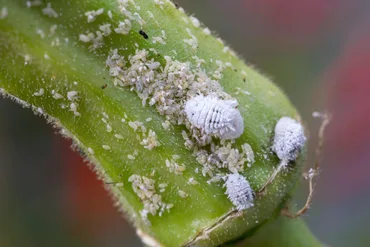
This pest appears as white, cottony clusters tucked between succulent leaves and along stems, often causing stunted growth and sticky residue. Symptoms include leaf distortion and slow decline if the colony is large.

Solution

Isolate the plant, then dab visible insects with cotton swabs dipped in 70% isopropyl alcohol and gently wipe leaf undersides and crevices. Repeat weekly until no new insects appear and improve airflow and light levels to reduce reinfestation risk; for heavy infestations, use a labeled insecticidal soap on all aboveground parts.

Spider mites

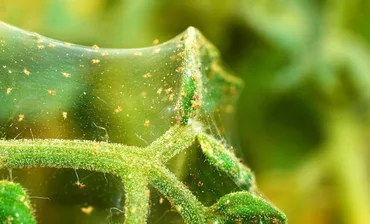
These insects are tiny and often produce fine webbing between the thick, V-shaped leaves, especially in warm, dry indoor air. Symptoms include dull, speckled foliage and a general faded look to the red undersides of the leaves.

Solution

Rinse the plant thoroughly under a gentle shower or sink sprayer, focusing on leaf undersides, then allow it to dry in bright, indirect light. Raise humidity slightly around the plant, avoid very dry heat, and apply insecticidal soap or a neem-based product every 7–10 days until no new webbing or speckling appears.

Fungus gnat larvae

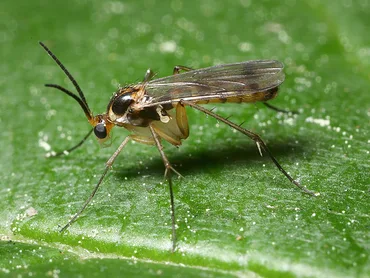
This pest develops in consistently moist, organic-rich potting mix and damages fine roots, which can cause yellowing and slowed growth. Adults are small black flies that hover over the pot surface when disturbed.

Solution

Allow the top 2–3 cm of soil to dry between waterings and use a well-draining, gritty succulent mix to discourage larvae. Place yellow sticky traps to catch adults and, if needed, drench the soil with a biological control containing Bacillus thuringiensis israelensis (Bti) according to label directions.

Edema

This physiological disorder occurs when roots uptake water faster than the fleshy leaves can use it, often in cool, low-light conditions. Symptoms include small corky, blister-like spots on the leaf undersides that do not spread like a typical infection.

Solution

Reduce watering frequency and avoid leaving the plant in cold, wet soil; let the mix dry more thoroughly before the next watering. Provide brighter indirect light and stable indoor temperatures, and remove only the most damaged leaves if their appearance is undesirable.

Leaf spot

This disease causes small, circular to irregular brown or black spots on the succulent leaves, sometimes with a yellow halo, especially when foliage stays wet for long periods. In severe cases, affected leaves may soften and drop prematurely.

Solution

Remove and discard affected leaves promptly and avoid wetting the foliage when watering. Improve air circulation, keep the plant in bright, indirect light, and if spotting continues, apply a copper-based or other labeled ornamental fungicide following package directions while adjusting watering to keep the foliage dry.

Interesting Facts

Ruby-backed foliage

The leaves have a V-shaped cross-section with a translucent, bright green window on top and a deep ruby-red underside, an adaptation that lets light penetrate to the photosynthetic tissues while reducing direct sun stress in its native habitat.

Ecuadorian canyon native

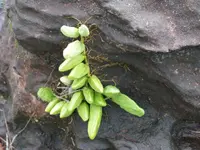
This species is naturally restricted to dry, rocky slopes and canyon walls in southern Ecuador, where it grows in crevices and shallow substrates rather than typical forest understory soil.

Succulent Peperomia form

Unlike many thin-leaved Peperomia species, it has thick, water-storing leaves and stems that allow it to tolerate drier conditions and brief periods of neglect, which is central to Peperomia graveolens plant care.

FAQs about Ruby Glow

Brown leaf tips or edges usually result from underwatering, very low humidity, or excess fertilizer salts. Brown, mushy areas at the base suggest rot. Check roots, adjust watering, and flush the potting mix if needed.

Grow Healthy Plants with Botan Care

Keep your plants happy and healthy with plant identification, disease detection, and easy care guidance.

Botan plant care app — identify plants on mobile

Explore More Plants