Hedging Form Control
When using this plant as a hedge, lightly pinch back new soft shoots several times in spring instead of making one heavy summer cut, which creates a denser screen with less visible pruning scars.

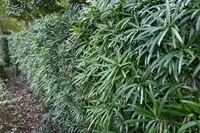
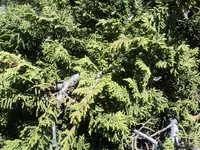
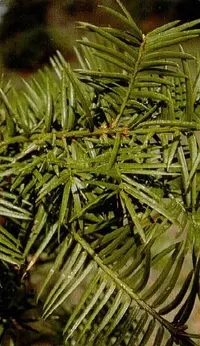
Yew pine (Podocarpus macrophyllus) is an evergreen shrub or small tree valued for its dense, fine-textured foliage and naturally tidy form. It is not a true pine but a podocarp, a conifer relative. Native to parts of China and Japan, it adapts well to warm-temperate and subtropical climates and is common in hedges, foundation plantings, and containers. Its slow to moderate growth and tolerance of pruning make it suitable for structured shapes and bonsai. This species prefers bright light, moderate moisture, and well-drained soil, which makes it relatively straightforward to care for Yew pine when those basics are met.

Care Difficulty
Moderate Care

Light Preference
Partial Sun

Water Requirements
Moderate Water

Temperature Preference
Warm Climate

Hardiness Zone
7–11

Soil Texture
Sandy, Loamy, Clay

Soil pH
Acidic (5.5–6.5), Slightly acidic (6.5–7.0)

Soil Drainage
Well-drained

Fertilization
Minimal (feed rarely)
Scan your plant to receive care tips personalized for your specific plant
Available on iOS and Android
Podocarpus macrophyllus grows best with bright light and some direct sun while avoiding harsh extremes.
This species prefers evenly moist but not saturated soil and copes better with slight dryness than with standing water.
This conifer prefers mild, stable conditions and tolerates a range of outdoor temperatures when protected from extremes.
Podocarpus macrophyllus handles typical indoor humidity well but benefits from slightly moist air in heated homes.
Podocarpus macrophyllus prefers a loose, well-drained, slightly acidic to neutral substrate that does not stay waterlogged.
This species is well suited to container culture for patios, entrances, and balconies.
Podocarpus macrophyllus responds well to modest, steady nutrition rather than heavy feeding.
Pruning supports dense structure and size control in Podocarpus macrophyllus, especially in hedges or containers.
Container-grown plants and young hedges benefit from thoughtful repotting or transplanting that limits root stress.
Podocarpus macrophyllus is most commonly propagated from semi-hardwood cuttings taken in warm seasons.
Established Podocarpus macrophyllus is fairly cold hardy but young or container plants need some winter attention.

Plant Health Check
Not sure what's wrong with your plant? Check your plant's health inside the app.
This species belongs to the Podocarpaceae, an old Southern Hemisphere conifer family that diverged early from the pine relatives, so it is more closely related to podocarps from New Zealand and South America than to true pines in North America.
Individual plants are usually either male or female (dioecious), with male plants producing pollen cones and female plants bearing fleshy, berry-like seed structures that attract birds.
The species is widely used in East Asian and subtropical cities because its foliage tolerates air pollution and pruning, making it a reliable evergreen hedge or topiary for formal landscapes and for those interested in growing Yew pine in containers.

In parts of East Asia, large, old specimens are sometimes preserved in temple grounds and traditional gardens, where they can live for several centuries and become culturally valued landmark trees due to their longevity and dense, sculptural crowns.
Growth is moderate rather than fast. In landscape conditions, expect about 15–30 cm of new growth per year. Cooler climates, poor soil, restricted root space, or heavy pruning can slow extension, while warm, stable climates encourage steadier development.
Keep your plants happy and healthy with plant identification, disease detection, and easy care guidance.