Chinese Banyan Care (Ficus microcarpa)

Also known as: Curtain Fig, Indian Laurel, small-fruited fig

About Chinese Banyan

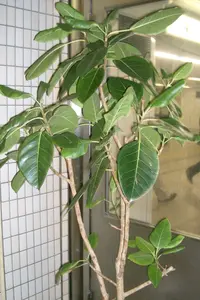
Chinese banyan, Ficus microcarpa, is a woody fig species often grown as a small indoor tree or bonsai. It has glossy, oval leaves and a dense branching habit that can be shaped over time.

In nature it occurs in warm, humid regions of Asia and the Pacific, where it can become a very large tree with extensive aerial roots. Indoors it stays compact when pruned and reacts strongly to changes in light or temperature, which can make it a bit temperamental for beginners.

It prefers bright, indirect light, evenly moist but not waterlogged soil, and good air circulation. Understanding how to care for Chinese Banyan helps keep it leafy and stable year-round.


Main Plant Requirements

Care Difficulty

Moderate Care

Light Preference

Bright Indirect Light

Water Requirements

Moderate Water

Temperature Preference

Tropical / Frost Sensitive

Hardiness Zone

10–12

Soil Texture

Loamy, Sandy, Organic-rich

Soil pH

Acidic (5.5–6.5), Slightly acidic (6.5–7.0)

Soil Drainage

Moist but well-drained

Fertilization

Light (every 4–6 weeks)

Get Personalized Care Plan

Scan your plant to receive care tips personalized for your specific plant

Personalized Care in the App

Available on iOS and Android

How to Care for the Chinese Banyan

Ficus microcarpa prefers bright, indirect light with some gentle direct sun.

  • Provide 4–6 hours of bright, filtered light daily, such as near an east- or north-facing window or under light tree shade outdoors.
  • Tolerates partial shade but may produce sparse growth and longer internodes if light stays below about 3 hours of bright exposure per day.
  • Protect Chinese Banyan from strong midday and afternoon sun, which can scorch leaves, especially in summer; shift slightly brighter in winter to compensate for weaker light.

This species prefers evenly moist, not saturated, soil and reacts quickly to poor watering habits.

  • Water when the top 2–4 cm of soil feels dry to the touch, allowing deeper soil to stay lightly moist but never soggy.
  • Reduce watering in cooler, darker months as growth slows, and increase slightly during warm, active growth when leaves are firm and turgid.
  • Watch for yellowing, soft leaves and a sour smell as signs of overwatering, and for dull, curling, or crispy leaf edges as indicators of underwatering; ensure free-draining soil to avoid root rot in Ficus microcarpa.

Stable warmth supports compact growth and healthy foliage.

  • Aim for 65–80°F (18–27°C) for active growth, with the lower end suitable for slower, compact development and the higher end favoring faster growth.
  • Avoid exposure below 50°F (10°C); brief dips to 45°F (7°C) may be tolerated but can stress the plant and trigger leaf drop.
  • Protect from frost and from hot, dry air above about 90°F (32°C); provide light shade and increased humidity during heat waves and shelter from cold drafts in cooler seasons.

This species grows best with moderate household humidity but benefits from slightly elevated levels.

  • Aim for 40–60% humidity; prolonged air below 30% can stress Chinese Banyan foliage.
  • Low humidity shows as crisp leaf edges, increased leaf drop, and stalled new growth despite correct watering.
  • Increase humidity by grouping plants, placing the pot on a pebble tray with water below the pot base, or running a room humidifier nearby.

This species prefers a loose, well-draining, slightly acidic to neutral substrate for stable growth.

  • Use a mix of 40% all-purpose potting mix, 30% pine bark fines, and 30% perlite or pumice to balance moisture retention and aeration.
  • Soil should feel springy, not compacted; coarse particles create air spaces that protect Ficus microcarpa roots from oxygen shortage.
  • Target pH around 6.0–7.0; avoid strongly alkaline mixes, which can reduce nutrient availability and cause chlorotic leaves.
  • Avoid heavy garden soil or peat-only mixes that stay wet for days, as persistently soggy conditions promote root rot and fungal problems.

This species adapts well to container culture when the pot is matched to its vigorous root system.

  • Choose a container slightly wider than the root ball but not excessively deep, so the upper root zone does not stay cold and wet.
  • Use a heavier pot material such as ceramic or clay for tall or bonsai-trained plants to counterbalance the woody canopy and prevent tipping.
  • Ensure the potting mix drains quickly so water moves out of the root zone, then empty saucers promptly to avoid re-soaking the lower roots.

Ficus microcarpa benefits from moderate, consistent feeding during its active growing season.

  • Use a balanced liquid fertilizer (such as 10-10-10 or 20-20-20) diluted to 1/2 strength every 4–6 weeks in spring and summer.
  • For Chinese Banyan in containers, slow-release pellets can be applied at the start of the growing season following label rates.
  • Reduce or stop feeding in fall and winter when growth slows, especially indoors.
  • Avoid fertilizing very dry or stressed plants; water first, then apply fertilizer to damp soil to limit root burn.

Pruning supports compact growth and structural strength in Ficus microcarpa.

  • Carry out main pruning in late winter or early spring before vigorous growth starts.
  • Remove dead, diseased, crossing, or inward-growing branches to improve airflow and light penetration.
  • Shorten overly long shoots to refine shape, encouraging denser branching for bonsai or indoor trees.
  • Use clean, sharp bypass pruners and make cuts just above a node or side branch to reduce dieback.

Ficus microcarpa adapts well to container growth but benefits from periodic repotting for root health.

  • Repot every 2–3 years in late winter or early spring, when roots circle the pot, emerge from drainage holes, or growth slows.
  • Choose a container 2–5 cm wider with drainage holes and a well-draining, slightly chunky mix such as peat-free potting soil with perlite or bark.
  • Gently loosen circling roots, trim any dead or rotten sections, and keep root reduction modest to limit stress.
  • Water thoroughly after repotting, keep in bright indirect light, and avoid heavy fertilizing for 3–4 weeks while roots re-establish.

Ficus microcarpa is commonly propagated from stem cuttings under warm, humid conditions.

  • Take semi-hardwood stem cuttings in late spring or early summer, 8–12 cm long, with 2–4 leaves.
  • Remove lower leaves, optionally dip the cut end in rooting hormone, and insert into a sterile, well-draining medium such as perlite and peat or coco coir.
  • Maintain 70–80°F, high humidity, and bright indirect light, using a clear cover or propagator for moisture control.
  • Air layering of thicker branches in late spring also works well, producing larger, pre-rooted plants before separation.

Ficus microcarpa is frost-sensitive and needs protection in regions with cold winters.

  • Move container plants indoors before temperatures drop below 45°F, placing them in bright indirect light away from drafts.
  • In mild climates, mulch the root zone with 5–8 cm of organic material to buffer soil temperature.
  • Avoid overwatering in winter; allow the top layer of soil to dry slightly between waterings to reduce root rot risk.
  • If grown outdoors near the margin of its hardiness, use breathable frost cloth during short cold snaps to shield foliage.

Care Tips

Root pruning schedule

For container trees older than 3–4 years, plan light root pruning every 2–3 years in late spring by trimming 10–20% of the outer root mass and refreshing the potting mix to keep the plant compact and prevent it from becoming root-bound.

Canopy thinning technique

Once or twice a year, selectively remove a few inner crossing or downward-growing branches rather than just tip-trimming, which improves air movement through the crown and reduces the risk of scale and mite issues.

Branch wiring support

To shape the structure, gently wire young, flexible branches using soft aluminum bonsai wire for 2–3 months, checking every 2 weeks so the wire does not cut into the bark as the branch thickens.

Salt buildup management

Every 1–2 months, leach the pot thoroughly by running water through the soil until it drains freely for 1–2 minutes to flush out fertilizer salts that can cause leaf tip burn over time.

Acclimation for moves

When relocating the plant between indoors and a sheltered outdoor spot, increase light exposure gradually over 7–10 days and avoid sudden changes in temperature or drafts, which reduces leaf drop and keeps growing Chinese Banyan more stable.

Common Pests and Diseases

Ficus whitefly

This pest feeds on the undersides of leaves, causing yellow stippling, leaf curling, and premature leaf drop. Symptoms include sticky honeydew on foliage and surfaces below the plant.

Solution

Rinse the undersides of leaves thoroughly with a strong but gentle stream of water, then apply insecticidal soap or neem oil every 7–10 days until no new activity appears. Improve air circulation, avoid overfertilizing with high nitrogen, and remove heavily infested leaves to reduce population pressure when working on Ficus microcarpa care.

Psyllids

These insects, often called jumping plant lice, suck sap from young leaves and shoots, leading to cupping, puckering, and distorted new growth. Sticky honeydew and sooty mold may develop on affected foliage.

Solution

Prune and discard the most distorted or infested shoots, then treat new growth with horticultural oil or insecticidal soap, making sure to cover leaf undersides. For outdoor or large specimens, encourage natural predators like lady beetles and avoid broad-spectrum insecticides that disrupt beneficial insects.

Scale insects

This pest appears as small, immobile bumps on stems and leaf midribs, often brown, tan, or gray. Symptoms include yellowing leaves, weak growth, and sticky honeydew that can lead to sooty mold.

Solution

Gently scrape or wipe visible scale off stems and leaves with a cotton swab dipped in alcohol, then follow with a thorough application of horticultural oil to smother remaining insects. Repeat treatments every 10–14 days and isolate heavily infested plants to prevent spread to nearby houseplants.

Nematode leaf galls

This disease is caused by microscopic worm-like organisms that induce small, swollen galls or blisters on leaves and sometimes young stems. Symptoms include irregular, thickened leaf areas and reduced overall vigor in severe cases.

Solution

Remove and discard fallen and heavily galled leaves to reduce nematode numbers, and avoid reusing contaminated soil or tools between plants. Grow plants in clean, well-drained potting media, and if infestation is severe, consider replanting into fresh soil and a new container, disposing of the old substrate safely.

Sooty mold

This disease is a superficial black fungal growth that develops on leaves and stems where honeydew from whiteflies, scale, or aphids has accumulated. Symptoms include dull, blackened foliage that can reduce light reaching the leaves and slow growth.

Solution

Address the underlying sap-sucking insect infestation first, then gently wash leaves with lukewarm water and a mild, diluted soap solution to remove mold. Improve airflow and light around the plant to help foliage dry quickly, and regularly inspect for returning honeydew or insect activity.

Interesting Facts

Natural strangler habit

In its native range, this species often begins life as an epiphyte on other trees, then sends roots down to the ground that gradually thicken and can eventually envelop and kill the host, a growth pattern known as a strangler fig strategy.

Complex pollination partner

Ficus microcarpa relies on a highly specific wasp, usually Eupristina verticillata, for pollination; the wasp breeds inside the fig’s enclosed inflorescences (syconia), completing its life cycle entirely within this one plant species.

Extensive aerial root system

In humid, frost-free climates, older trees produce abundant aerial roots from horizontal branches, which can reach the ground and form pillar-like secondary trunks that support a massive, spreading canopy.

Botan icon

Did you know?

Large specimens in tropical and subtropical cities are known to support rich urban biodiversity, providing nesting and feeding sites for many bird and bat species due to their frequent and long-lasting fig production throughout the year.

FAQs about Chinese Banyan

Growth is generally fast in warm, bright, stable conditions. Outdoors in the ground, it can add 60–90 cm per year. In containers or indoors, growth is slower, often 15–30 cm annually, depending on root space and care.

Grow Healthy Plants with Botan Care

Keep your plants happy and healthy with plant identification, disease detection, and easy care guidance.

Botan plant care app — identify plants on mobile

Explore More Plants