Rotate For Symmetry
Turn the pot 90° every 2–3 weeks so new leaves color evenly and the plant keeps a compact, balanced rosette instead of leaning toward one side.

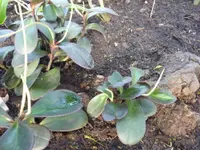
Red edged peperomia, Peperomia clusiifolia, is a compact tropical perennial often grown as a small houseplant. It belongs to the pepper family and is valued for its thick, glossy leaves with cream and pink to red margins. In the wild, it grows as an understory plant in Central and South America, where it usually lives in warm, shaded, and humid forest habitats. Its slow to moderate growth and clumping habit make it suitable for desks, shelves, and mixed plant displays. The succulent-like leaves store water, so it tolerates short dry spells and is generally easy to care for, as long as it receives bright, indirect light and a free-draining potting mix, which helps when learning how to care for Red Edged Peperomia.

Care Difficulty
Easy Care

Light Preference
Bright Indirect Light

Water Requirements
Moderate Water

Temperature Preference
Tropical / Frost Sensitive

Hardiness Zone
10–12

Soil Texture
Loamy, Peaty, Organic-rich

Soil pH
Acidic (5.5–6.5), Slightly acidic (6.5–7.0)

Soil Drainage
Well-drained

Fertilization
Light (every 4–6 weeks)
Scan your plant to receive care tips personalized for your specific plant
Available on iOS and Android
Peperomia clusiifolia prefers bright, gentle light that mimics dappled tropical shade.
Peperomia clusiifolia needs infrequent, careful watering that respects its semi-succulent leaves.
This species thrives in stable, warm conditions without sudden temperature swings.
This species prefers moderate home humidity and usually adapts well to typical indoor air.
This plant prefers a light, airy mix that drains quickly yet holds some moisture.
This compact species is well suited to container growing.
Peperomia clusiifolia benefits from light, controlled feeding rather than heavy fertilization.
Peperomia clusiifolia responds well to light pruning to keep plants compact and tidy indoors.
This plant has a modest root system and prefers infrequent repotting in snug containers.
Peperomia clusiifolia is commonly propagated from cuttings rather than seed in home settings.
This tropical houseplant is frost sensitive and needs stable indoor conditions in winter.

Plant Health Check
Not sure what's wrong with your plant? Check your plant's health inside the app.
This species naturally produces cream or pink leaf margins with a reddish edge, and these pigmented zones have fewer chloroplasts, which slightly reduce photosynthesis compared with the deep green center of the leaf.
In the wild it often grows as an epiphyte on tree trunks or in organic debris caught in branch crotches in tropical forests, anchoring in loose material rather than mineral soil.
The thick, fleshy leaves and stems act as water-storage tissues, an adaptation that allows the plant to tolerate short dry spells under the canopy where moisture levels can fluctuate.

Mature plants can form a compact, semi-woody subshrub over time, with older lower stems becoming slightly woody while still carrying the fleshy leaves that are characteristic of Peperomia clusiifolia plant care discussions.
Leaf curling usually comes from moisture stress, temperature swings, or low humidity. Check that the pot drains well, roots are not compacted, and the plant is away from drafts, heaters, or air conditioners causing rapid environmental changes.
Keep your plants happy and healthy with plant identification, disease detection, and easy care guidance.