Giant White Bird of Paradise Care (Strelitzia nicolai)

Also known as: wild banana, bird-of-paradise -tree, giant white bird of paradise tree, giant bird-of-paradise flower, natal bird-of-paradise flower, giant bird-of-paradise tree, Coastal Strelitzia, Natal Mock Banana, Natal Strelitzia

About Giant White Bird of Paradise

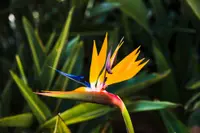
Giant white bird of paradise, Strelitzia nicolai, is a large, tropical ornamental plant known for its banana-like leaves and bold architectural form. It naturally grows in coastal forests of South Africa, often forming dense clumps.

Indoors, it can become a tall, statement plant with upright stems and fans of foliage that give a structural, modern look. Mature plants may produce white and dark blue bird-shaped flowers in suitable conditions.

This species prefers bright light, consistent but not excessive moisture, and well-draining soil. When learning how to care for Giant White Bird of Paradise, its size, light needs, and sensitivity to cold are the main challenges for home growers.

Main Plant Requirements

Care Difficulty

Moderate Care

Light Preference

Bright Indirect Light

Water Requirements

Moderate Water

Temperature Preference

Tropical / Frost Sensitive

Hardiness Zone

10–11

Soil Texture

Sandy, Loamy, Organic-rich

Soil pH

Acidic (5.5–6.5), Slightly acidic (6.5–7.0)

Soil Drainage

Moist but well-drained

Fertilization

Light (every 4–6 weeks)

Get Personalized Care Plan

Scan your plant to receive care tips personalized for your specific plant

Personalized Care in the App

Available on iOS and Android

How to Care for the Giant White Bird of Paradise

This species thrives in high light and needs more sun than many common houseplants.

  • Provide 6–8 hours of bright light daily; outdoors, full morning sun with light afternoon shade suits Giant White Bird of Paradise best.
  • Indoors, place near a south or west window with strong, filtered light; leaves stretching or losing gloss indicate insufficient light.
  • Harden plants gradually before full summer sun to prevent leaf scorch, and move them closer to brightest windows in winter when days shorten.

This plant prefers evenly moist but not saturated soil during active growth.

  • Water when the top 3–5 cm of soil feel dry; in warm seasons this might mean thorough watering then allowing excess to drain freely.
  • Reduce frequency in cooler months, letting the top 5–7 cm dry; slow growth and firm leaves usually mean the current interval is suitable.
  • Watch for yellowing, mushy bases as a sign of overwatering, and crisp brown leaf edges, curling, or very light pots as signs of underwatering for Strelitzia nicolai.

This species favors warm, stable temperatures with protection from frost and extreme heat.

  • Aim for 65–80°F (18–27°C) for best growth; short spikes up to 90°F (32°C) are tolerated if soil moisture and airflow are good.
  • Avoid temperatures below 50°F (10°C); tissue damage can occur near this level, and hard frost can kill exposed foliage or young plants.
  • In regions with cool winters, protect from cold drafts and sudden temperature drops, and provide shade cloth or indirect exposure during intense midsummer heat waves above 90°F (32°C).

This species prefers moderately humid air but usually adapts to typical indoor conditions.

  • Target 40–60% humidity for steady growth of Giant White Bird of Paradise leaves and flower stalks.
  • Brown, crispy leaf edges and stalled new leaves often indicate air that is too dry for this plant.
  • Increase humidity by grouping plants, placing the pot on a pebble tray with water below the pot base, or running a room humidifier nearby.

Strelitzia nicolai grows best in a loose, aerated, fast-draining mix that still holds some moisture.

  • Use a base of peat- or coir-based potting mix amended with 20–30% perlite and 10–20% pine bark for structure and airflow.
  • Aim for slightly acidic to neutral pH, around 6.0–7.0, which supports nutrient uptake for strong foliage and roots.
  • Ensure water runs freely through the mix and out of the pot within seconds; avoid heavy, compacted, or clay-rich substrates.
  • Improve drainage and aeration by adding coarse sand or extra perlite and avoiding fine compost that clogs pore spaces.

This species is well suited to container growing when the pot supports its large, tall form.

  • Choose a wide, heavy container that resists tipping, since mature plants become tall and top-heavy in wind or near foot traffic.
  • Select a deep pot that allows strong, downward root growth, which stabilizes the plant and reduces leaning as it gains height.
  • Use a container material that matches your climate: unglazed clay for faster drying in humid areas, or plastic/fiberglass to retain moisture in drier conditions.

Strelitzia nicolai benefits from moderate, structured feeding during its active growing season to support foliage and structural growth.

  • Use a balanced liquid fertilizer (around 10-10-10 or 20-20-20) at 1/2 strength every 4–6 weeks in spring and summer.
  • Alternatively, apply a slow-release granular fertilizer at the start of spring, following label rates for container tropicals.
  • Supplement with a thin top-dressing of compost once in spring to improve soil structure and micronutrient supply.
  • In fall and winter, when growth slows, reduce feeding to once in the season or stop entirely for indoor Giant White Bird of Paradise.

Pruning Strelitzia nicolai focuses on hygiene and space management rather than reshaping the plant.

  • Best time is late winter to early spring, before strong new growth starts.
  • Remove dead, yellowing, torn, or pest-damaged leaves at the base with sharp, clean pruners.
  • Cut out crowded or crossing stems to improve airflow and light penetration around the clump.
  • Avoid cutting green, healthy trunks; this maintains the plant’s natural upright form and future flowering sites.

Strelitzia nicolai prefers a slightly snug container but still needs periodic repotting as the root system expands.

  • Look for roots circling the pot, pushing through drainage holes, or very slow growth as signs it needs more space.
  • Repot every 2–3 years in late winter or early spring into a container 2–5 cm wider with drainage holes.
  • Use a well-draining mix (quality potting soil with coarse perlite or bark) and keep the root ball at the same depth.
  • Water thoroughly after repotting, keep in bright indirect light for 1–2 weeks, and avoid heavy fertilization until new growth appears.

Strelitzia nicolai is most reliably propagated by division rather than by seed in home conditions.

  • Best season for division is late winter to early spring, when the plant is just entering active growth.
  • Lift or unpot a mature clump and separate sections with at least 1 healthy stem and several roots using a clean knife.
  • Plant each division in a snug pot with well-draining mix, keeping rhizomes just below the surface.
  • Maintain warm temperatures (70–80°F), bright indirect light, and slightly moist soil until divisions establish new growth.

Strelitzia nicolai is frost-tender and requires thoughtful winter care in regions with cold climates.

  • Avoid exposure below 32°F; sustained frost can damage leaves and pseudostems.
  • For in-ground plants in mild zones, apply 5–8 cm of mulch around the root zone, keeping it slightly away from the stems.
  • Move container plants indoors or to a bright, frost-free greenhouse before nighttime lows drop near freezing.
  • Indoors, provide maximum light, slightly drier soil, and good air circulation to limit rot and pest issues over winter.

Care Tips

Rotate For Symmetry

Turn the container 90° every 2–4 weeks so the broad leaves receive light from all sides, which maintains a balanced crown and reduces leaning toward windows or skylights.

Secure Heavy Stems

As the plant gains height, insert 1–3 sturdy stakes just inside the pot rim and loosely tie older, heavier leaf stalks with soft plant ties to prevent wind or bump damage in high-traffic indoor areas.

Root Zone Management

Check the root ball annually by sliding the plant partly out of its pot; if you see tight, circling roots, lightly tease them apart and upsize the container by 2–5 cm to support healthy long-term structure.

Clean And Inspect Leaves

Wipe both sides of each leaf every 3–4 weeks with a damp, soft cloth to remove dust, improve light capture, and catch early signs of scale, spider mites, or mealybugs while caring for Giant White Bird of Paradise.

Seasonal Light Adjustment

In winter, move the plant closer to bright windows or under supplemental grow lights, then gradually shift it back a little in late spring to avoid sudden high-light scorch on previously shaded foliage.

Common Pests and Diseases

Spider mites

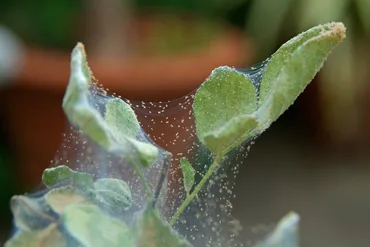
This pest thrives on Strelitzia leaves in warm, dry indoor air and feeds by piercing leaf tissue, causing tiny pale speckles and fine webbing. Symptoms include dull, dusty-looking leaves that may yellow and dry at the edges.

Solution

Rinse both sides of the leaves with a strong, lukewarm water spray, then wipe to remove webs and mites. Increase humidity slightly, improve air movement, and treat remaining mites with repeated applications of insecticidal soap or neem oil every 5–7 days until no new damage appears.

Scale insects

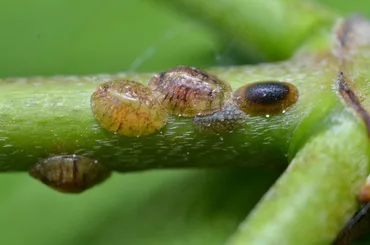
These insects appear as small, rounded or oval bumps along stems and leaf midribs and suck sap, leading to yellowing, weak growth, and sticky honeydew on leaves and floors. Sooty mold fungi may grow on the honeydew, turning surfaces black.

Solution

Gently scrape or wipe visible scale off stems and midribs with a cotton pad dipped in isopropyl alcohol, then rinse the plant. For ongoing infestations, use insecticidal soap or horticultural oil, applied carefully along stems and leaf bases, and repeat several times to catch newly hatched insects.

Mealybugs

This pest shows up as white, cottony clusters in leaf axils, at the base of the stalks, and on roots in pots, causing distorted new leaves and sticky residue. Heavy infestations can slow growth and make leaves droop.

Solution

Isolate the plant, then dab visible mealybugs with cotton swabs dipped in isopropyl alcohol and rinse foliage afterwards. For hidden insects, drench leaf bases and crevices with insecticidal soap or neem oil, repeat weekly, and repot if root mealybugs are present, discarding as much old soil as possible.

Leaf spot

This disease causes brown or tan spots on leaves, often with darker edges and sometimes yellow halos, especially when foliage stays wet and air circulation is poor. Over time, spots can merge and create larger dead patches that weaken the large leaves.

Solution

Remove and discard the most affected leaves, cutting back to healthy tissue, and avoid wetting the foliage when watering. Improve spacing and airflow around the plant, keep leaves dry, and in persistent cases use a copper-based or other labeled ornamental fungicide, applied according to package directions.

Bacterial leaf blight

This disease produces irregular, water-soaked patches that turn brown and can spread rapidly along the leaf blade, often starting where water collects. Symptoms include a foul smell from rotting tissue and rapid collapse of affected areas in warm, humid conditions.

Solution

Cut off and discard infected leaves immediately, sterilizing pruners between cuts with alcohol, and keep the plant away from overhead watering, splashing, and crowded groupings. Improve ventilation, reduce humidity around the foliage, and if spread continues, consider discarding heavily affected plants to protect others, following strict hygiene when handling them for proper Strelitzia nicolai care.

Interesting Facts

Tree-like leaf bases

This species forms a woody, palm-like trunk made from old leaf bases stacked on top of each other, allowing it to reach tree height rather than staying as a stemless clump like many other bird of paradise species.

Wind-driven pollination

In its native range in South Africa, the large white flowers are adapted for pollination by sunbirds; when the birds land on the flower, the floral parts open and dust their feet with pollen, which is then transferred to the next bloom.

Coastal habitat specialist

In the wild it commonly grows on coastal dunes and along riverbanks, where its thick leaves and robust root system tolerate wind exposure and brief salt spray better than many other tropical ornamentals.

Botan icon

Did you know?

In suitable outdoor conditions this species can form multi-stem clumps over 9–10 m tall that function structurally like small trees, creating their own shaded understory and significantly altering light and moisture conditions for other plants beneath them.

FAQs about Giant White Bird of Paradise

This species often takes several years to flower and usually blooms only when large, pot-bound, and grown in bright, stable conditions. Lack of maturity, insufficient light, cool temperatures, or recent repotting can all delay flowering.

Grow Healthy Plants with Botan Care

Keep your plants happy and healthy with plant identification, disease detection, and easy care guidance.

Botan plant care app — identify plants on mobile

Explore More Plants