Structural staking plan
Install a sturdy stake or discreet wall anchor before the plant becomes top-heavy, then loosely secure the main stem with soft ties to prevent leaning or snapping as it gains height and weight.

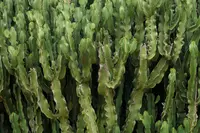
The candelabra tree, Euphorbia ingens, is a succulent tree-form euphorbia with thick, upright, branching stems that resemble a leafless cactus. It stores water in its green, ribbed stems and has small spines along the edges.
This species is native to arid and semi-arid regions of southern Africa, where it grows on rocky slopes and dry scrub. In cultivation it tends to stay smaller but still develops a sculptural, architectural shape.
It is generally considered low-maintenance, but its milky sap is irritating, and overwatering easily causes root rot. Bright light, fast-draining soil, and careful watering are the main points to understand when learning how to care for Candelabra tree.

Care Difficulty
Moderate Care

Light Preference
Full Sun

Water Requirements
Low Water

Temperature Preference
Tropical / Frost Sensitive

Hardiness Zone
10–11

Soil Texture
Sandy, Loamy, Rocky

Soil pH
Slightly acidic (6.5–7.0), Neutral (7.0)

Soil Drainage
Well-drained

Fertilization
Minimal (feed rarely)
Scan your plant to receive care tips personalized for your specific plant
Available on iOS and Android
Euphorbia ingens needs bright, direct sun to maintain strong, compact growth.
This drought-tolerant succulent stores water in its stems and prefers infrequent, deep watering.
Stable warmth is important for healthy growth and long-term survival of this succulent tree.
Humidity is rarely a concern for this arid-adapted succulent.
This species requires a sharply draining, mineral-rich substrate to prevent root rot.
This species is suitable for container growing when stability and drainage are prioritized.
Euphorbia ingens needs only light feeding, as it is adapted to nutrient-poor soils.
Pruning Euphorbia ingens is done mainly for safety, health, and size control rather than flowering.
Euphorbia ingens in containers or landscape positions is moved only when clearly outgrowing its space.
New Euphorbia ingens plants are most often produced from stem cuttings rather than seed in home settings.
This species is frost-sensitive and needs careful winter management in most temperate climates.

Plant Health Check
Not sure what's wrong with your plant? Check your plant's health inside the app.
Despite its cactus-like appearance with tall, ribbed, spiny columns, this species is a succulent spurge and not a true cactus; its thorns are modified stems associated with the Euphorbia latex system rather than cactus areoles.
The plant produces a white latex that helps seal wounds and deter herbivores but is irritating or harmful to skin, eyes, and mucous membranes, a typical defense trait of many Euphorbia species developed to reduce grazing pressure.
This species is native to arid and semi-arid regions of southern Africa, where its columnar form and water-storing tissues allow it to withstand intense sun and prolonged dry periods while providing structural habitat for birds and insects.

In its natural range, mature specimens can form small, candelabra-like groves where fallen branches root and grow into new stems, creating clonal clusters that may persist in the landscape for many decades.
This species rarely flowers indoors or in small containers. Flowering is more likely on mature, tall plants grown in warm, bright, outdoor conditions with strong seasonal light changes and very sharp drainage. Lack of age, light, and heat reduces blooms.
Keep your plants happy and healthy with plant identification, disease detection, and easy care guidance.