


Encourage Night Blooms
Keep the plant in a stable spot once buds appear, because frequent moving or turning can cause buds to drop. Don't disturb it during the 2-3 weeks before flowering.


This is a tropical epiphytic cactus. It produces beautiful white flowers that open at night and usually last only until morning. That's why the plant got its name. Unlike desert cacti, it grows with long, flat, leaf-like stems that can trail or arch gracefully from a pot or hanging basket. In nature, it occurs in tropical forests of Mexico, Central America, and parts of South America, where it grows on trees, not in dry sand.
The main challenge in caring for the queen of the night is giving it appropriate light and steady moisture without constantly wet roots, so this plant needs more attention than some other popular cacti.

Care Difficulty
Moderate Care

Light Preference
Bright Indirect Light

Water Requirements
Moderate Water

Temperature Preference
Tropical / Frost Sensitive

Hardiness Zone
10–11

Soil Texture
Loamy, Organic-rich

Soil pH
Acidic (5.5–6.5), Slightly acidic (6.5–7.0)

Soil Drainage
Well-drained

Fertilization
Light (every 4–6 weeks)
Scan your plant to receive care tips personalized for your specific plant
Available on iOS and Android
As this species came from tropical forest zones, it prefers bright filtered light, similar to the forest canopy conditions in the natural environment.
The plant needs moderate watering. Try to give it time to dry out between waterings, but avoid prolonged drought.
Tip: When in doubt, wait an extra day before watering. This plant tolerates short dry periods much better than soggy soil.
As a warmth-loving plant, the queen of the night will thrive in stable "tropical" conditions. They directly impact flowering in this cactus.
Humidity is important for this plant, but you should maintain a balance and avoid overly humid conditions. Try to keep about 50% humidity when possible, as dry air may cause shriveled stems or slower growth.
Tip: Use a pebble tray or grouped plants to raise humidity gently.
Epiphyllum oxypetalum grows best in an airy, humus-rich mix that holds light moisture without becoming soggy.
Life hack: Mix in a small amount of charcoal when preparing the substrate: it helps keep the soil fresh, prevents odor, and reduces the risk of root rot in moisture-retentive blends.
This plant will grow in the pot, but there are several aspects to know before buying it. First, choose a wide, stable container to support long arching stems without tipping. Add a small trellis or hanging support if stems become heavy.
Note: A young plant can start in a 6-8 inch (15-20 cm) pot, while a heavy specimen needs a 12-14 inch (30-35 cm) wide container for stability.
Light feeding is a good decision for the queen of the night: fertilize every 4-6 weeks until buds are open. Then, follow the next steps:
This procedure isn't necessary, but the plant can benefit from light pruning after flowering or during active growth to control size and shape. To do this, remove dead, damaged, yellowing, or weak stems and cut back overly long stems. Then, thin the crowded growth to improve airflow around the flat stems.
Tip: Avoid heavy pruning before flowering, as buds form on mature stems.
Repotting is more common than garden transplanting because this tropical cactus is often grown in containers.
Note: Water lightly a day or two before repotting: slightly moist soil holds together better. You will find it easier to lift the plant out without damaging the roots.
Stem cuttings are the most reliable way to propagate this tropical epiphytic cactus. Follow these steps to do it:
The queen of the night is frost-sensitive and can't survive in cold conditions. Keep plants above 50°F (10°C) to prevent cold stress and move containers indoors or to a sheltered warm spot before frost.
Tip: Keep stems away from cold windows, drafts, or freezing air.

Plant Health Check
Not sure what's wrong with your plant? Check your plant's health inside the app.
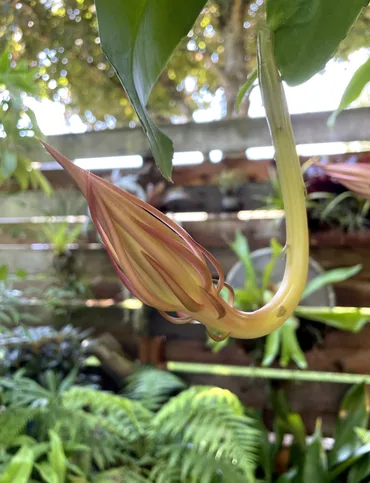
Symptoms include healthy stem growth but no flower buds, often because the queen of the night is too young, kept in low light, moved during bud formation, or not given a cooler resting period.
Solution
Keep the plant in filtered light and avoid disturbing it once buds appear.
Reduce watering in winter, and allow mature stems to develop before expecting flowers.
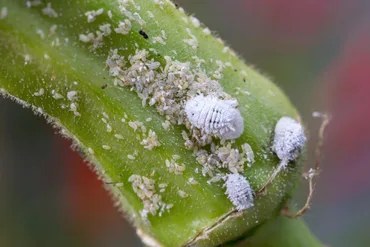
These sap-feeding insects appear as small white cottony clusters along stem joints, edges, and hidden crevices.
They weaken plants and excrete a sticky substance on leaves, which allows the growth of sooty molds.
Solution
Remove visible colonies with a cotton swab dipped in rubbing alcohol.
Then, rinse the stems and inspect weekly until no new insects appear.
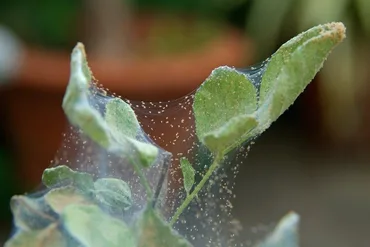
These pests are tiny and often noticed first by fine webbing, dull stem surfaces, or pale speckling.
They have piercing-sucking mouthparts for feeding on sap and cause plants to lose vigor.
Solution
Wash the stems with water, improve humidity, and airflow.
Then, treat repeated outbreaks with insecticidal soap, covering both stem surfaces.
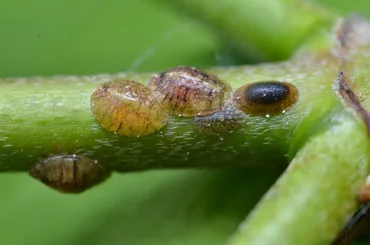
These insects look like small brown or tan bumps attached to the flat stems and may cause sticky residue or weakened growth.
Solution
Scrape off small infestations carefully and wipe the affected areas with alcohol.
Repeat checks every 2-3 days because young scale insects can spread quickly.
Epiphyllum oxypetalum has a rare natural variation described as Phyllocactus purpusii. Unlike the famous fragrant white-flowered form, this Mexican type had red outer petals and an unpleasant scent.
Now, it is treated as part of the same species.
In several Asian traditional medicine systems, the queen of the night is used for ailments such as breathing problems, bleeding, pain, and inflammation.
Note: These uses come from folk practice, not confirmed modern medical guidance.
The name Epiphyllum oxypetalum describes the plant’s unusual look. "Epiphyllum" comes from Greek words meaning “upon the leaf,” while "oxypetalum" means “with pointed petals”.

The queen of the night is so famous for its brief night bloom that it appears in Crazy Rich Asians, where characters gather for “tan hua” blooming parties.
In Chinese, the plant is known as “tánhuā”, a flower associated with rare, fleeting beauty.
It blooms at night because its flowers are adapted to nocturnal pollinators such as moths and bats. The large white petals and strong fragrance help attract them in the darkness.
Keep your plants happy and healthy with plant identification, disease detection, and easy care guidance.

Florida butterfly orchid
Encyclia tampensis

Wiggins' cholla
Cylindropuntia echinocarpa

Philodendron
Philodendron 'Bloody Mary'

Silver torch cactus
Cleistocactus strausii
white champaca
Magnolia × alba

Spanish Butcher's-broom
Ruscus hypophyllum
 POPULAR
Thanksgiving Cactus
Schlumbergera truncata

Bulbophyllum incurvum
Bulbophyllum incurvum