


Offset management
Remove and replant offsets once they reach about 1/3 the size of the mother rosette, using a sterile knife and allowing the cut ends to dry for 1–2 days before potting to maintain a compact, healthy clump.


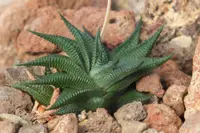
Fairy washboard, Haworthiopsis limifolia, is a compact succulent known for its rosettes of thick, triangular leaves with raised ridges that give a textured, ribbed look. A close relative with similarly textured foliage is the Zebra Haworthia, recognizable by its raised white horizontal ridges and compact rosette form.
It is native to parts of southern Africa, where it grows in dry, rocky habitats with strong light and fast-draining soil. This background makes it a resilient houseplant that tolerates some neglect if not overwatered.
Light to bright, indirect light, minimal watering, and gritty, well-draining soil are usually enough to care for Fairy Washboard successfully, even in small indoor spaces.

Care Difficulty
Easy Care

Light Preference
Bright Indirect Light

Water Requirements
Low Water

Temperature Preference
Tropical / Frost Sensitive

Hardiness Zone
10–11

Soil Texture
Sandy, Loamy, Rocky

Soil pH
Acidic (5.5–6.5), Slightly acidic (6.5–7.0)

Soil Drainage
Well-drained

Fertilization
Minimal (feed rarely)
Scan your plant to receive care tips personalized for your specific plant
Available on iOS and Android
This succulent prefers bright, indirect light with some gentle direct sun each day.
This species stores water in its leaves and needs thorough but infrequent watering. A similar dry-between-waterings routine works well for Haworthia cooperi.
This succulent prefers warm, stable conditions with protection from frost and extreme heat.
This succulent handles typical indoor humidity well and rarely needs special adjustments.
Use a very fast-draining, mineral-rich mix to keep the roots dry between waterings.
This species is very suitable for container growing due to its compact, shallow root system.
Haworthiopsis limifolia is a slow-growing succulent that benefits from modest, dilute feeding during its active season.
Haworthiopsis limifolia needs minimal pruning, focused on hygiene rather than shaping.
This compact succulent prefers to stay slightly root-bound, so repotting is infrequent and done mainly for health or space.
This species is most commonly propagated by removing offsets rather than by seed.
This succulent is not frost tolerant and needs indoor or protected conditions in regions with cold winters.

Plant Health Check
Not sure what's wrong with your plant? Check your plant's health inside the app.
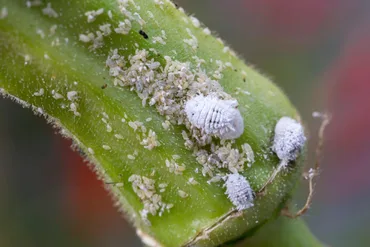
This pest feeds on leaf bases and between the ribs, sucking sap and weakening the rosette over time.
Symptoms include white cottony clumps in tight leaf crevices and sticky honeydew on lower leaves or the pot rim.
Solution
Isolate the plant, then dab visible mealybugs with cotton swabs dipped in 70% isopropyl alcohol and repeat weekly until no new insects appear.
Rinse the rosette gently with lukewarm water to flush hidden insects, let dry well, then maintain drier soil and good air movement to discourage reinfestation.
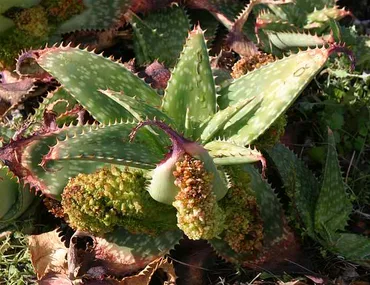
This pest (also called aloe gall mite) causes distorted, knobbly, or warty growth on the leaf surface, often starting near the center of the rosette.
Symptoms include rough, tumor-like swellings that do not wipe off and may slowly spread across leaves.
Solution
Remove and discard all affected leaves with sterile tools, cutting back into healthy tissue, and dispose of the waste in the trash.
Keep the plant isolated, improve air circulation, and if deformation continues, consider discarding the entire plant to prevent spread to other succulents.
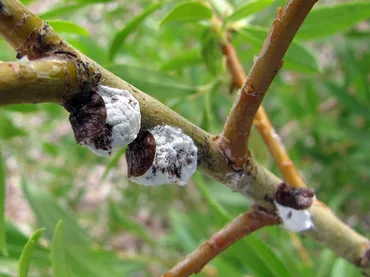
These insects attach to the leaf bases and lower leaf surfaces, appearing as small, smooth, tan or brown bumps that do not move.
Symptoms include sticky honeydew, sooty mold on older leaves, and gradual loss of vigor.
Solution
Gently scrape or wipe off individual scales with a fingernail or cotton pad, then wash the plant under a mild stream of lukewarm water.
Follow up with several applications of insecticidal soap or neem oil to leaf undersides and bases at 7–10 day intervals.
This species develops thick, triangular leaves with strongly raised transverse ridges, giving a washboard-like texture that inspired the common name fairy washboard.
Mature rosettes often show a subtle spiral arrangement of leaves, an efficient packing pattern that helps maximize light capture in its native habitats of southern Africa.
It forms a compact, fibrous root system adapted to shallow, gritty soils, which allows quick uptake of limited rainfall and helps prevent rot during dry periods.

In parts of its native range in Mozambique and South Africa, this species often grows partially shaded under grasses or low shrubs, indicating that in cultivation it usually performs better in bright, filtered light than in intense, all-day direct sun.
Brown tips or patches usually come from underwatering, very low humidity, intense direct sun, or fertilizer burn. Check the roots, adjust watering slightly, move from harsh midday sun, and always dilute succulent fertilizer to half strength.
Keep your plants happy and healthy with plant identification, disease detection, and easy care guidance.


Algerian ivy
Hedera algeriensis
 POPULAR
Madagascar jasmine
Stephanotis floribunda

Palmer's Sedum
Sedum palmeri

Chenille plush plant
Echeveria pulvinata
 POPULAR
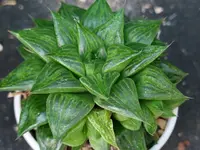
Ruens Haworthia
Haworthia retusa
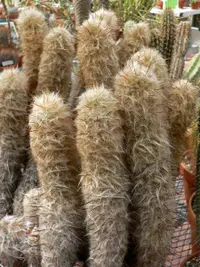
Old Man of the Mountain
Oreocereus trollii
 POPULAR
Tasteless Stonecrop
Sedum sexangulare
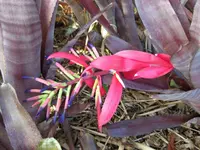
Billbergia distachya
Billbergia distachya