Red Mambo Care (Alocasia azlanii)

About Red Mambo

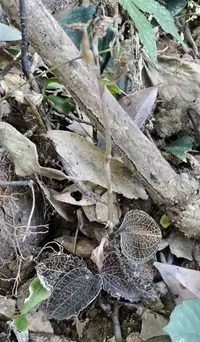
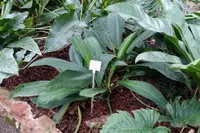
Red Mambo, botanically known as Alocasia azlanii, is a compact aroid grown mainly for its striking foliage. It typically forms a low clump rather than a tall stem.

Leaves are thick, glossy, and often deep burgundy to green with metallic sheen and contrasting veins, giving a dramatic, almost iridescent look. It is native to Borneo, where it grows in warm, shaded rainforest conditions.

This plant prefers stable warmth, high humidity, and evenly moist but airy soil, which can make it more demanding than common houseplants. Understanding these natural conditions helps clarify how to care for Red Mambo indoors.

Main Plant Requirements

Care Difficulty

Hard Care

Light Preference

Bright Indirect Light

Water Requirements

Keep Soil Moist

Temperature Preference

Tropical / Frost Sensitive

Hardiness Zone

11–12

Soil Texture

Loamy, Peaty, Organic-rich

Soil pH

Acidic (5.5–6.5), Slightly acidic (6.5–7.0)

Soil Drainage

Moist but well-drained

Fertilization

Moderate (every 2–4 weeks)

Get Personalized Care Plan

Scan your plant to receive care tips personalized for your specific plant

Personalized Care in the App

Available on iOS and Android

How to Care for the Red Mambo

Alocasia azlanii prefers bright, indirect light that protects its delicate leaves from harsh sun.

  • Provide 6–8 hours of bright, filtered light each day, such as near an east-facing window or under sheer curtains.
  • Allow brief early morning sun but avoid direct midday or afternoon sun, which can cause leaf scorch and fading of Red Mambo foliage.
  • In winter, move the plant closer to bright windows or supplement with a grow light to prevent stretched, pale growth.

Alocasia azlanii needs evenly moist but not saturated soil, with careful attention to drainage.

  • Water when the top 2–3 cm of soil feel dry, adding enough water to moisten the root zone, then let excess drain away fully.
  • Reduce watering in winter when growth slows, allowing the top 3–4 cm to dry to lower the risk of root rot.
  • Watch for yellowing, mushy stems as a sign of overwatering, and for drooping, dry-edged leaves as a sign of underwatering.

This species prefers consistently warm, stable temperatures to maintain healthy foliage and root function.

  • Keep Alocasia azlanii in a range of 70–80°F (21–27°C) for active growth, with slightly cooler nights acceptable.
  • Avoid temperatures below 60°F (16°C); prolonged exposure near 50°F (10°C) can cause leaf damage and dormancy, and frost is lethal.
  • Protect from hot, dry drafts above 85°F (29°C); combine shade with higher humidity to prevent leaf scorch and stress in summer heat.

This species needs high, stable humidity to maintain healthy foliage.

  • Aim for 60–80% humidity; in drier homes place the plant near a humidifier or in a naturally more humid room.
  • In dry air, leaves may curl, develop brown crispy edges, and show slowed growth, especially on Red Mambo forms.
  • Increase humidity with a room humidifier, grouped plants, or a pebble tray under the pot, but avoid misting that keeps leaves wet for long.

Alocasia azlanii prefers an airy, moisture-retentive yet fast-draining mix.

  • Use a loose, organic-rich base such as peat or coco coir combined with chunky orchid bark for structure.
  • Add perlite or pumice at 20–40% of the mix to improve aeration and prevent root suffocation.
  • A slightly acidic to neutral pH around 6.0–7.0 supports nutrient uptake and root health.
  • Avoid dense garden soil or mixes that stay wet for more than 3–4 days, which promote rot and fungus gnat buildup.

This species is well suited to container growing when moisture and stability are controlled.

  • Choose a pot only 2–4 cm wider than the root ball so the mix dries evenly and roots are not left in cold, wet pockets.
  • Select a heavier ceramic or clay container if the plant becomes top-heavy, to prevent tipping when leaves enlarge.
  • Ensure drainage holes never sit directly in a closed cachepot; elevate the grow pot slightly so runoff can escape freely.

Alocasia azlanii benefits from light, consistent feeding during active growth for healthy foliage color and size.

  • Use a balanced liquid fertilizer (for example 10-10-10 or 20-20-20) diluted to 1/4–1/2 strength for Red Mambo indoor care.
  • Feed every 4–6 weeks in spring and summer when growth is active and days are longer.
  • Switch to a slow-release fertilizer or stop liquid feeding in late summer to prevent soft, weak growth.
  • In fall and winter, when growth slows, feed at most every 8–10 weeks or not at all, watching for salt buildup in the soil.

Alocasia azlanii needs minimal pruning, mainly to keep foliage clean and prevent disease spread.

  • Best timing is during active growth in spring or early summer so the plant can replace removed leaves.
  • Cut away yellowing, damaged, or diseased leaves at the base of the petiole with clean, sharp scissors or pruning shears.
  • Remove crowded or crossing petioles only when necessary to improve air movement around leaves and reduce fungal issues.
  • Disinfect tools before and after use to avoid transmitting pathogens between plants.

This plant prefers slightly snug pots and benefits from thoughtful repotting to avoid root shock.

  • Plan to repot every 1–2 years in spring when days lengthen, choosing a pot only 2–5 cm wider than the old one.
  • Look for roots circling the pot, pushing through drainage holes, or slow growth despite proper care as signs it needs more space.
  • Gently loosen circling roots, trim dead or mushy sections, and set the root ball into a chunky, fast-draining aroid mix.
  • Water thoroughly after repotting, then keep soil lightly moist, high humidity, and bright, indirect light to reduce transplant stress.

This species is usually propagated by division of the rhizome rather than by stem cuttings or seed.

  • Divide established clumps in warm spring or early summer when the plant is actively growing.
  • Unpot carefully, remove loose soil, and separate sections with at least 1 healthy growth point and several roots.
  • Plant divisions in a small pot with airy, well-drained mix, keeping roots just covered and crown above the soil line.
  • Maintain 70–80°F, high humidity, and consistently lightly moist soil to encourage new root and leaf growth.

Cold-sensitive Alocasia azlanii requires warm, stable indoor conditions in winter, especially in temperate climates.

  • Move plants indoors before temperatures drop below 55°F, placing them in bright, indirect light away from drafts.
  • Keep room temperatures around 65–75°F and avoid cold windowsills or unheated rooms.
  • Allow the top of the soil to dry slightly more between waterings and reduce fertilizer during the low-light season.
  • If leaves die back, keep the rhizome in barely moist soil and resume normal care in spring when new growth appears.

Care Tips

Acclimate After Purchase

Keep the plant in its nursery pot for 2–4 weeks after purchase so you can monitor root health, watering needs, and any stress response before repotting into a long‑term container.

Stabilize The Petioles

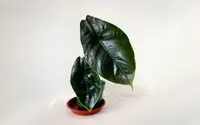
Use a low, circular support ring or 2–3 small plant stakes to gently guide and support the petioles, which reduces mechanical stress and leaf tearing as new foliage unfurls.

Rotate With Caution

Rotate the pot by 90° every 2–3 weeks rather than all at once, which helps the plant grow evenly without shocking the foliage that has adapted to a particular light direction.

Implement Pest Quarantine

Keep new plants at least 1–2 m away from existing collections for 2–3 weeks and inspect leaf undersides and petioles twice weekly with a magnifier to catch spider mites, thrips, or scale early when caring for Red Mambo.

Seasonal Rest Adjustment

During late fall and winter, accept slower growth, remove any yellowing leaves cleanly at the base, and avoid disturbing the roots so the plant can complete its natural semi‑dormant rest period.```

Common Pests and Diseases

Spider mites

These insects thrive in warm, dry indoor air and often attack the thin, metallic leaves, causing a dull, stippled appearance and fine webbing on the undersides. Symptoms include slow decline, leaf edge browning, and loss of the deep sheen typical for this species.

Solution

Rinse foliage thoroughly with a strong, lukewarm shower, focusing on leaf undersides, then repeat every 5–7 days for several cycles. Increase humidity to 60–70%, isolate the plant, and apply a neem oil or insecticidal soap spray labeled for houseplants, ensuring full coverage of both sides of the leaves and petioles.

Thrips

This pest scrapes and sucks sap from the thin leaf surface, leading to silvery streaks, distorted new leaves, and black specks of frass along veins. Damage is often most visible on young, unfolding leaves, which can emerge misshapen or with permanent scarring.

Solution

Remove and discard heavily scarred leaves, then rinse the plant thoroughly under running water. Use sticky traps near the plant to monitor adults and treat all foliage, including petiole bases, with insecticidal soap or a systemic insecticide suited for indoor use, repeating at 7–10 day intervals to break the life cycle.

Rhizoctonia leaf spot

This disease causes irregular tan to brown spots with darker margins, often starting along the leaf edges where moisture lingers on the thin blade. Symptoms include rapid spread of lesions in warm, humid, low-airflow conditions, leading to partial leaf collapse.

Solution

Remove affected leaves promptly with sterilized scissors and avoid wetting foliage during watering. Improve airflow, space plants apart, and if new spots continue to appear, treat with a copper-based or other labeled fungicide, following package directions and allowing leaves to dry quickly after any spray.

Pythium root rot

This disease attacks fine roots in consistently wet, poorly aerated mix, leading to limp petioles, yellowing leaves, and collapse despite moist soil. Symptoms include a sour smell from the pot and brown, mushy roots that break easily when touched.

Solution

Unpot the plant, trim off all soft, dark roots, and replant in a fresh, well-draining aroid mix with plenty of perlite or bark. Reduce watering frequency, allowing the top 3–5 cm of mix to dry before watering again, sanitize the old pot or replace it, and consider a targeted fungicide drench if valuable roots remain.

Bacterial leaf blight

This disease produces water-soaked, translucent patches that quickly turn brown and may ooze, often starting from small wounds on the soft leaf tissue. Symptoms include irregular lesions with yellow halos and a bad odor if the infection is advanced.

Solution

Isolate the plant, remove and discard all affected leaves, and sterilize tools between cuts. Keep foliage dry, increase airflow, avoid overhead misting, and if the problem recurs, discard severely affected plants and start fresh from clean stock to prevent spread to other Alocasia azlanii plant care collections.

Interesting Facts

Naturally restricted range

This species is believed to occur only in a limited area of Borneo, making it a naturally rare aroid in the wild rather than simply a rare plant in cultivation.

Metallic leaf surface

Its leaves develop a pronounced metallic sheen with deep purple to near-black tones, caused by specialized epidermal cells that change how light is reflected from the surface.

Distinct juvenile coloration

Young leaves often emerge brighter green with clearer contrasting veins, then gradually darken and take on a stronger iridescent effect as the leaf matures.

FAQs about Red Mambo

Brown, crispy edges usually come from low humidity, underwatering, or fertilizer salts building up in the pot. Increase humidity, water thoroughly but less often, and flush the soil occasionally to remove excess fertilizer.

Grow Healthy Plants with Botan Care

Keep your plants happy and healthy with plant identification, disease detection, and easy care guidance.

Botan plant care app — identify plants on mobile

Explore More Plants