Philodendron panduriforme Care

About Philodendron panduriforme

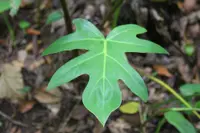
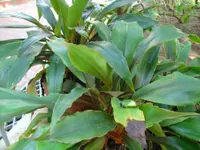
Philodendron panduriforme is a climbing aroid grown mainly for its narrow, violin-shaped leaves and strong, upright to vining growth habit. It usually stays manageable in size indoors but can grow much larger in warm, humid climates. Native to tropical forests of South America, it naturally climbs trees, using aerial roots to anchor itself and access light. The species prefers bright, filtered light, moderate moisture, and airy, well-draining soil to maintain healthy roots. Its sturdy growth and tolerance for typical indoor humidity make it relatively straightforward to care for Philodendron panduriforme once its basic needs are understood.

Main Plant Requirements

Care Difficulty

Moderate Care

Light Preference

Bright Indirect Light

Water Requirements

Moderate Water

Temperature Preference

Tropical / Frost Sensitive

Hardiness Zone

11–12

Soil Texture

Loamy, Peaty, Organic-rich

Soil pH

Acidic (5.5–6.5), Slightly acidic (6.5–7.0)

Soil Drainage

Moist but well-drained

Fertilization

Light (every 4–6 weeks)

Get Personalized Care Plan

Scan your plant to receive care tips personalized for your specific plant

Personalized Care in the App

Available on iOS and Android

How to Care for the Philodendron panduriforme

This species prefers bright, filtered light that mimics a forest understory.

  • Provide 6–8 hours of bright, indirect light each day, such as light filtered through sheer curtains or dappled shade under taller plants.
  • Allow early morning sun for 1–2 hours if it is gentle, but avoid harsh midday and afternoon sun, which can cause leaf scorch and bleaching.
  • Tolerates partial shade, yet very low light leads to slow growth and stretched stems; move closer to a bright window or brighter outdoor spot in winter when days are shorter.

Watering should keep the root zone evenly moist but never waterlogged.

  • Water when the top 2–4 cm of soil feels dry, using enough water so some drains away, then let excess run off completely.
  • Reduce watering in cooler months when growth slows, but do not allow the root ball to dry out completely for long periods.
  • Watch for yellowing, soft leaves and a sour soil smell as signs of overwatering, and drooping, thin leaves and dry, pulling soil as signs of underwatering; always use well-draining, airy soil.

Stable, warm conditions support healthy growth and leaf development.

  • Aim for 65–80°F (18–27°C) for active growth, with the warm end of this range promoting faster foliage production.
  • Protect from cold; growth slows below 60°F (16°C), and damage can occur below 50°F (10°C), especially with damp soil or wind exposure.
  • Avoid frost entirely, and in hot periods above 86°F (30°C) provide shade, increased air movement, and slightly higher humidity to limit heat stress.

This species benefits from moderately high indoor humidity for steady foliage growth.

  • Aim for 50–70% humidity; it tolerates brief dips to 40% but grows slower in very dry air.
  • Watch for brown, crispy leaf edges or curling as signs that humidity is too low.
  • Increase humidity with a nearby humidifier, grouped plants, or a pebble tray placed under but not touching the pot base.

This aroid prefers a loose, airy, organic-rich medium that drains quickly yet holds some moisture.

  • Use a mix such as 40% peat or coco coir, 30% fine bark, 20% perlite, and 10% compost for structure and nutrients.
  • Ensure water drains through in seconds; if it lingers or the mix feels heavy, add more bark or perlite to improve aeration.
  • Keep pH slightly acidic to neutral, around 5.5–7.0, avoiding strongly alkaline mixes that can lock up nutrients.
  • Avoid dense garden soil, clay-heavy mixes, or pots that stay wet for hours, which encourage root rot in Philodendron panduriforme.

This species is well suited to container growing due to its manageable, climbing growth habit.

  • Choose a pot just 2–5 cm wider than the root mass to reduce long-term wet pockets near the edges.
  • Select a heavier ceramic or terracotta container if supporting a moss pole so the plant’s weight does not tip the pot.
  • Ensure drainage holes are unobstructed and empty saucers within 5–10 minutes to prevent water collecting around the pot base.

Consistent but moderate feeding supports healthy foliage and steady growth in Philodendron panduriforme.

  • Use a balanced liquid fertilizer (around 10-10-10 or 20-20-20) diluted to 1/4–1/2 strength for container-grown plants.
  • Feed every 4–6 weeks during the warm growing season when the plant is actively producing new leaves.
  • Reduce or stop fertilizing in fall and winter, when growth slows under lower light and cooler temperatures.
  • Avoid heavy applications of compost or slow-release pellets that can cause salt buildup in confined indoor pots.

Thoughtful pruning keeps Philodendron panduriforme compact, tidy, and encourages stronger new growth.

  • Carry out main pruning in late winter or early spring before vigorous new growth begins.
  • Remove yellowing, dead, or damaged leaves first, then thin crowded or crossing stems to open the canopy.
  • Use clean, sharp pruners or scissors and cut just above a node to guide branching and shape.
  • Limit pruning to at most 1/3 of the foliage at one time to avoid unnecessary stress on the plant.

Periodic repotting maintains root health and stable growth for container-grown Philodendron panduriforme.

  • Check for roots circling the pot, growing from drainage holes, or slowed top growth as signs that repotting is needed.
  • Plan to repot every 2–3 years in spring, when light and temperatures support recovery and new root growth.
  • Move the plant only 1 pot size up, into a well-draining aroid mix, keeping the root ball intact as much as possible.
  • Water lightly after repotting, keep in bright indirect light, and avoid heavy feeding for 2–3 weeks to limit transplant shock.

Stem cuttings provide the most reliable method for increasing Philodendron panduriforme plants at home.

  • Take stem cuttings in late spring or early summer, choosing sections with at least 1–2 nodes and a healthy leaf.
  • Place cuttings in moist, airy substrate or water, keeping nodes submerged or well-contacted with the medium.
  • Maintain warmth around 70–80°F, high humidity, and bright indirect light to promote root formation.
  • Transplant rooted cuttings carefully into small pots, then gradually reduce humidity as new growth stabilizes.

Indoor Philodendron panduriforme plants require protection from low temperatures during winter.

  • Keep plants above 60°F, as foliage and roots are sensitive to frost and prolonged chills.
  • Move container plants away from drafty windows and exterior doors to reduce cold stress on leaves.
  • In heated homes, use trays with pebbles and water or a humidifier to offset dry indoor air.
  • Water less often in winter, allowing the top substrate to dry slightly deeper to match slower growth.

Care Tips

Early support training

Install a sturdy moss pole or textured stake while the plant is still small and loosely tie new vines as they elongate so aerial roots anchor early and leaves develop full size and proper shape.

Root zone monitoring

Use a simple moisture meter or insert a plain wooden skewer deep into the root ball monthly to check for consistently wet areas that indicate poor aeration, then adjust pot size or soil structure accordingly.

Targeted leaf cleaning

Wipe each leaf with a barely damp, soft cloth every 3–4 weeks while supporting it from beneath, which removes dust that blocks light and lets you spot scale, mites, or thrips before they spread.

Seasonal nutrient break

Reduce or pause fertilizing in late fall and winter if new leaves emerge smaller or slower, then resume feeding lightly in early spring as daylight increases to match the plant’s natural growth rhythm.

Preventing pot compaction

Rotate the container a quarter turn every 2–3 weeks and gently tap the pot sides after watering to prevent substrate from settling unevenly, which helps roots spread evenly and supports stable, upright growth when caring for Philodendron panduriforme.

Common Pests and Diseases

Spider mites

This pest often appears on plants grown in warm, dry indoor air, causing fine leaf stippling and dull, dirty-looking foliage. Symptoms include tiny webbing on leaf undersides and between petioles and stems.

Solution

Rinse leaves thoroughly with lukewarm water, focusing on the undersides, and repeat every few days to break the life cycle. For heavier infestations, use an insecticidal soap or neem oil spray, and increase humidity to make conditions less favorable for mites as part of long-term Philodendron panduriforme care instructions.

Mealybugs

These insects hide in leaf axils and along the midrib, forming white, cottony clusters that weaken the plant and cause distorted new growth. Symptoms include sticky honeydew and sooty mold on nearby surfaces.

Solution

Isolate the plant, then dab visible mealybugs with cotton swabs dipped in 70% isopropyl alcohol and wipe leaf axils carefully. Follow up with repeated applications of insecticidal soap or neem oil every 7–10 days until no new insects appear, and inspect regularly for re-infestation along the petioles and nodes.

Bacterial leaf spot

This disease often starts as small, water-soaked lesions on the thin, deeply lobed leaves, which can turn brown with yellow halos. Symptoms include rapidly enlarging spots that may coalesce and cause partial leaf collapse in humid, poorly ventilated conditions.

Solution

Remove and discard affected leaves, sterilizing scissors between cuts, and avoid overhead watering or water sitting on leaves for long periods. Improve air circulation, keep foliage dry, and if the problem persists, use a copper-based bactericide according to label directions, ensuring good spacing and lower humidity around the plant.

Fungal leaf blight

This disease produces irregular brown or dark tan patches on leaves, sometimes with a slightly fuzzy or water-soaked margin, especially in dense, humid indoor groupings. Symptoms include rapid deterioration of the leaf blade and premature yellowing and drop.

Solution

Cut off and dispose of damaged leaves promptly, then allow the top of the potting mix to dry slightly more between waterings and reduce ambient humidity if it is very high. Improve air movement, space plants apart, and apply a broad-spectrum houseplant-safe fungicide if new spots continue to appear on fresh foliage.

Interesting Facts

Distinct fiddle-shaped leaves

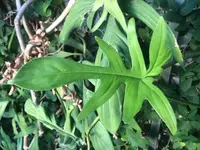
This species develops strongly panduriform, or fiddle-shaped, leaf blades with a narrowed middle and broader upper section, a feature that inspired its species name panduriforme, meaning fiddle- or guitar-shaped in Latin-derived botanical terminology.

Climbing hemi-epiphyte habit

In its native tropical forests, this plant behaves as a climbing hemi-epiphyte, starting life on or near the ground and then anchoring itself to tree trunks with aerial roots as it ascends toward higher light.

Juvenile to adult change

As it matures, the plant shows clear heteroblasty, a developmental shift where juvenile leaves are smaller and often differently proportioned, while adult leaves become larger, thicker, and more deeply fiddle-shaped.

FAQs about Philodendron panduriforme

Growth is moderate. In good indoor conditions it may add 10–25 cm of stem and several new leaves per year. Growth slows in low light, cramped roots, cool temperatures, or if nutrients are limited.

Grow Healthy Plants with Botan Care

Keep your plants happy and healthy with plant identification, disease detection, and easy care guidance.

Botan plant care app — identify plants on mobile

Explore More Plants