Provide climbing support
Install a narrow trellis, hoop, or vertical strings so the vines can be tied and guided upward, which keeps leaves flat and maximizes their color and pattern.

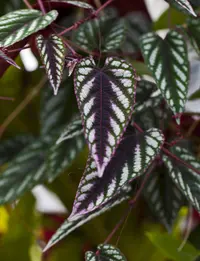
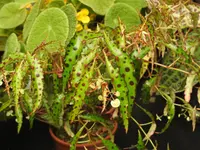
Begonia vine, Cissus discolor, is a tropical climbing vine grown mainly for its striking foliage rather than flowers. It is often used as a trailing or climbing houseplant. Leaves are heart-shaped with silver markings on dark green topsides and deep reddish-purple undersides, giving a strong decorative effect even on young plants.
This species comes from humid, shaded forests in Southeast Asia, so it prefers warm, stable indoor conditions. It can be moderately challenging, as it dislikes cold drafts, very dry air, and inconsistent watering. Those who learn how to care for Begonia Vine usually grow it for its vivid color contrast and graceful, vining habit.

Care Difficulty
Moderate Care

Light Preference
Bright Indirect Light

Water Requirements
Moderate Water

Temperature Preference
Tropical / Frost Sensitive

Hardiness Zone
11–12

Soil Texture
Loamy, Organic-rich

Soil pH
Acidic (5.5–6.5), Slightly acidic (6.5–7.0)

Soil Drainage
Moist but well-drained

Fertilization
Light (every 4–6 weeks)
Scan your plant to receive care tips personalized for your specific plant
Available on iOS and Android
Cissus discolor prefers bright, filtered light that mimics a bright forest understory.
Water to maintain lightly moist but never waterlogged soil for healthy foliage and roots.
This species thrives in consistently warm, frost-free conditions with only slight seasonal variation.
This species prefers consistently high humidity to maintain healthy foliage and strong growth.
Use a loose, airy, organic-rich mix that drains quickly yet holds moderate moisture.
This vine is very suitable for container growing due to its manageable root system and climbing habit.
Cissus discolor benefits from moderate, consistent feeding during active growth for strong foliage color and steady vine development.
Pruning Cissus discolor helps manage length, encourage bushier growth, and maintain a tidy, healthy vine.
Cissus discolor grows well in containers and benefits from thoughtful repotting to prevent root binding and stress.
Cissus discolor is commonly propagated from stem cuttings taken during the plant’s active growing period.
Cissus discolor is frost-sensitive and needs protection in regions with cold winters, especially when grown outdoors in containers.

Plant Health Check
Not sure what's wrong with your plant? Check your plant's health inside the app.
Individual plants can show different mixes of silver, green, and purple on the leaves, and this pattern often shifts with light intensity and plant age rather than being genetically fixed in a simple way.
This species produces slender, branching tendrils that coil around nearby supports, allowing the vine to climb efficiently toward brighter canopy gaps in its native tropical forests.
The dark upper leaf surface with metallic markings and the paler underside reflect and capture light differently, an adaptation that helps the plant function in the filtered, low-light conditions of understory habitats.

Cissus discolor is native to tropical Southeast Asia, yet in cultivation it has become far more familiar as a foliage houseplant in Europe and North America than in its natural forest habitats, where it is just one of many inconspicuous understory vines.
Brown leaf edges usually come from low humidity, fertilizer burn, or excess direct sun. Brown patches can indicate underwatering or past drought stress. Check recent care changes, flush the pot, and raise humidity to stabilize growth.
Keep your plants happy and healthy with plant identification, disease detection, and easy care guidance.