


Winter dormancy handling
Reduce watering to very light sips and keep the plant on the cool, bright side of the house in winter to respect its semi-dormant period and prevent root loss from overwatering when it is not actively growing.

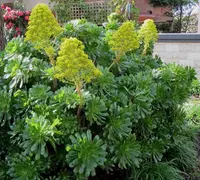
Tree aeonium (Aeonium arboreum) is a shrubby succulent known for its tall, branching stems topped with rosettes of fleshy, spoon-shaped leaves. The rosettes can be bright green, dark purple, or bi-colored, creating a strong architectural look in containers and garden beds.
This species comes from the Canary Islands, where it grows in mild, sunny, coastal climates with dry, rocky soils. It generally adapts well to pots and mild outdoor climates, but dislikes hard frost and heavy, soggy soil.
Its drought tolerance and slow to moderate growth make it manageable for most home growers, especially those learning how to care for Tree Aeonium. It does best with bright light, infrequent but thorough watering, and sharply draining soil.

Care Difficulty
Moderate Care

Light Preference
Full Sun

Water Requirements
Low Water

Temperature Preference
Tropical / Frost Sensitive

Hardiness Zone
9–11

Soil Texture
Sandy, Loamy, Rocky

Soil pH
Acidic (5.5–6.5), Slightly acidic (6.5–7.0)

Soil Drainage
Well-drained

Fertilization
Minimal (feed rarely)
Scan your plant to receive care tips personalized for your specific plant
Available on iOS and Android
Aeonium arboreum needs bright light to stay compact, colorful, and healthy.
This succulent stores water in its leaves and needs infrequent but deep watering.
This species prefers mild, frost-free climates with cool to warm temperatures.
This succulent tolerates typical indoor humidity and rarely needs special adjustments.
Aeonium arboreum needs a fast-draining, airy, mineral-rich mix to prevent root and stem rot.
This species is very suitable for container growing due to its shallow, fibrous root system.
Aeonium arboreum benefits from modest feeding during its active growing season if grown in containers.
Aeonium arboreum benefits from light, intentional pruning to maintain shape and plant health.
Container-grown plants need occasional repotting to refresh soil and maintain healthy roots.
This species is commonly propagated from stem cuttings taken from healthy rosettes.
This succulent is frost sensitive and needs protection in climates colder than USDA zone 9b.

Plant Health Check
Not sure what's wrong with your plant? Check your plant's health inside the app.
This succulent develops a woody, branched trunk with rosettes only at the tips, giving it a shrub or small tree form unusual among succulents of similar size.
Unlike many succulents, it is most active in cool, mild winters and often slows or partially sheds rosettes in dry summer dormancy to reduce water loss.
The typically green rosettes can turn deep reddish-purple on the outer leaves when exposed to strong sunlight, cool temperatures, or mild water stress, a response linked to increased protective pigments called anthocyanins.

In its Canary Islands native range, this species often colonizes lava fields, rocky cliffs, and roadside walls, using its shallow but wide-spreading roots to anchor in narrow rock crevices and exploit brief moisture pulses after ocean-influenced rains.
Brown leaves usually result from strong sun scorch, extended drought stress, or old lower rosettes naturally aging and drying. Check for hot reflected light, very dry soil, or cold drafts, then adjust exposure and watering accordingly.
Keep your plants happy and healthy with plant identification, disease detection, and easy care guidance.

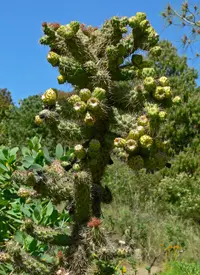
coastal cholla
Cylindropuntia prolifera
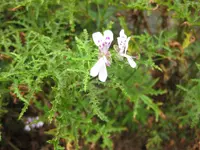
Toothy Storksbill
Pelargonium denticulatum
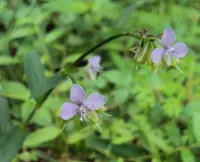
Murdannia loriformis
Murdannia loriformis
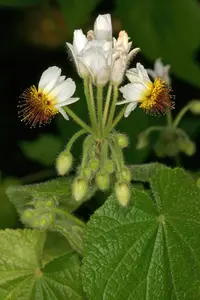
African Hemp
Sparrmannia africana
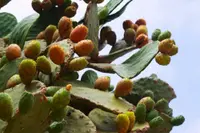
Stenocereus pruinosus
Stenocereus pruinosus
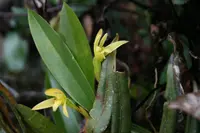
Maxillaria porrecta
Maxillaria porrecta
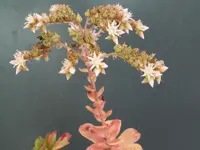
Haworth's aeonium
Aeonium haworthii
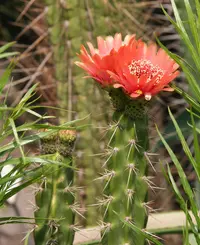
Corryocactus melanotrichus
Corryocactus melanotrichus