Evergreen Clematis Care (Clematis armandii)

About Evergreen Clematis

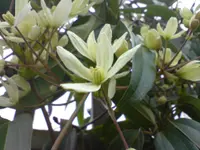
Evergreen clematis (Clematis armandii) is a vigorous, woody climber grown for its glossy, dark green leaves and masses of fragrant white spring flowers. It is typically trained on fences, trellises, or walls, where it forms a dense, permanent screen.

This species is native to China and northern Myanmar, where it grows in woodland and scrub. Its fast growth and evergreen foliage make it effective for quick coverage, but it needs support and some space to spread.

It is considered relatively straightforward to care for Evergreen Clematis if given bright light, shelter from harsh winds, and well-drained, fertile soil with steady moisture but no waterlogging.

Main Plant Requirements

Care Difficulty

Moderate Care

Light Preference

Partial Sun

Water Requirements

Moderate Water

Temperature Preference

Cold Hardy

Hardiness Zone

7–9

Soil Texture

Loamy, Sandy, Organic-rich

Soil pH

Acidic (5.5–6.5), Slightly acidic (6.5–7.0)

Soil Drainage

Moist but well-drained

Fertilization

Light (every 4–6 weeks)

Get Personalized Care Plan

Scan your plant to receive care tips personalized for your specific plant

Personalized Care in the App

Available on iOS and Android

How to Care for the Evergreen Clematis

This vigorous evergreen climber prefers bright conditions with protection from harsh afternoon sun.

  • Provide 4–6 hours of direct morning sun with light afternoon shade; an east or southeast wall suits Evergreen Clematis well.
  • Allow the top growth to reach full sun while shading the root zone with mulch or low plants to keep the soil cool.
  • In very hot summers, protect from strong sun between 1–4 pm to prevent leaf scorch; in cooler climates, it tolerates more all-day sun.

This species prefers evenly moist, cool soil that never stays saturated for long periods.

  • Water when the top 3–5 cm of soil feels dry, applying a deep soak so moisture reaches the full root zone, especially during the first 2–3 growing seasons.
  • Use well-drained, humus-rich soil and mulch 5–8 cm deep to reduce surface drying while still allowing excess water to drain freely.
  • In hot, dry weather, monitor foliage for wilting or crisp leaf edges as signs of underwatering; yellowing lower leaves and limp stems may indicate overwatering in Clematis armandii.

This climber is hardy in many temperate regions but performs best with moderate temperatures.

  • Active growth is strongest around 55–75Β°F (13–24Β°C); flowering and foliage quality are best when extremes are brief rather than prolonged.
  • Mature plants tolerate lows near 10–15Β°F (-12 to -9Β°C) in the ground, but young plants benefit from mulch around the crown in colder winters.
  • In summer, temperatures above 90Β°F (32Β°C) can stress the plant, so provide soil shade, consistent moisture, and some afternoon protection from reflected heat.

This species prefers moderate humidity but usually adapts to typical outdoor air in temperate climates.

  • Aim for 40–60% humidity, which is common outdoors in many regions where Evergreen Clematis is grown.
  • Watch for crisp leaf edges, rolling, or stalled new growth as signs of low humidity stress in hot, drying winds.
  • In very dry, exposed sites, shelter the plant with windbreaks and use organic mulch to reduce moisture loss around the root zone.

Clematis armandii performs best in deep, moisture-retentive but free-draining soil.

  • Use a loamy structure enriched with organic matter, such as compost or well-rotted manure, to support strong root growth.
  • Aim for slightly acidic to neutral pH, roughly 6.0–7.0, which supports nutrient availability and root health.
  • Improve drainage and aeration by blending coarse sand or fine grit into heavy clay, or adding bark chips into dense mixes.
  • Avoid waterlogged, compacted, or very shallow soils, which encourage root rot and poor anchoring of the vine.

This species can be grown in containers if the pot is large, stable, and drains efficiently.

  • Choose a tall, heavy container to counterbalance the vine’s top growth and reduce tipping in strong wind.
  • Provide a strong trellis or support fixed directly to the container so stems do not strain or loosen the root ball.
  • Use a slightly gritty, organic-rich mix that stays evenly moist but allows excess water to drain quickly from the base.

Clematis armandii benefits from moderate, consistent nutrition during its active growth period.

  • Apply a balanced, slow-release fertilizer (around 10-10-10) in early spring as new growth starts, following label rates.
  • Supplement with a light application of well-rotted compost around the root zone 1–2 times during the growing season.
  • During summer, you may use a balanced liquid feed at 1/2 strength every 4–6 weeks if growth is weak.
  • Stop feeding in late summer to early fall so the plant hardens off before winter and avoid all fertilizer in winter dormancy.

Pruning helps maintain size, health, and flowering performance in Clematis armandii.

  • Prune just after flowering in late spring because it blooms on old wood formed the previous year.
  • Remove dead, damaged, or weak stems first using clean, sharp bypass pruners.
  • Thin out crowded or tangled growth, cutting back to a healthy bud to improve light and air movement.
  • Lightly shorten overlong shoots to control size and guide the vine over its support without cutting into old, woody framework too hard.

This clematis is usually grown in the ground, so focus on careful transplanting rather than frequent repotting.

  • Transplant or shift containers in early spring or early fall when temperatures are mild and soil is workable.
  • Look for roots circling the pot, water draining very fast, or reduced vigor as signs a container-grown plant needs a larger container.
  • When transplanting, keep the root ball as intact as possible, plant at the same depth, and backfill with free-draining, humus-rich soil.
  • Water thoroughly after planting, shade the root zone, and keep soil evenly moist for several weeks to reduce transplant shock while growing Evergreen Clematis.

Clematis armandii is most commonly propagated by semi-ripe cuttings and simple layering.

  • Take semi-ripe cuttings in mid to late summer from non-flowering shoots, 8–10 cm long with 2–3 leaf nodes.
  • Insert cuttings into a well-drained, low-peat mix, keep at 65–75Β°F with high humidity and bright, indirect light.
  • For layering, bend a flexible stem to the ground in spring, wound slightly, peg down, and cover with moist soil.
  • Leave layered sections in place until a strong root system forms, then sever and transplant during mild weather.

This evergreen climber is reasonably cold hardy but benefits from some winter root protection in cooler climates.

  • Hardy to around 10–15Β°F once established, though young plants are more vulnerable to hard freezes.
  • Apply 5–8 cm of organic mulch around the root zone in late fall, keeping it slightly away from the stems.
  • In very cold or exposed sites, use windbreaks or horticultural fleece around supports to reduce foliage scorch.
  • Move container-grown plants to a sheltered, frost-free or slightly heated area where temperatures stay above freezing.

Care Tips

Train Young Vines

In the first 1–2 years, loosely tie new stems to the support with soft garden ties or jute twine to direct growth horizontally, which encourages a denser, better-covered trellis or fence over time.

Shade The Roots

When planting near a wall or fence, place a flat rock or a low, dense groundcover at the base to keep the root zone shaded and cool while still allowing the foliage to reach full light.

Secure Sturdy Support

Install strong wires, a trellis, or mesh with gaps no larger than 2–5 cm so the slender leaf stalks can hook on easily, and check annually that fastenings have not loosened under the vine’s weight.

Prevent Stem Wind Rock

In windy sites, add an extra anchoring tie 20–30 cm above the soil line and check it each spring so the main stems do not rock in the wind and damage the root crown.

Monitor For Scale

Inspect woody stems and leaf midribs 2–3 times each growing season for scale insects, and if found early, wipe them off with a cloth dampened in water with a small amount of insecticidal soap rather than waiting for a heavy infestation when caring for Evergreen Clematis.

Common Pests and Diseases

Clematis wilt

This disease causes sudden blackening and collapse of stems, often beginning at a leaf stalk and progressing rapidly along the vine. Symptoms include limp, darkened foliage and whole sections of the plant dying back almost overnight.

Solution

Cut out all affected stems back to healthy green tissue or to the base, sterilizing pruners between cuts, and dispose of infected material in the trash. Improve air circulation, avoid overhead watering, keep mulch away from the crown, and allow strong replacement shoots to regrow from the base as part of long-term Clematis armandii care.

Powdery mildew

This disease shows as white or gray powdery patches on leaves, stems, and sometimes flower buds, often during warm days with cool, humid nights. Affected leaves may yellow, distort, and drop early, reducing flowering and vigor.

Solution

Increase airflow by thinning congested growth and avoid wetting foliage late in the day. Remove heavily affected leaves and use a targeted fungicidal spray such as a sulfur or potassium bicarbonate product labeled for ornamental vines, applied according to the label instructions.

Aphids

These insects cluster on soft new growth, undersides of leaves, and flower stalks, sucking sap and excreting sticky honeydew. Symptoms include curled or distorted leaves, sticky residue, and sometimes sooty mold growing on the honeydew.

Solution

Spray the vine with a firm stream of water to dislodge colonies, then follow with insecticidal soap or a horticultural oil, making sure to coat leaf undersides. Repeat treatments every 5–7 days as needed and encourage natural enemies such as lady beetles by avoiding broad-spectrum insecticides nearby.

Spider mites

This pest is favored by hot, dry conditions and feeds on leaf sap, causing fine stippling, bronzing, and eventual leaf drop. Symptoms include very fine webbing on the undersides of leaves and between leaf stems, especially during prolonged dry spells.

Solution

Rinse foliage thoroughly with water, including the undersides of leaves, on a regular schedule to lower mite numbers and increase humidity around the plant. For heavier infestations, apply a horticultural oil or miticide labeled for ornamental vines, repeating as directed and reducing drought stress to prevent recurrence.

Slugs and snails

These pests feed mostly at night on young shoots and tender leaves, leaving irregular holes and ragged edges, especially around the base of the plant. Symptoms include silvery slime trails on leaves, stems, and nearby surfaces.

Solution

Hand-pick slugs and snails in the evening, remove hiding places such as dense ground debris, and use barriers or iron phosphate bait around the crown area. Keeping the base of the Clematis slightly more open and dry also reduces habitat and feeding damage.

Interesting Facts

Early-spring nectar source

This evergreen climber flowers very early in the season, often from late winter to early spring, providing one of the first substantial nectar and pollen sources for bees and other pollinators in mild climates.

Scented star-shaped blooms

Its white, star-shaped flowers produce a notable sweet, almond-like fragrance, which can be strong enough to be detected several meters away in still air.

Adapted to mild winters

Native to warm-temperate regions of China, this species evolved as an evergreen woody vine that retains foliage through mild winters but can suffer damage in areas with prolonged hard frosts.

Botan icon

Did you know?

This species was introduced to Western horticulture in the late 19th century and quickly became valued in gardens because, unlike many clematis that flower in summer, it offers a mass of evergreen foliage plus a heavy flush of fragrant flowers at the very end of winter when many other ornamental climbers are still dormant.

FAQs about Evergreen Clematis

This vine is generally fast-growing, often extending 60–90 cm or more per year once established. Growth is slower during the first 1–2 years while roots develop, then accelerates in good soil with adequate moisture and support.

Grow Healthy Plants with Botan Care

Keep your plants happy and healthy with plant identification, disease detection, and easy care guidance.

Botan plant care app β€” identify plants on mobile

Explore More Plants