Remove Dust From the Leaves
Ficus elastica collects more dust than you might imagine. Once a month, you should wipe each leaf carefully with a damp cloth.
Dust reduces the amount of light reaching the leaf surface.

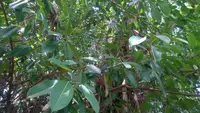
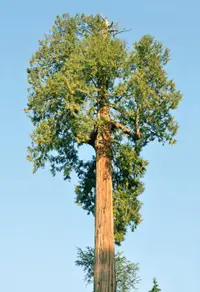
The Rubber Tree (Ficus elastica) belongs to the fig family. It is an evergreen plant with large oval leaves — they are leathery to the touch and reach 1 foot (30 cm) in length. Some varieties become almost blackish-red. Others have cream, pink, or black spots. In the wild, Ficus elastica grows over 100 feet (30 meters) tall and sends out aerial roots from its branches. Indoors, it typically reaches a height of 6-10 feet (1.8-3 meters).
The natural range of the Rubber Tree extends from the Himalayan foothills to Malaysia, Sumatra, and Java. Any novice houseplant grower can handle this species. It forgives occasional neglect. Most problems come from cold drafts and overwatered roots.

Care Difficulty
Easy Care

Light Preference
Bright Indirect Light

Water Requirements
Moderate Water

Temperature Preference
Tropical / Frost Sensitive

Hardiness Zone
10–12

Soil Texture
Loamy, Sandy, Organic-rich

Soil pH
Acidic (5.5–6.5), Slightly acidic (6.5–7.0)

Soil Drainage
Moist but well-drained

Fertilization
Light (every 4–6 weeks)
Scan your plant to receive care tips personalized for your specific plant
Available on iOS and Android
This plant prefers bright, indirect light and can tolerate direct sun.
Note: Intervals between the leaves of Ficus elastica of 3 inches (7.5 cm) or more indicate that the location is too dark.
Regarding watering, deep soaks with long intervals between waterings are better for Rubber Tree than small sips every couple of days.
Note: Ficus elastica placed in a dark corner requires much less water, so use the soil conditions rather than the calendar as a guide.
For the Rubber Tree, temperature stability is an important factor; sudden cold snaps are harmful.
Note: Leaf drop usually indicates a draft, not excessively high room temperatures.
Regular household air is fine for this plant, although it prefers a little extra humidity — 40-50% is sufficient. Dry air causes leaf tips and margins to turn brown.
Tip: Plant it with other tropical species to increase the humidity around the leaves. Calathea lutea and Philodendron hederaceum are good companions provided they do not receive direct sun.
Choose a potting mix that retains moisture but drains quickly.
Note: Dense garden soil is not suitable for container-grown Ficus elastica as it has poor aeration and drainage, which can lead to rot.
Ficus elastica grows well in containers. Choose a pot that is 1-2 inches (2.5-5 cm) wider than the root ball, but no wider. It is important that it has drainage holes. Keep in mind that a tall Rubber Tree has a heavy stem and crown. Upgrade to a ceramic pot with a wide and heavy base once your plant exceeds 4 feet (1.2 meters) in height to avoid tipping.
The plant requires fertilizing throughout the growing season, as new leaves require a lot of nutrients.
Note: A white crust on the soil surface indicates salt accumulation.
The best time to prune a Rubber Tree is in spring or early summer.
Most Rubber Trees need repotting into a larger container every 2-3 years.
You can use cuttings and air layering to propagate Ficus elastica:
Note: Air layering is best for tall and bare stems. Ringbark the desired shoot and wrap in plastic or foil filled with moist peat. Roots form while the stem remains attached.
A Rubber Tree generally stops growing in winter, so water it much less frequently than in summer — allow the top 1-2 inches (3–5 cm) of soil to dry. Keep the pot away from cold, frosty glass and heating vents. Do not fertilize until days lengthen again. Wipe the leaves clean, as this will help this houseplant use the weak winter light.

Plant Health Check
Not sure what's wrong with your plant? Check your plant's health inside the app.
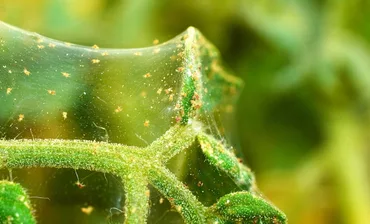
Look for webbing near the leaf joints and light-colored spots on the surface. These usually appear when indoor air is dry and hot.
Spider mites breed rapidly, so treat the problem as soon as possible.
Solution
Wipe the leaves clean with special focus on their undersides. Then, apply insecticidal soap or horticultural oil every 3-5 days.
High humidity helps discourage these pests.
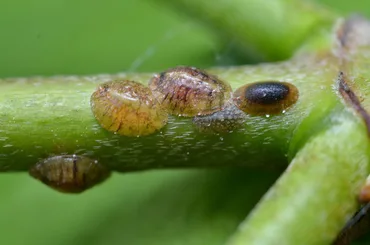
Small, waxy bumps on the stems and undersides of leaves are armored scale insects. They feed on plant sap and leave behind a sticky honeydew.
This residue often forms a sooty film.
Solution
Wipe each bump with a cotton swab soaked in rubbing alcohol. Then treat the entire plant with horticultural oil.
Continue inspecting weekly for a month.
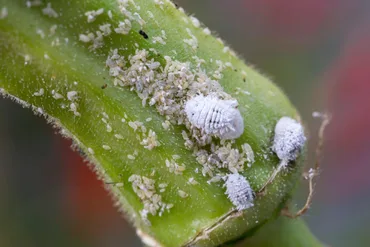
You may notice white fluffy clumps in leaf axils and along leaf veins.
These are mealybugs. Sticky or blackened honeydew on the lower leaves often gives them away before you even find the insects.
Solution
Wipe each clump with a cotton swab soaked in 70% alcohol. Then treat the entire plant, including the underside, with neem oil or horticultural oil.
Repeat every 7 days for three weeks to completely remove mealybugs and their eggs.
The name Rubber Tree refers to the latex once used to produce rubber. Commercial supplies have long since switched to Hevea brasiliensis.
However, the houseplant retains this name.
In the wild, seeds often germinate among the branches of another tree. The roots then grow towards the ground.
Botanists call this facultative hemi-epiphytism.
That magenta cone on a young shoot is a stipule wrapped around a developing leaf. It protects the leaf until it unfurls.
Then it dries and falls from the stem.

In Meghalaya, India, the Khasi and Jaintia communities span the aerial roots of the Ficus elastica across rivers. A 2019 study published in Scientific Reports documented 76 such bridges. The longest is 173 feet (52.7 meters) long, and some are hundreds of years old.
The plant's sap irritates the lining of animals' mouths and stomachs. Chewing the leaves often causes salivation and vomiting, so keep the plant out of reach of pets.
Keep your plants happy and healthy with plant identification, disease detection, and easy care guidance.