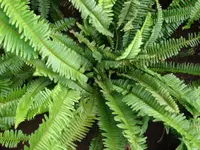
Peacock Fern Care (Selaginella willdenowii)

Also known as: vine spikemoss, peacock fern

About Peacock Fern

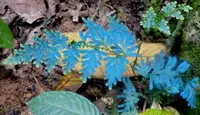
Peacock fern, Selaginella willdenowii, is a spikemoss, not a true fern, known for its metallic blue-green foliage that shifts color with the light. It forms low, spreading clumps with layered, fern-like fronds that give a soft, mossy look.

This species comes from humid tropical forests in Southeast Asia, where it grows in shaded, consistently moist environments. Its need for stable moisture, higher humidity, and gentle light makes it slightly more demanding than many common houseplants.

For those ready to care for Peacock Fern, it suits a sheltered indoor spot with soft, indirect light, evenly moist soil, and good airflow to prevent stress and decline.

Main Plant Requirements

Care Difficulty

Hard Care

Light Preference

Partial Shade

Water Requirements

Keep Soil Moist

Temperature Preference

Tropical / Frost Sensitive

Hardiness Zone

10–11

Soil Texture

Loamy, Peaty, Organic-rich

Soil pH

Strongly acidic (4.5–5.5), Acidic (5.5–6.5)

Soil Drainage

Moist but well-drained

Fertilization

Light (every 4–6 weeks)

Get Personalized Care Plan

Scan your plant to receive care tips personalized for your specific plant

Personalized Care in the App

Available on iOS and Android

How to Care for the Peacock Fern

This species thrives in bright, very filtered light that mimics a forest understory.

  • Provide dappled shade or bright indirect light for 6–8 hours daily; brief early morning sun is acceptable, but avoid direct midday and afternoon sun to prevent frond scorch and color fading in Peacock Fern.
  • Site plants under taller vegetation, shade cloth, or a north/east exposure where light passes through foliage or sheer curtains rather than hitting leaves directly.
  • In summer, move plants deeper into shade if fronds pale, curl, or develop brown patches; in winter, increase light slightly by moving closer to bright windows or opening surrounding canopy.

This plant prefers consistently moist, never waterlogged soil that mimics a humid forest floor.

  • Water whenever the top 1–2 cm of soil feels just barely dry, aiming to rehydrate before the lower soil dries completely, since Selaginella willdenowii has shallow, fine roots that dehydrate quickly.
  • Use a well‑draining, humus‑rich mix so excess water drains within a few seconds; standing water around the roots encourages rot and foul odor in the soil.
  • In warmer months, expect to water more often as edges curl and foliage droops when moisture is low; in cooler months, reduce frequency but still prevent the root zone from drying out fully.

This humidity‑loving species grows best in mild, consistently warm conditions without temperature shocks.

  • Aim for 65–80°F (18–27°C) for active growth; growth slows below 60°F (16°C) and foliage may lose color quality if kept too cool for long periods.
  • Protect from cold; avoid exposure below about 50°F (10°C), and prevent any frost, which can cause blackened, collapsing stems and permanent tissue damage.
  • Tolerates short heat spikes up to 85–90°F (29–32°C) only if humidity is high and soil stays moist; keep away from hot, dry drafts from heaters or sun‑baked walls, which dehydrate fronds rapidly.

This species needs consistently high humidity to maintain its iridescent foliage and dense growth.

  • Aim for 70–90% humidity; prolonged exposure below 60% quickly dries delicate stems and leaf tips.
  • Dry indoor air causes crispy tips, dull color, and curling fronds, especially in heated or air-conditioned rooms.
  • Increase humidity with a closed terrarium, greenhouse cabinet, or a fine-mist humidifier placed nearby, rather than relying on pebble trays.

Selaginella willdenowii performs best in a loose, moisture-retentive yet airy substrate that mimics forest floor conditions.

  • Use a mix of roughly 50% peat or coco coir, 30% fine bark, and 20% perlite to keep roots evenly moist and well aerated.
  • Aim for slightly acidic conditions around pH 5.5–6.5 to support nutrient uptake and healthy rhizome development.
  • Ensure the mix drains freely but never dries out completely; water should seep through within seconds, not sit on the surface.
  • Avoid heavy garden soil, dense potting mixes, and large sand particles that cause compaction, waterlogging, or rapid surface drying.

This species is well suited to container culture, especially in shallow, moisture-retentive setups and terrariums.

  • Choose a broad, shallow pot to accommodate creeping stems and surface-rooting growth rather than a deep, narrow container.
  • Select plastic or glazed ceramic to slow evaporation, which helps maintain the evenly moist conditions this plant prefers.
  • If using drainage holes, place the pot in a waterproof outer cachepot so high humidity and constant moisture do not damage surrounding surfaces.

Selaginella willdenowii benefits from light, careful feeding in active growth but is sensitive to excess salts.

  • Use a balanced liquid fertilizer (such as 10-10-10) diluted to 1/4–1/2 strength for Peacock Fern.
  • Apply every 4–6 weeks during spring and summer, only on moist soil to avoid root burn.
  • Do not use strong slow-release pellets that can accumulate salts in the shallow root zone.
  • Stop feeding in fall and winter, when growth slows, to prevent weak, leggy tissue.

Selaginella willdenowii needs only light pruning to keep growth dense and healthy.

  • Trim back yellow, brown, or damaged fronds at the base at any time of year.
  • In spring or early summer, lightly shorten overly long or straggly stems to maintain a compact, mounding shape.
  • Thin crowded areas by removing individual stems to improve air movement and reduce fungal risk.
  • Use clean, sharp scissors or small snips, disinfected before and after use, to avoid tearing stems.

This shallow-rooted plant dislikes disturbance, so repot or transplant Selaginella willdenowii only when clearly needed.

  • Check for roots circling the pot, emerging from drainage holes, or very slow growth despite good care as signs to move up 1 pot size.
  • Plan repotting for spring, about every 2–3 years, using a shallow, wide container with moisture-retentive, airy mix.
  • Keep the original root ball as intact as possible, gently loosening only the outer roots to limit shock.
  • Water thoroughly after moving, then keep evenly moist and shaded for 1–2 weeks while the roots re-establish.

Selaginella willdenowii is most often propagated by division and stem layering rather than seed.

  • In spring or early summer, divide dense clumps into sections, each with healthy roots and shoots, and replant at the same depth.
  • For layering, pin flexible stems onto moist substrate so nodes contact the surface until new roots form.
  • Maintain high humidity, warm temperatures around 68–75°F, and bright, indirect light to support rooting.
  • Keep the medium consistently moist but not waterlogged, using fine, well-drained mix such as peat-based with perlite.

This species is frost-sensitive and needs careful winter management in temperate climates.

  • Grow Selaginella willdenowii in containers in cold regions and move indoors before temperatures drop below 50°F.
  • Indoors, provide bright, indirect light, 60–75°F, and high humidity using trays or a room humidifier.
  • Outdoors in mild climates, add a light mulch layer around the root zone to buffer temperature swings.

Care Tips

Shallow, Wide Pot

Use a shallow, wide pot or tray so the creeping stems can root along the surface, which creates a fuller mat and reduces bare patches over time.

Moisture-Holding Underlayer

Line the pot base with a thin layer of long-fiber sphagnum moss under the main mix to stabilize moisture around the fine roots without leaving the plant sitting in water.

Edge Containment Trimming

Lightly trim and replant overreaching stems back into the potting surface to keep the colony dense, prevent legginess at the center, and make caring for Peacock Fern more efficient.

Humidity Dome Rotation

If using a terrarium or clear humidity dome, open it fully for 30–60 minutes 2–3 times a week to refresh air and reduce fungal issues, then rotate the container so all sides receive similar light exposure.

Gradual Environment Shifts

When moving the plant between rooms, terrariums, or outdoor shade for summer, adjust over 3–5 days by increasing the new conditions a few hours at a time to avoid stress from sudden changes in humidity and airflow.

Common Pests and Diseases

Spider mites

This pest favors the fine, scale-like foliage and often appears when air is warm and dry, leading to stippling and dull, bronzed fronds. Symptoms include very fine webbing between stems and a general faded look to the plant.

Solution

Rinse foliage thoroughly under lukewarm water, including leaf undersides, then increase humidity to 60–80% and avoid direct sun. For persistent infestations, apply insecticidal soap or a neem-oil-based spray every 5–7 days for several cycles, keeping the spray off the soil surface as much as possible.

Fungus gnats

These insects are attracted to the constantly moist potting mix that this moisture-loving species prefers. Symptoms include tiny black flies hovering near the soil and very fine larvae in the top 1–2 cm of the substrate.

Solution

Allow the top 1–2 cm of the mix to dry slightly between waterings while keeping deeper layers evenly moist, and remove decaying plant material from the soil surface. Use yellow sticky traps for adults and, if needed, drench the soil with a biological control such as Bacillus thuringiensis var. israelensis according to label instructions.

Botrytis blight

This disease develops in cool, very humid, and poorly ventilated conditions typical of enclosed terrariums or crowded plant shelves. Symptoms include soft, water-soaked stems and fronds that quickly develop fuzzy gray mold.

Solution

Remove and discard all affected fronds and stems, then increase airflow and reduce leaf wetness by watering at the base and avoiding misting directly onto foliage. If the environment remains very humid, consider spacing plants further apart and, in severe cases, apply a labeled fungicide while monitoring for new lesions as part of overall Selaginella willdenowii plant care.

Leaf tip dieback

Symptoms include browning and drying of frond tips and margins, often starting on the upper, more exposed parts of the plant. This physiological issue is usually linked to low humidity, excess fertilizer salts, or exposure to hot, moving air.

Solution

Raise humidity to around 60–80% using a pebble tray or room humidifier, and keep the plant away from heating vents or fans. Trim off dead tips with clean scissors, flush the potting mix thoroughly with water to remove excess salts, and resume feeding at a reduced strength only during active growth.

Interesting Facts

Iridescent blue foliage

This species produces leaves that appear metallic blue in strong light due to structural coloration, where microscopic leaf structures scatter light rather than pigments alone creating the color.

Ancient lineage clubmoss

It belongs to an early-diverging vascular plant lineage, with relatives that were already present in Paleozoic coal forests, so its basic body plan reflects very old stages of land plant evolution.

Creeping rainforest mat

In tropical Southeast Asia it naturally forms dense, creeping mats on the forest floor and on shaded banks, helping to retain moisture and stabilize soil in humid, low-light environments.

Botan icon

Did you know?

The iridescent blue coloration of this species fades significantly in deep shade or very low light, so wild populations often show a striking gradient from green in darker understory spots to vivid metallic blue where even small shafts of light reach the foliage.

FAQs about Peacock Fern

This species is a spikemoss and does not produce showy flowers. It reproduces with spores, similar to ferns and mosses. Lack of blooms is normal and not a sign of poor health.

Grow Healthy Plants with Botan Care

Keep your plants happy and healthy with plant identification, disease detection, and easy care guidance.


Botan plant care app — identify plants on mobile

Explore More Plants