Rotate For Symmetry
Turn the pot 90° every 1–2 weeks so new leaves develop evenly and the plant does not lean or twist toward a single light source.

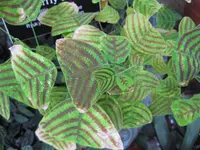
The swallowtail plant, Christia obcordata, is a tropical herbaceous species grown mainly for its striking, butterfly-shaped leaves. Each leaflet shows bold green, burgundy, and cream striping that creates a patterned, wing-like look. Plants stay relatively compact and bushy, making them suitable for containers and indoor displays.
Christia obcordata is native to parts of Southeast Asia, where it grows in warm, humid, partially shaded habitats. It can be somewhat demanding because it dislikes cold, dry air, and irregular watering. Those who care for Swallowtail Plant successfully usually provide bright, filtered light, evenly moist but well-drained soil, and stable indoor temperatures.

Care Difficulty
Hard Care

Light Preference
Bright Indirect Light

Water Requirements
Keep Soil Moist

Temperature Preference
Tropical / Frost Sensitive

Hardiness Zone
11–12

Soil Texture
Loamy, Peaty, Organic-rich

Soil pH
Acidic (5.5–6.5), Slightly acidic (6.5–7.0)

Soil Drainage
Moist but well-drained

Fertilization
Light (every 4–6 weeks)
Scan your plant to receive care tips personalized for your specific plant
Available on iOS and Android
This species prefers bright, indirect light with some gentle direct sun each day.
Christia obcordata prefers evenly moist, fast-draining soil without staying waterlogged.
This plant grows best in consistently warm, frost-free conditions.
This species prefers moderately high humidity to keep foliage markings crisp and growth steady.
Christia obcordata grows best in a loose, airy, organic-rich mix that drains quickly yet holds some moisture.
This species adapts well to container growing when the pot supports its shallow, fibrous root system.
Christia obcordata responds well to light, consistent nutrition during its active growing season.
Pruning Christia obcordata is mainly about tidiness and maintaining a compact shape.
Repotting helps this plant maintain healthy roots and steady growth in containers.
Christia obcordata is usually propagated from seeds and sometimes by careful division of clumps.
This plant is frost sensitive and requires protective winter care in cool climates.

Plant Health Check
Not sure what's wrong with your plant? Check your plant's health inside the app.
The trifoliate leaves of this species have bold maroon striping that closely resembles swallowtail butterfly wings, a visual mimicry thought to help break up the plant’s outline for herbivores.
Its leaflets show nyctinasty, a daily sleep movement, folding or drooping in lower light at night and reopening with daylight as a way to reduce water loss and potential nighttime damage.
In frost-free tropical and subtropical climates it behaves as a short-lived perennial, but in cooler regions it is usually grown as a warm-season annual because it does not tolerate cold or prolonged temperatures below about 50–55°F.

Christia obcordata is considered uncommon in mainstream horticulture and is more often circulated among specialty collectors and botanical gardens, which has led to confusion in the trade with similar species and frequent mislabeling.
Brown, crispy edges usually result from low humidity, underwatering, or fertilizer burn. Increase ambient humidity, water thoroughly but not constantly, and flush excess salts from the potting mix if fertilized frequently.
Keep your plants happy and healthy with plant identification, disease detection, and easy care guidance.