


Rotate For Symmetry
Turn the pot 90° every 2–3 weeks during active growth so the plant receives even light and develops a balanced, spherical shape without leaning toward the brightest side.

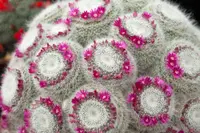
Old lady cactus, Mammillaria hahniana, is a small, globular cactus known for its dense white spines and fine hairs that give it a soft, woolly look. Plants often form clusters of rounded stems over time, creating a compact mound.
In nature it grows in arid regions of central Mexico, adapted to strong sun, high temperatures, and very little rainfall. It typically produces a ring of small pink to purple flowers near the crown, adding seasonal interest in good light.
Its drought tolerance and slow, tidy growth habit make it a suitable choice for windowsills and small indoor collections. Understanding how to care for Old Lady Cactus is straightforward once its need for bright light, fast-draining soil, and light, infrequent watering is respected.

Care Difficulty
Easy Care

Light Preference
Full Sun

Water Requirements
Low Water

Temperature Preference
Warm Climate

Hardiness Zone
9–11

Soil Texture
Sandy, Loamy, Rocky

Soil pH
Slightly acidic (6.5–7.0), Neutral (7.0)

Soil Drainage
Well-drained

Fertilization
Minimal (feed rarely)
Scan your plant to receive care tips personalized for your specific plant
Available on iOS and Android
This cactus needs bright light with several hours of direct sun to stay compact and flower well.
This species prefers thorough but infrequent watering with fast-drying soil.
This cactus prefers warm, dry conditions with a cool but not freezing winter rest.
This cactus prefers dry indoor air and rarely needs extra humidity.
Use a very fast-draining, mineral-rich mix to keep roots dry between waterings.
This species is very suitable for container growing due to its compact, clumping habit.
Mammillaria hahniana is a light feeder that benefits from modest nutrition during its active season.
Mammillaria hahniana needs almost no pruning, since old tissues age naturally and stay compact.
This cactus prefers being slightly root-bound, so repotting Mammillaria hahniana is infrequent but still useful.
New Mammillaria hahniana plants are most commonly obtained from offsets and seeds under warm, dry conditions.
Winter care for Mammillaria hahniana focuses on keeping it cold but dry to maintain a safe rest period.

Plant Health Check
Not sure what's wrong with your plant? Check your plant's health inside the app.
Mammillaria hahniana forms a dense ring of white hairs and spines around the stem apex, creating a striking contrast with the green body and purple flowers. This woolly crown helps shade the growing point from intense sun in its native central Mexico.
Over time, this cactus often offsets freely from the base, forming tight, dome-shaped clusters. Mature clumps can contain many individual heads, which is one reason it is popular in collections focusing on Mammillaria hahniana plant care.
In its native range, the small purple to magenta flowers typically form a circular band around the stem and can attract hummingbirds as pollinators. The ring-like bloom pattern is characteristic of this species in the genus Mammillaria.

The species name hahniana honors the German botanist Karl Heinrich Koch’s contemporary, the plant collector Hahn, reflecting a 19th-century tradition of naming new cactus species after European horticulturists and collectors involved in introducing them to cultivation.
Lack of flowers usually comes from insufficient light, a pot that is too large, or no cool, dry winter rest. Older, well-lit plants that experience a slight winter temperature drop are more likely to produce rings of blooms.
Keep your plants happy and healthy with plant identification, disease detection, and easy care guidance.

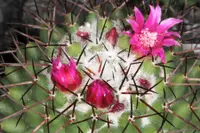
Mammillaria polythele
Mammillaria polythele
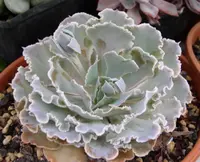
Mexican hens and chicks
Echeveria shaviana
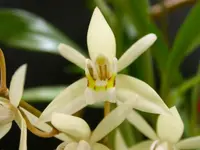
bearded coelogyne
Coelogyne flaccida
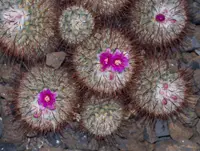
Silken Pincushion Cactus
Mammillaria bombycina

Poinsettia
Euphorbia pulcherrima
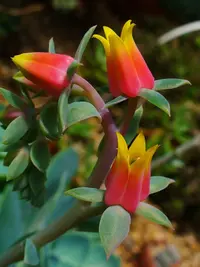
Metallic Echeveria
Echeveria gibbiflora

Acanthocalycium leucanthum
Acanthocalycium leucanthum
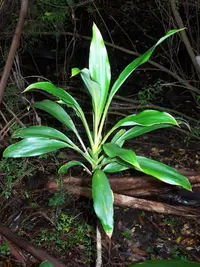
palm lily
Cordyline rubra